GCI Update
Connecting Members & Friends of GCI
Header Banner

Kingdom Living—Neighborhood Camps

Kingdom Living looks like loving your neighborhood by putting down roots. It looks like displaying your commitment to your neighbors’ flourishing, serving their children over the long haul, year after year. Read below the stories of GCI congregations that are building lasting relationships with the young people in their communities.


Jacksonville, Florida, US
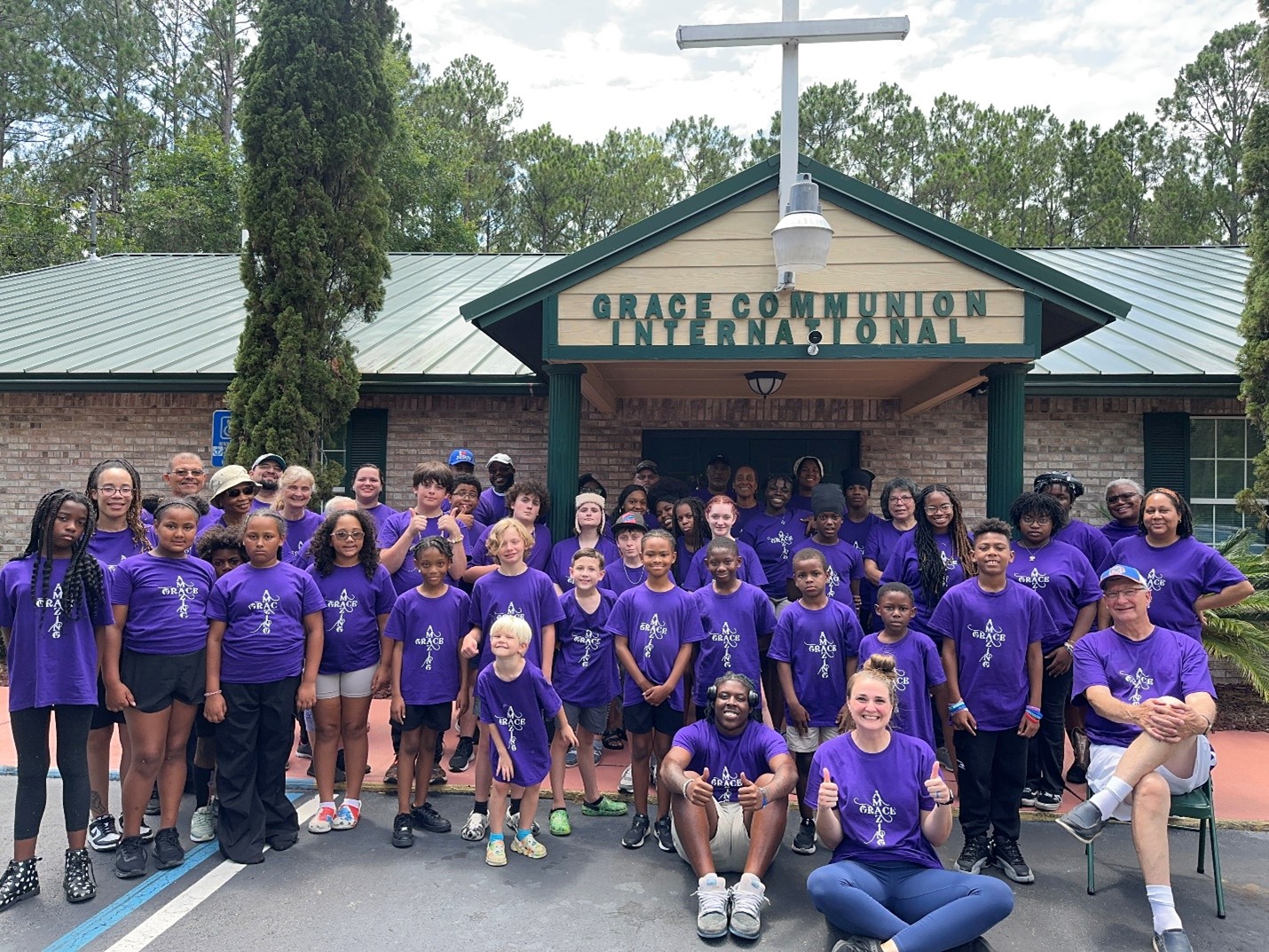
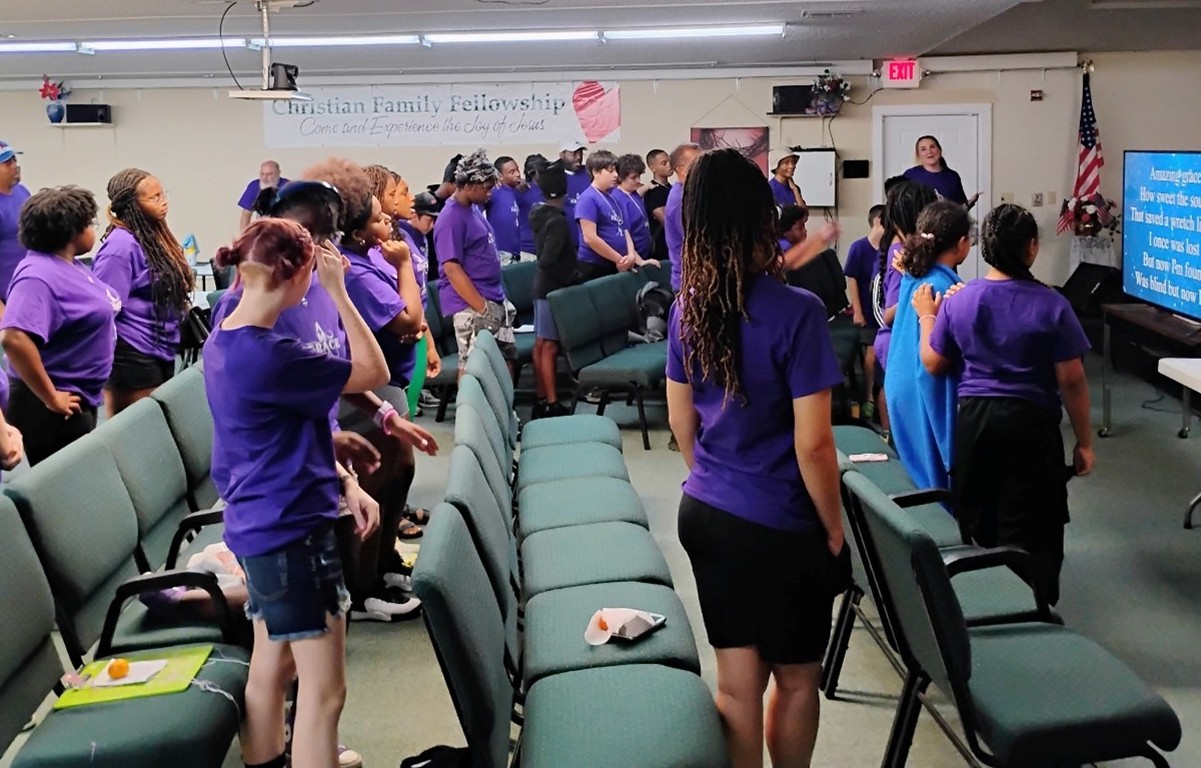
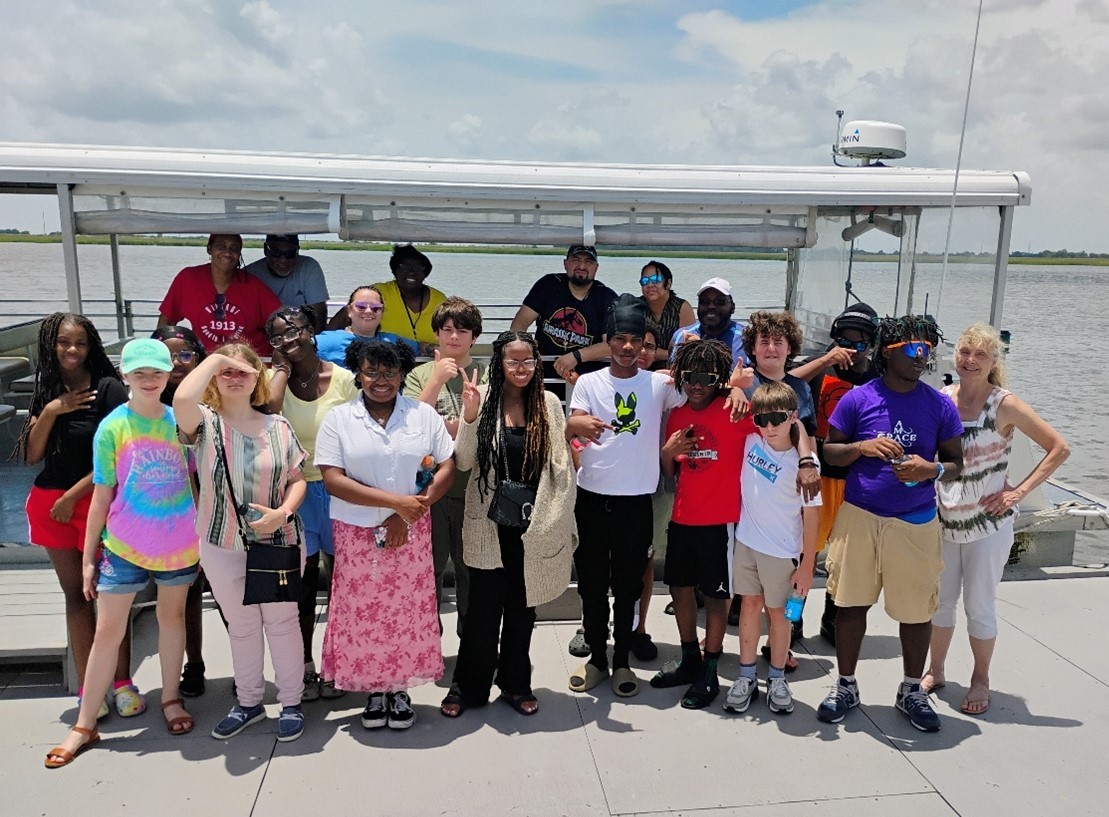
The Jacksonville congregation hosted its annual neighborhood youth camp, known as “Grace Camp 2025,” June 11–14.

Camp was attended by 35 youth and 20 adult staff. More than half of the participants were neighbors from the homes near our church building. We held daily chapel with a curriculum entitled “God’s Amazing Grace Changes Everything.” The four chapel lessons were: Grace changes …

      • Who you are
      • What you love most
      • How you live
      • Your eternal future


We provided three meals a day, outdoor sports, arts and crafts, a dance, skits and talent presentations, water balloon contests, a block party, and an inspirational movie with discussion. We also enjoyed outings to a U.S. Navy destroyer ship and museum and to Jekyll Island, G.A. Activities on Jekyll Island included a dolphin boat tour and visits to a water park, a pier, beach, and picnic areas.

The weather was favorable, and everyone enjoyed a safe, fun, and inspirational time together. Watch our short video of Grace Camp 2025 here.

By Marty Davey, Pastor
Jacksonville, Florida, US

Pasadena, California, US


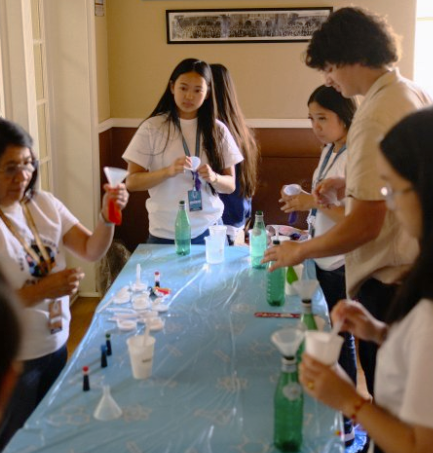
GC Pasadena had a very successful day camp last Sunday. All our members were involved in inviting and praying for campers. Seventeen campers attended with 12 volunteers helping.

Our camp ran from 9 am–5 pm with lots of food for everyone. Our theme was “God Created Science,” and we offered many interesting science activities. We gave the campers gifts and certificates of attendance after our worship service. Our normal Sunday format was adjusted for the campers.

One mother commented, “I like your church, and I haven’t attended any for a long time. I will attend your church.” Another mother, who we met through our food distribution, came with her two children.
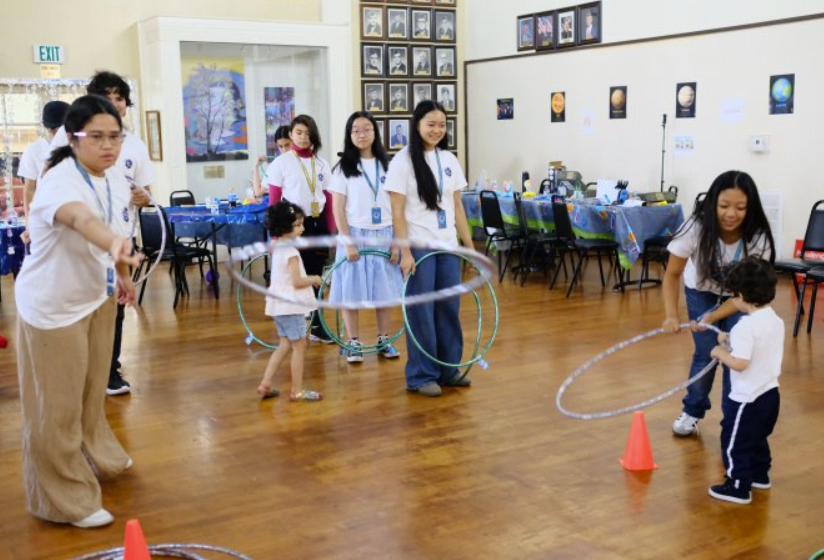

Depending on our budget, we are planning to do this twice a year. Please continue to pray that these kids with parents will all come to believe that they are included in the life and love of our triune God. You can see more pictures at our website, although they cannot capture the joy everyone felt during the camp.  I wish you all could have witnessed it yourself.

To God be the glory. All praises belong to him.

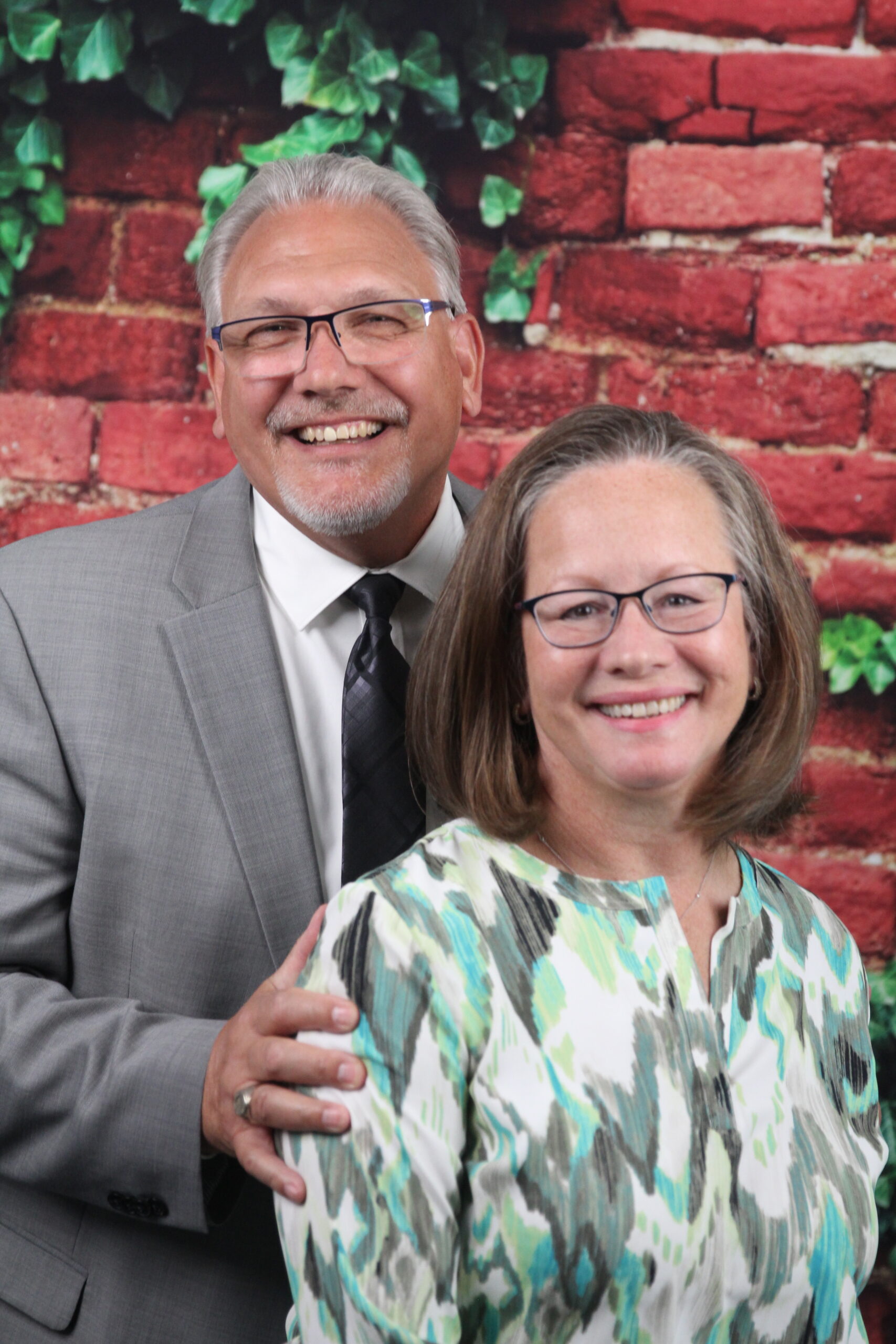
Angie with her husband, Sadie, pictured in the camp photo booth

By Angie Tabin, Pastor
Pasadena, California, US

Richardson, Texas, US
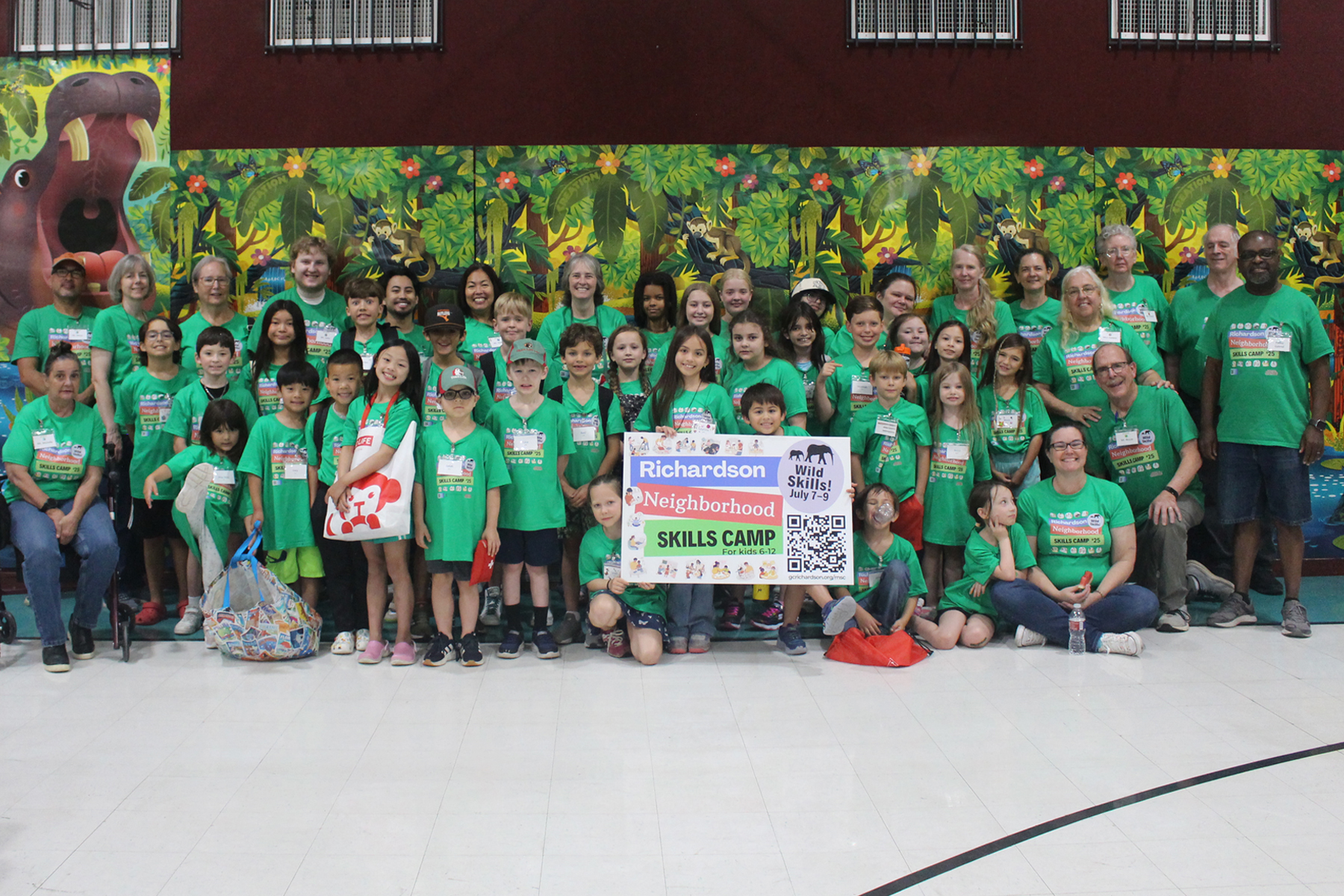

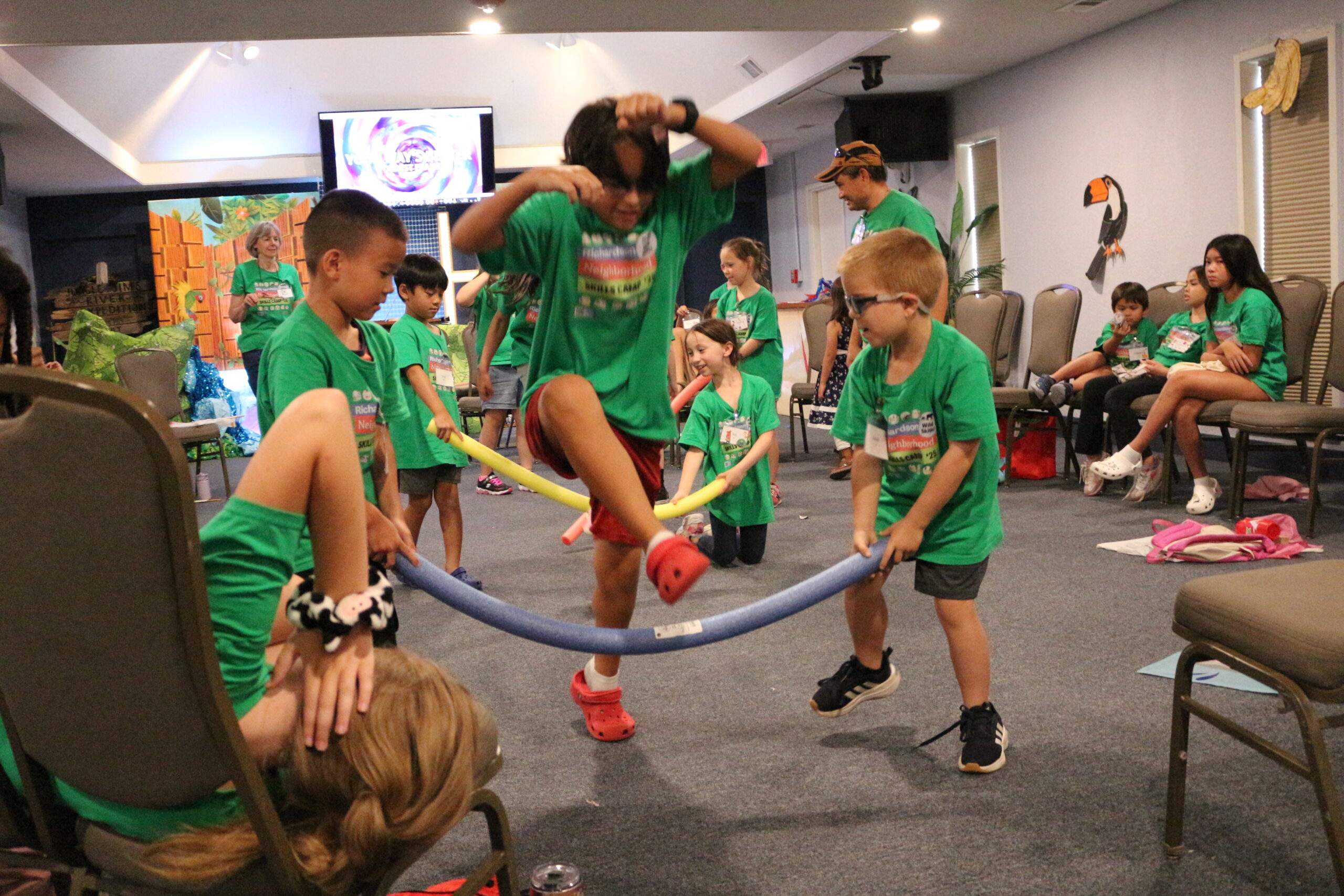
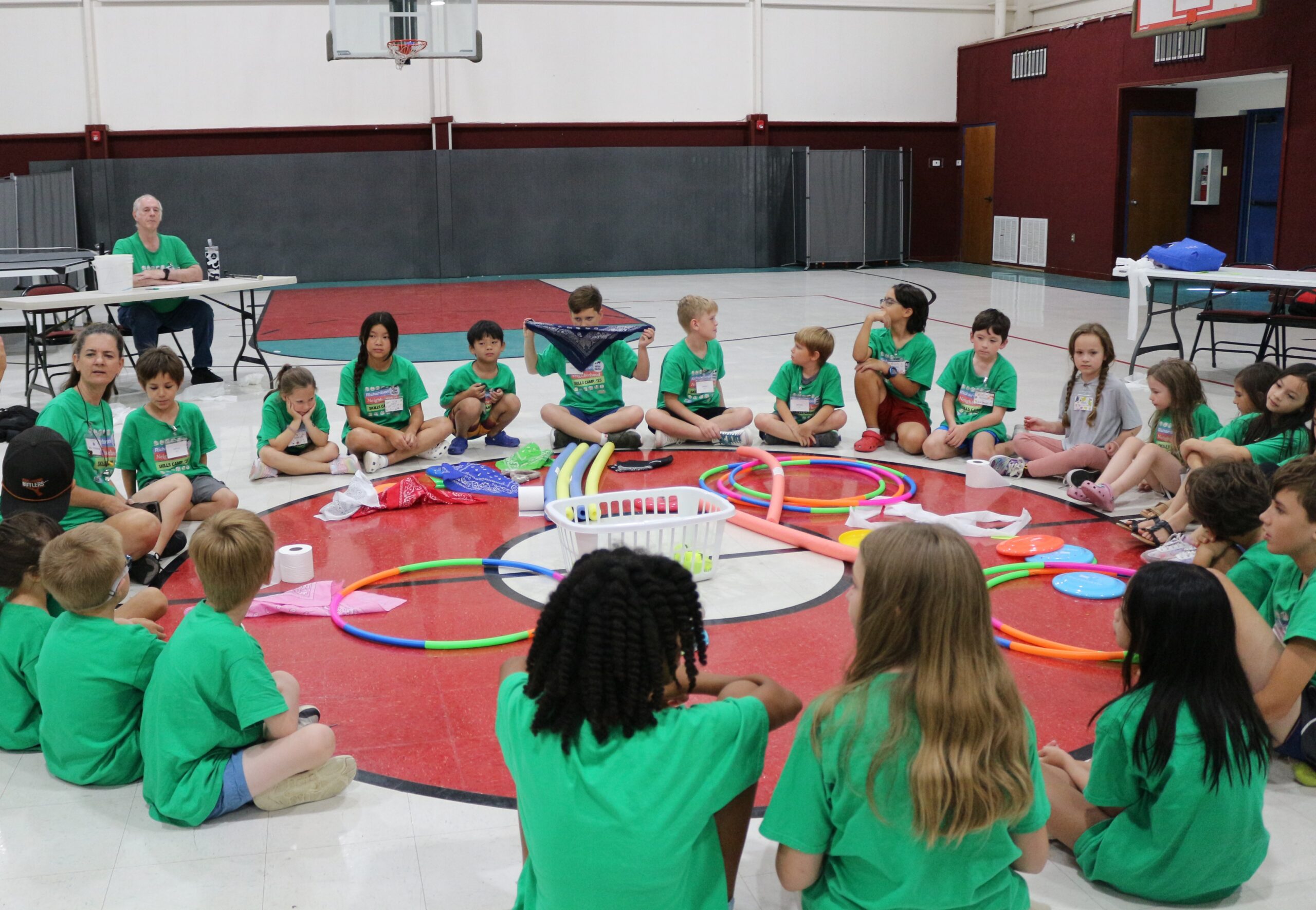
Thirty-one children enjoyed summer fun and learning life skills at Richardson Neighborhood Skills Camp (RNSC), “Wild Skills,” July 7–9. Twenty-six volunteers, including Grace Communion Richardson members and adult leaders from the congregation’s American Heritage Girls Troop, shared practical, artistic, and relational skills with campers. It was a friendly, high-energy atmosphere from 10 am–4 pm each day.

RNSC provides space for adults to share their hearts, skills, abilities, and talents with neighborhood children in a cross-generational, relationship-building environment. We pointed to Jesus within our four basic guidelines:

      • Love God
      • Love Others
      • Have Fun
      • Be Safe


In this third year of RNSC, skills included: first aid, robotics, soldering, sign language, graphic design, videography, bicycle and auto care, hospitality, and party planning. Using song and dance, our camp also featured the relational skills of teamwork, helpfulness, encouragement, perseverance, accountability, and courage.

Overwhelmingly positive feedback from volunteers, parents, and children has already created excitement for next year when RNSC is expected to increase the number of children served and further our neighborhood focus.
By Christine Ojih, Camp Director
Richardson, Texas, US
 

Devotional—The Last Bite and Jesus’ Heart

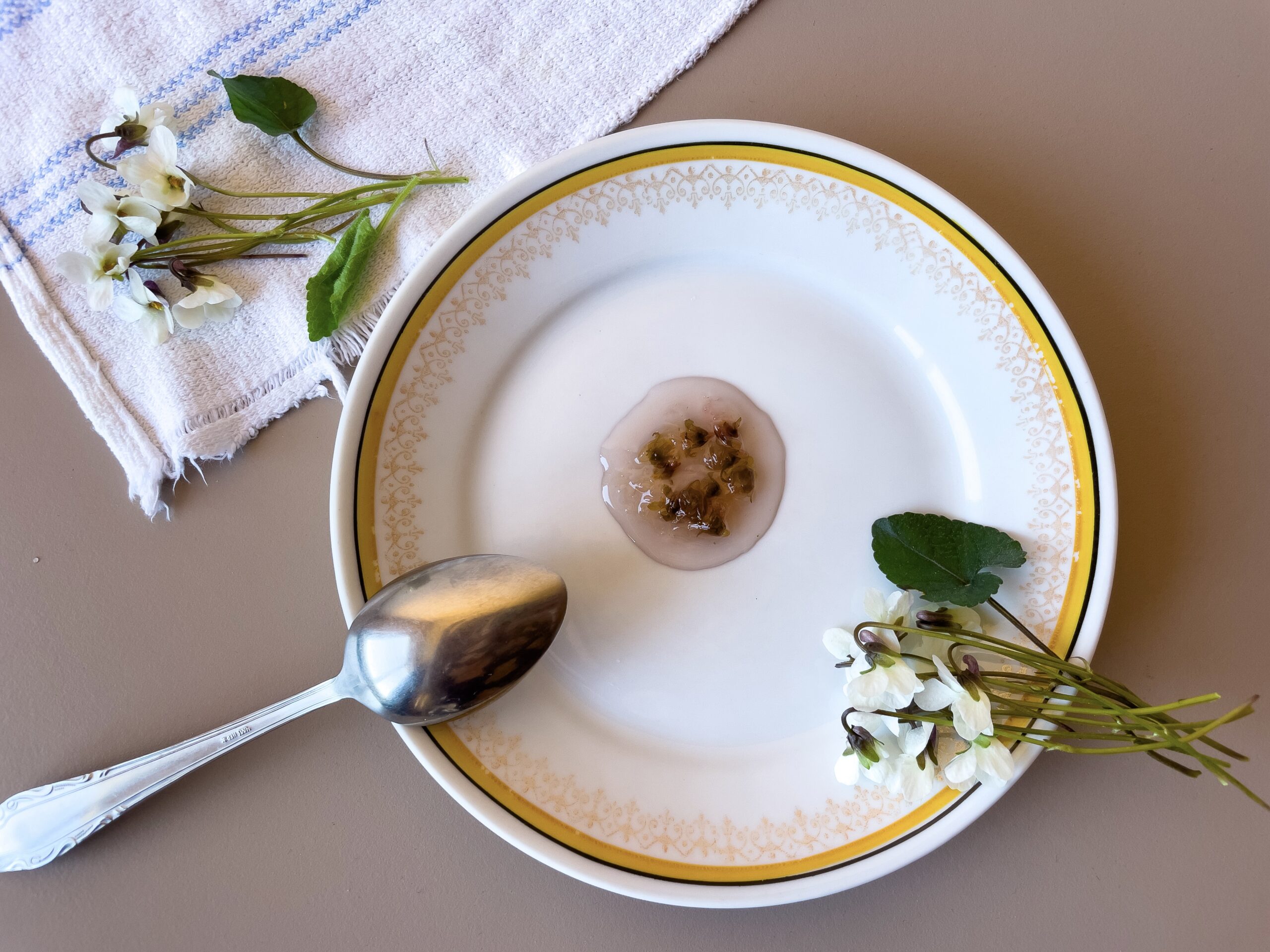
Did you know that at Filipino gatherings, there’s always that last piece of food on the plate that no one wants to take? We call it the “piece of shame” or hiya. It’s not that no one wants it — everyone just feels it would be selfish to take the last piece of food. So instead, they leave it for someone else.

Could that simple cultural moment reflect the heart of Jesus?

Do nothing out of selfish ambition or vain conceit. Rather, in humility value others above yourselves, not looking to your own interests but each of you to the interests of the others. Philippians 2:3–4

That’s exactly what happens when we leave that last piece. It may seem small, but it’s a way of putting others first.

Jesus did that too — but in the most powerful way. He didn’t just give up a bite of food — he gave up his life. Jesus’ love is sacrificial. It gives, even when it costs something. And when we choose to be generous or put others first — yes, even with something as small as food — we’re reflecting a little bit of him.

So, next time you see that last piece of food, think of Jesus. Let it remind you to be someone who lives with humility, generosity, and love — not just at the dinner table, but in everything.

Prayer: Dear Lord Jesus, thank you that even with this simple Filipino custom of hiya, we are reminded of your sacrificial and unconditional love for us. May we reflect more of your humility and generosity to others in our everyday lives. Amen.

By Jessica Joy Pamor, GC Pili Youth Leader
Bicol, Philippines

It Is Not So with You

Dear GCI Family and Friends,

Matthew chapter 20 provides insight into the deep wells of the human heart.

The mother of Zebedee’s sons came to Jesus with her sons and, kneeling down, asked a favor of him. 

“What is it you want?” he asked.

She said, “Grant that one of these two sons of mine may sit at your right and the other at your left in your kingdom.”

“You don’t know what you are asking,” Jesus said to them. “Can you drink the cup I am going to drink?”

“We can,” they answered.

Jesus said to them, “You will indeed drink from my cup, but to sit at my right or left is not for me to grant. These places belong to those for whom they have been prepared by my Father.”

When the ten heard about this, they were indignant with the two brothers. Jesus called them together and said, “You know that the rulers of the Gentiles lord it over them, and their high officials exercise authority over them. Not so with you. Instead, whoever wants to become great among you must be your servant, and whoever wants to be first must be your slave—just as the Son of Man did not come to be served, but to serve, and to give his life as a ransom for many. Matthew 20:20–28

The first lesson is the desire of a mother for recognition and promotion of her two sons. Perhaps she was prompted by her sons to make this bold request. They had seen over and over how Jesus was receptive to women and the special relationship he shared with his own mother. Perhaps James and John thought, “How could he deny her this request?”

These ambitious brothers (the “sons of thunder,” as they were called) wanted to be the right-hand and left-hand men for Jesus, not just now, but for the eternal kingdom. It was a big ask. Jesus’ reply was rather gentle, but straight to the heart of the matter. “Can you drink the cup I am going to drink?” He alluded to the cup of suffering and death. Maybe it’s my sports background, but the phrase, “no pain, no gain” keeps echoing in my head. These young men acknowledged that they could drink the cup.

Baptisms


Leeuwarden, Netherlands

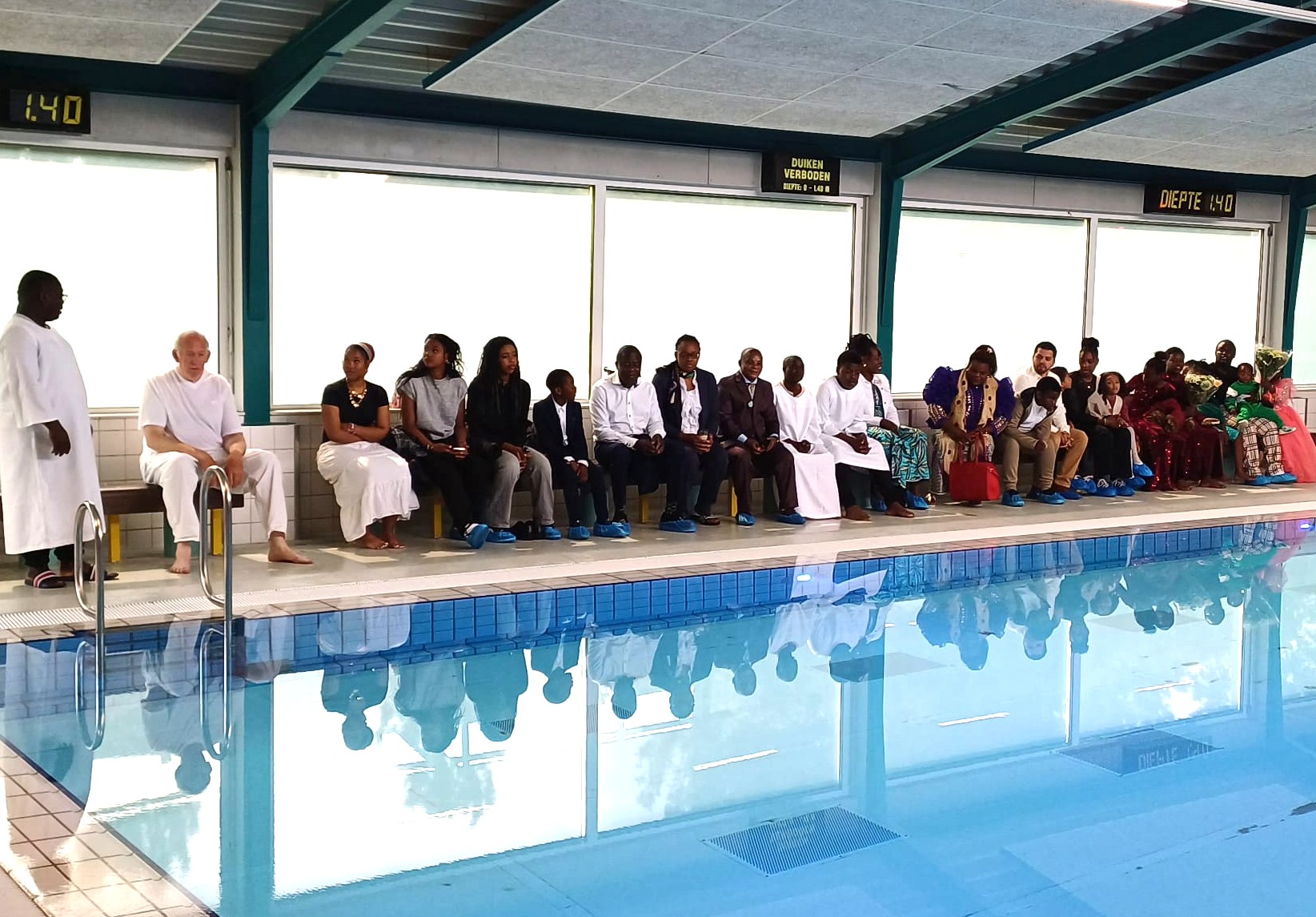
On Pentecost Sunday, two young men were baptized: Byanmungu Nene (24) and Baraka Matendo Makoti (15), the son of Pastor Makoti.

It was a beautiful baptism service, and we are grateful to God that he called them and that they said yes to Jesus Christ, their Savior!


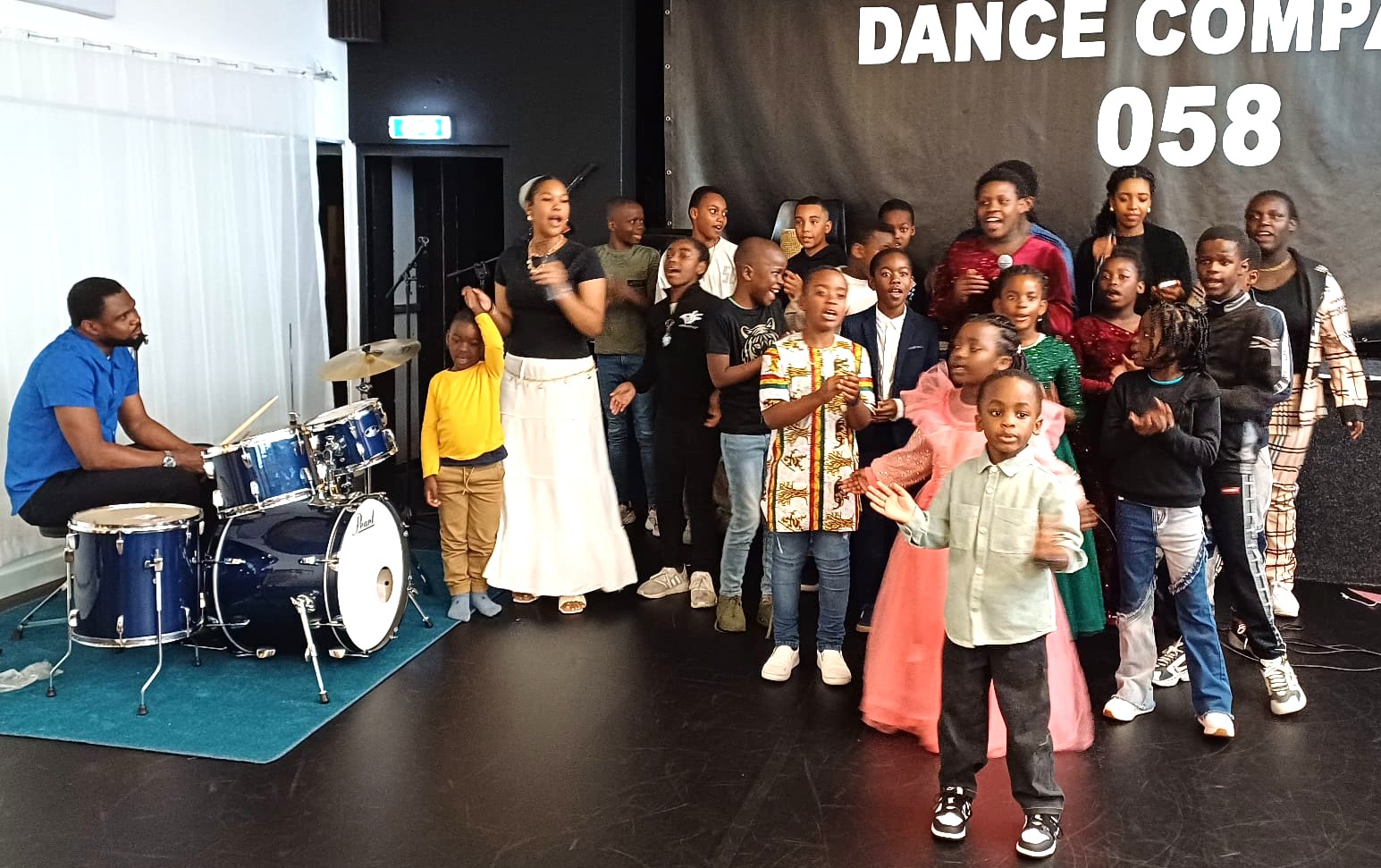
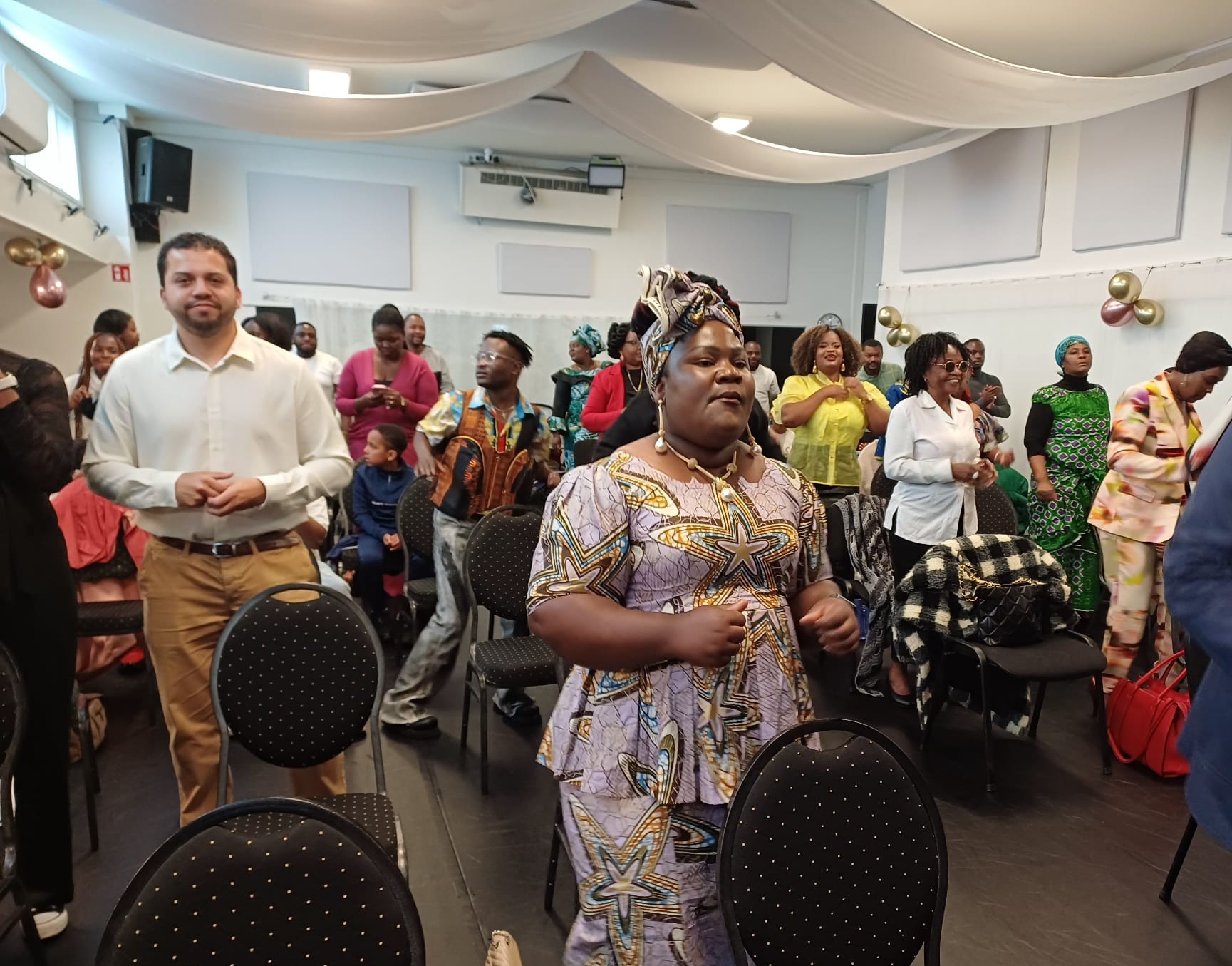
Afterwards, Pentecost was celebrated with an estimated 80 people present. There was exuberant singing, including a large children’s choir — the roof almost came off from all the enthusiasm!

Before communion and a tasty meal, Kahindo Kasinde preached about Pentecost and the power of God. And Pastor Frans gave a short sermon on how to love God above all and your neighbor as yourself, led by the Holy Spirit. It was a special and encouraging day!

By Frans Danenberg, Elder
Almere, Netherlands


Mexico City, Mexico

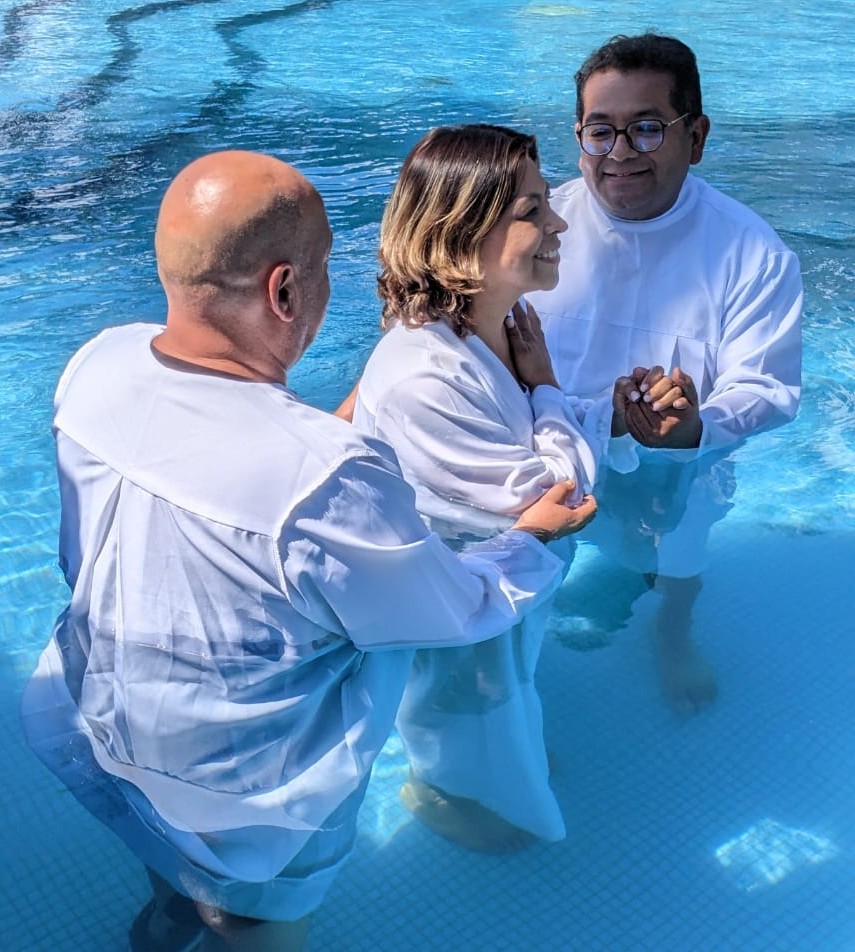
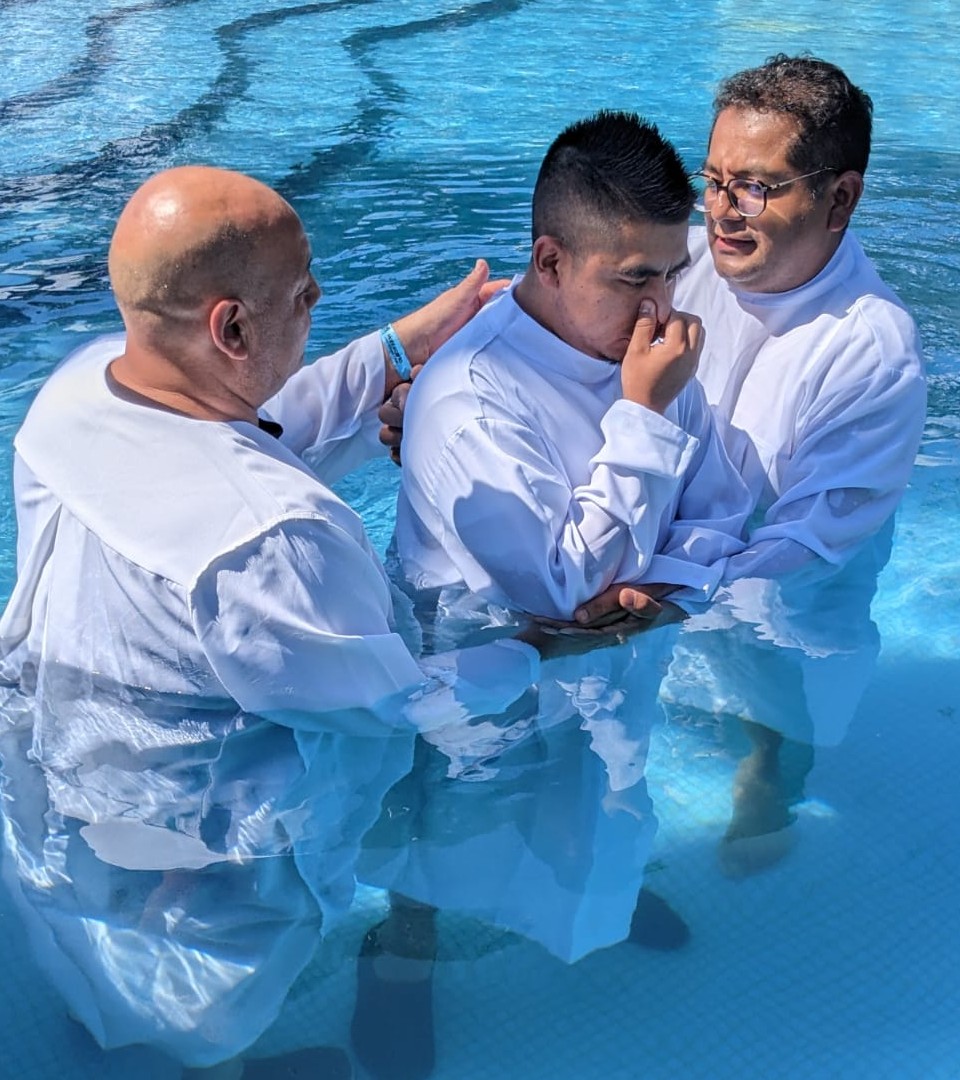
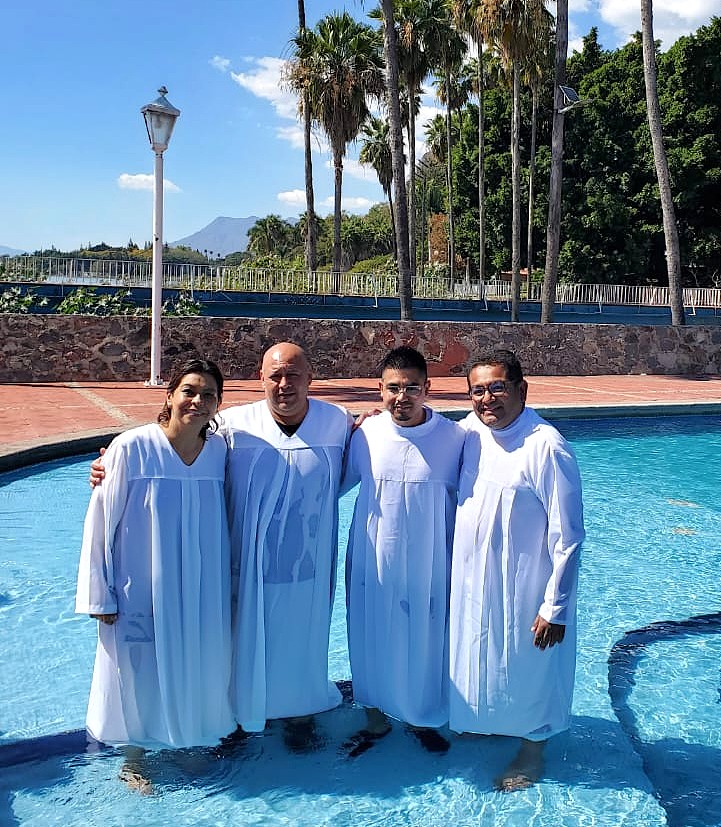
Earlier this year, Diana Zarate Contreras and Edgar Morales Calderón chose to be baptized at the conclusion of a conference for various congregations across Mexico. The conference fostered fellowship, unity, and spiritual growth. I officiated the baptisms with Alfredo Oloño, and it was a joyful and meaningful experience that will be cherished forever!


Our first encounter with Diana was during her daughter’s baptism in 2022, which sparked a meaningful connection. She soon became an active member of our church, with her heartfelt desire to follow Jesus growing stronger each day. Currently, Diana serves as an usher and aspires to become a children’s teacher. She remains committed to her spiritual growth through ongoing training and dedication.


Edgar Morales initially approached the church seeking marriage counseling with Alfredo Oloño. Through a period of counseling and discipleship, he made the decision to be baptized, openly confessing his faith in Jesus Christ. Currently, he serves in the Connection Group in La Paz, State of Mexico. He and his wife are students in the Ministerial Development Program (MDP) offered by Communion of Grace International (CGI, as GCI is known in Spanish). Both Edgar and his wife have demonstrated a faith truly worthy of their calling.

By Natanael Cruz, Pastor
Mexico City, Mexico

New Wineskins Gathering for US Pastors

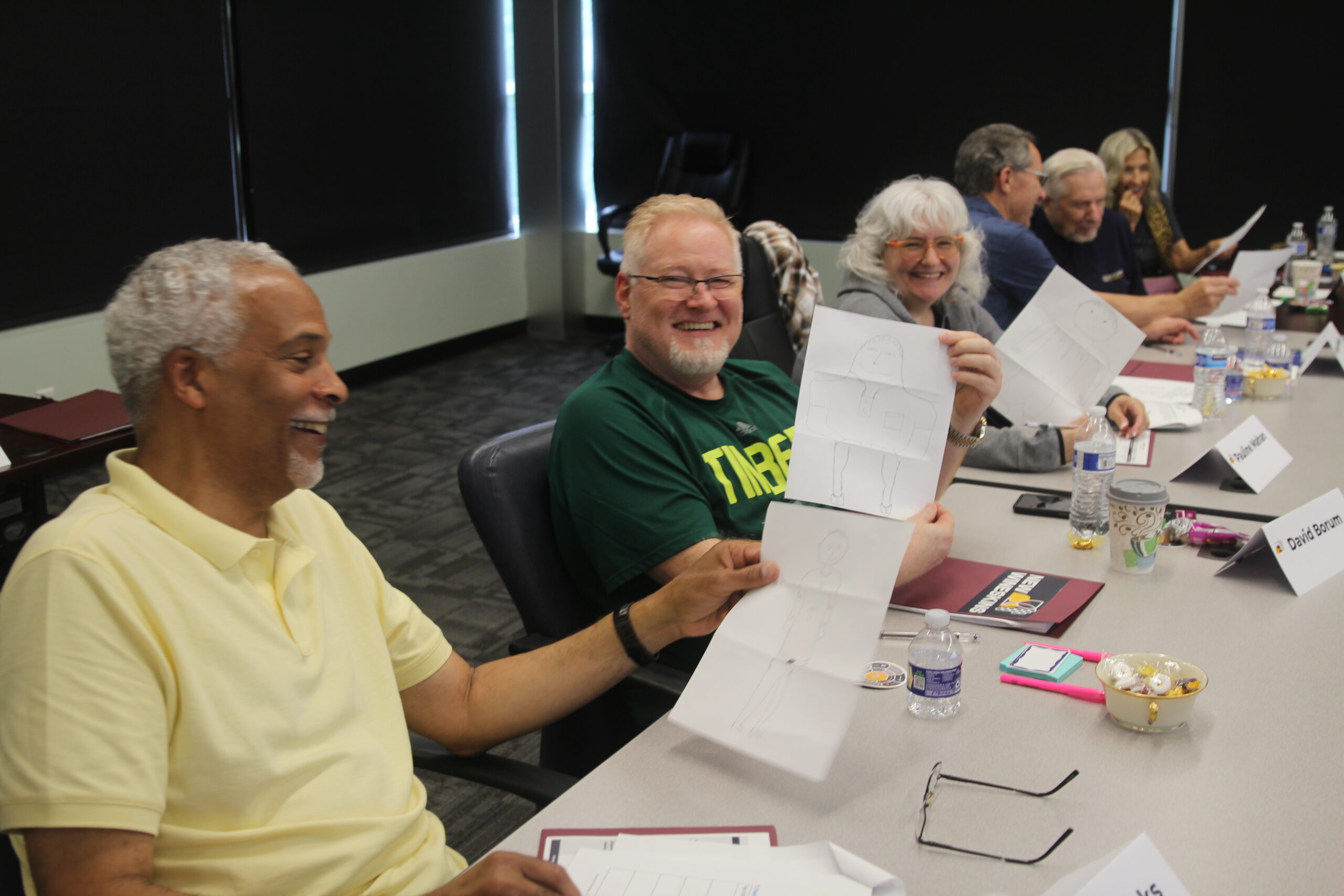
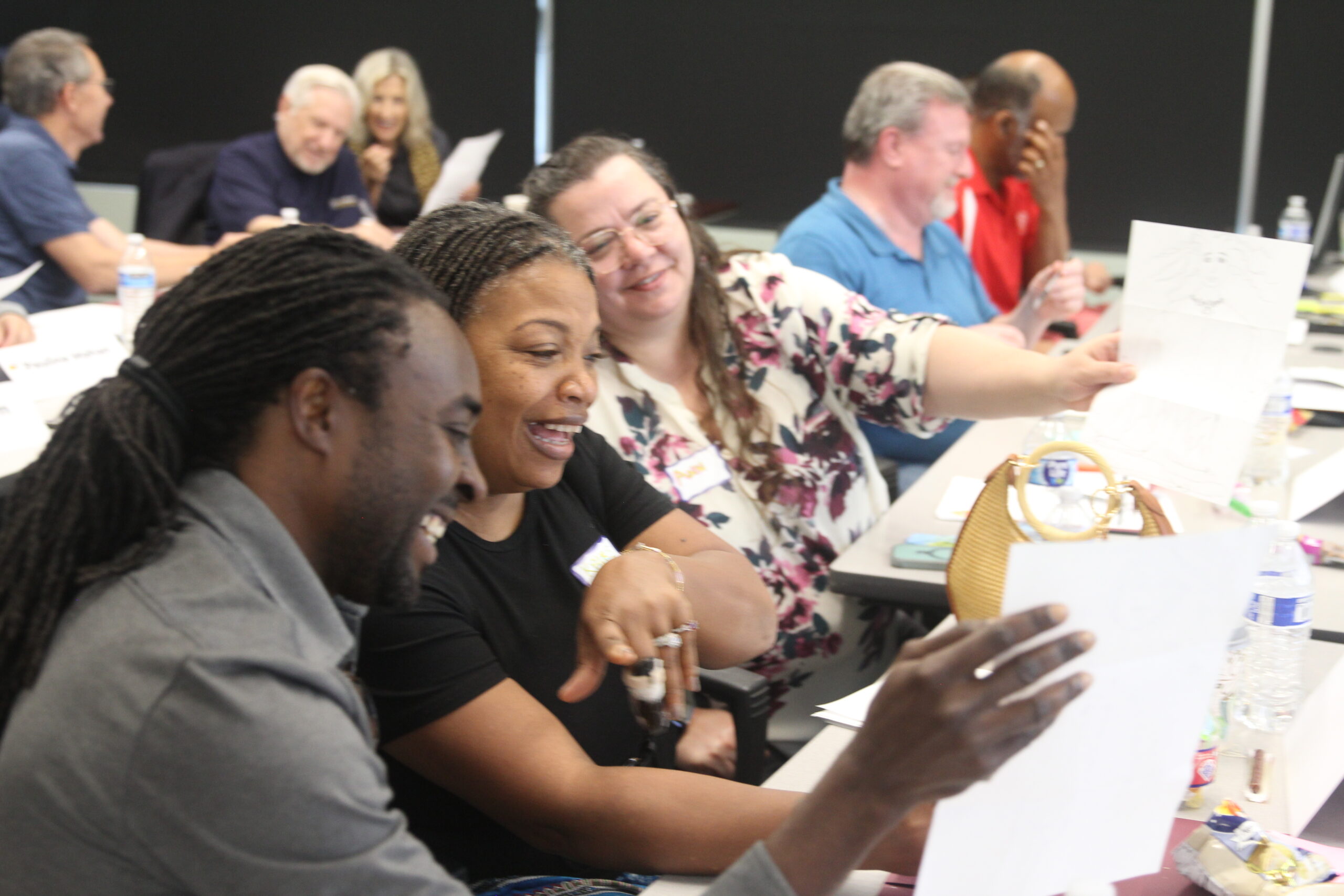
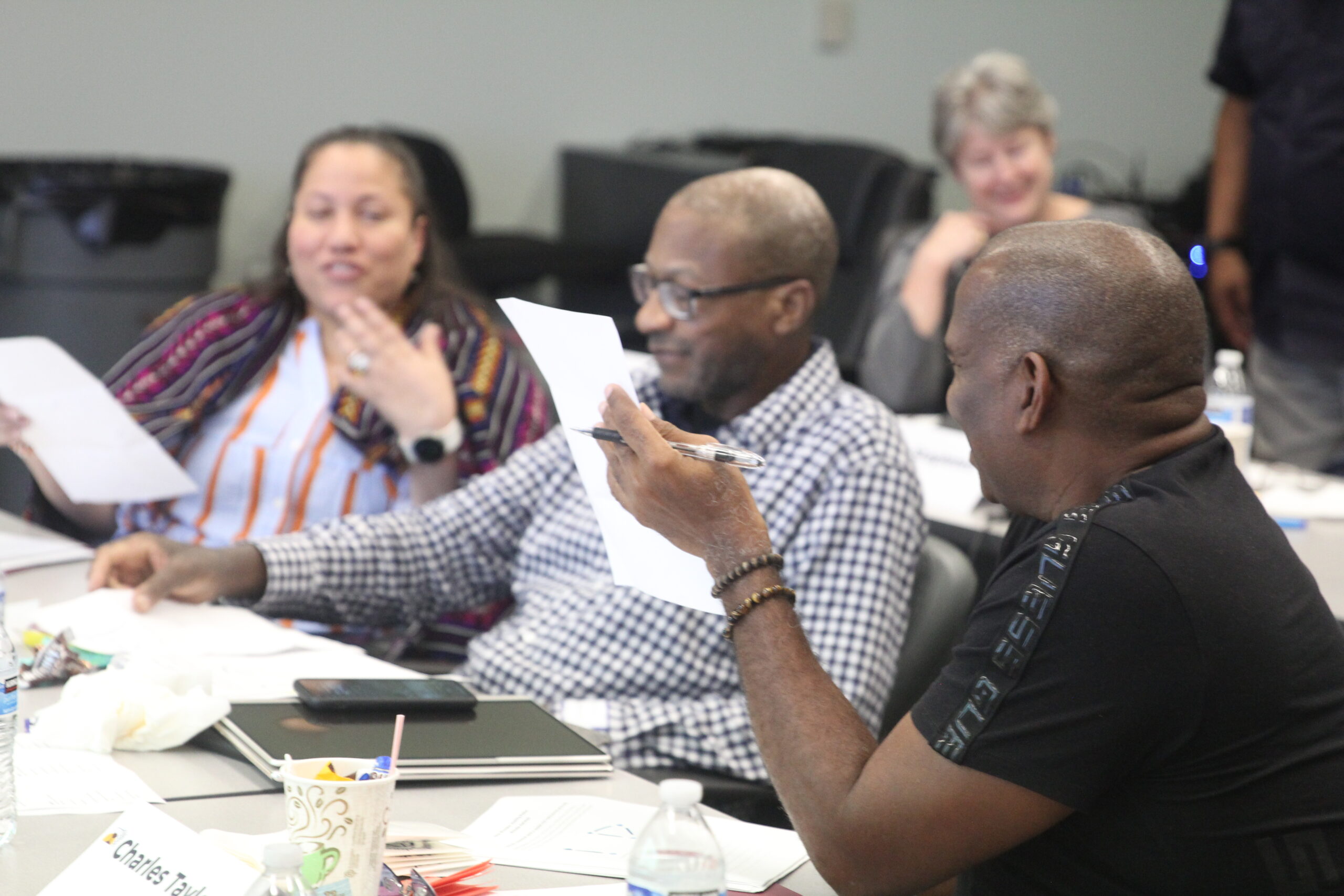
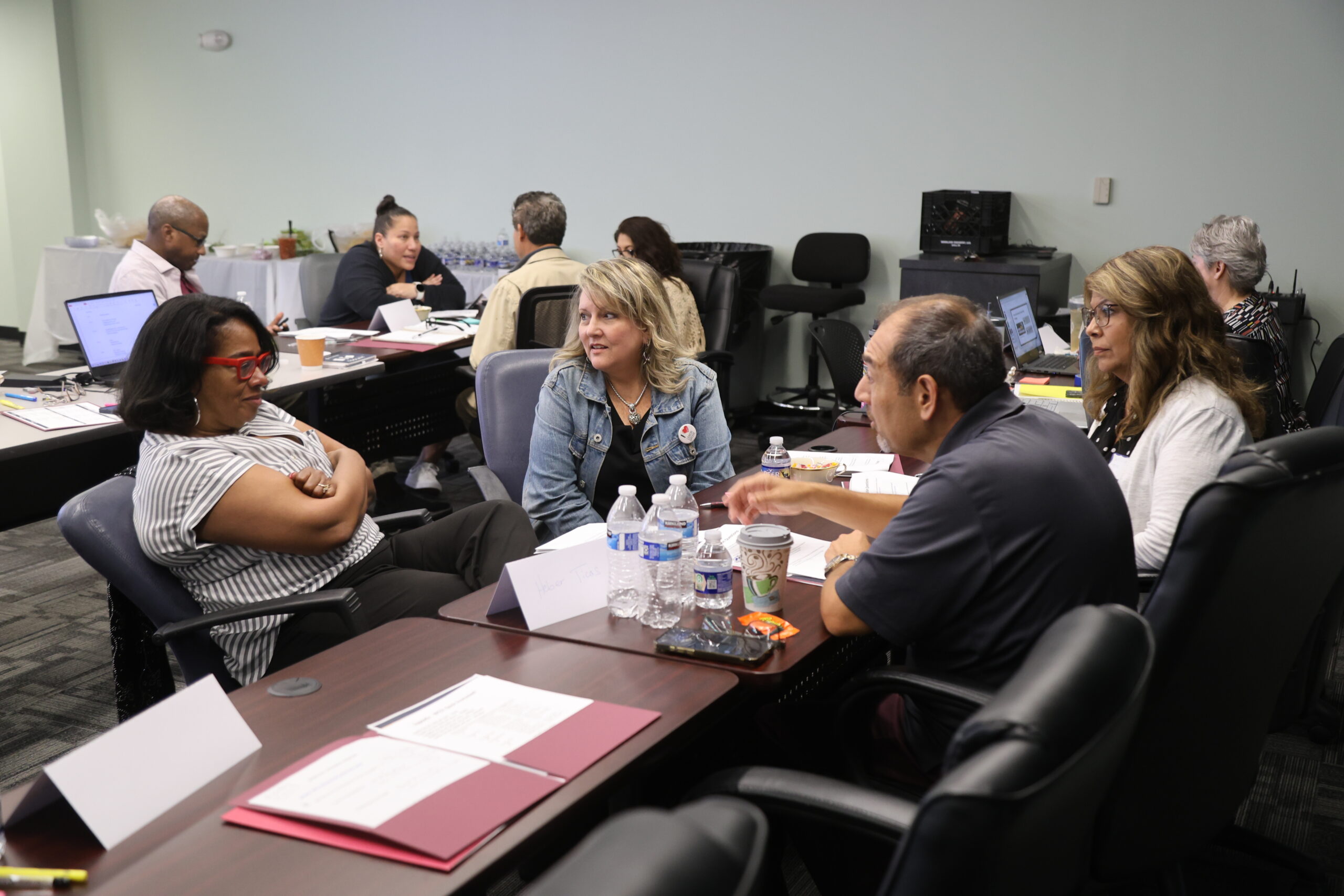
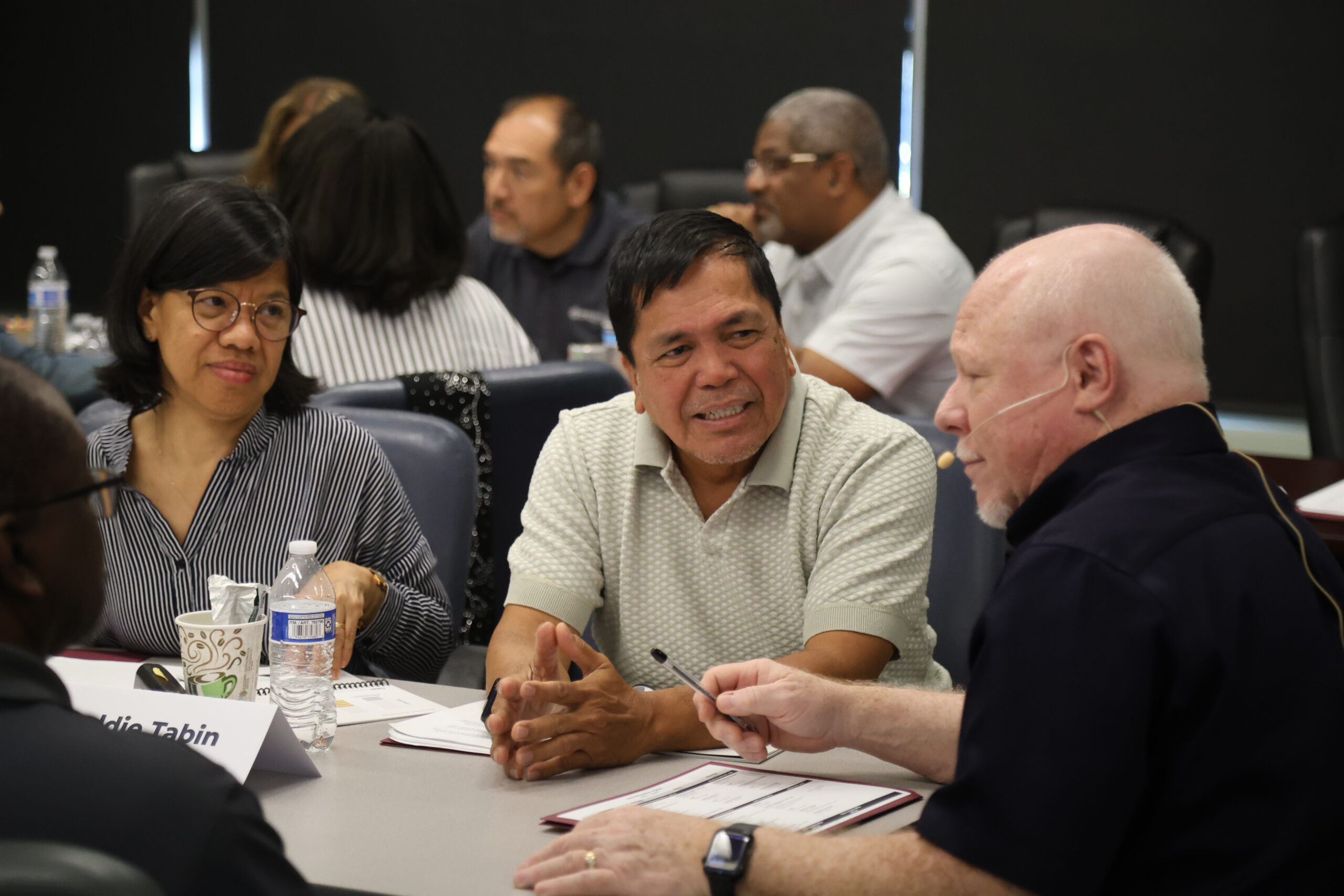
We were blessed this year to host forty of our pastors and spouses from across the nation at the Home Office in Charlotte for our two New Wineskins events. Eighteen pastors and spouses attended the first event, held on April 3–May 3, and 22 pastors and spouses attended our second event, held on June 5–7.

Here are a few comments we received during and after the events.

“I appreciated the emphasis on Healthy Pastor from the beginning and a support for our mental, emotional, and spiritual health.”

“I really appreciated this workshop of high support and high challenge! The high support of connecting and praying with other pastors and national leadership team was priceless.”


“I believe these trainings are valuable not only for the conferences but also for the opportunity to hear ideas about the various ways other leaders are moving their churches forward. I think these two factors are extremely important because the lives of pastors are somewhat isolated.”

“I am so thankful for the national team and the prayer and conversations that went into providing this learning space. Your efforts are not in vain and good things are happening by the power and presence of the Holy Spirit. Hallelujah!”


“I am starting a School of Prayer as part of the new wine for our congregation. We have not been a praying church, and it is time to start. I am excited to lead people into a new level of intimacy with their Savior.”

“Reflecting on our time together, I am filled with hope and excitement about the important lessons we have gathered. One of the most profound insights I have gained is our calling to continue shining brightly within our communities.”


“The need to cast off any lingering vestiges of a culture of pastor centric dependence.”

“This did not feel like another program, it felt more like a road-mapping session to see how we might intelligently navigate where the Father, Son, and Spirit are taking us.”

“The Father, Son, and Spirit have newness to pour into our denomination and our local congregations and we must set about the business of making room for this newness.”


2026 Denominational Celebration

The Denominational Celebration
will be held
in Dallas, Texas, U.S.
on
July 23-26, 2026.

Kingdom Living is participatory, relational, and missional.

Jesus said, “As the Father has sent me, I am sending you.” As citizens of the kingdom and co-laborers with Christ, we are sent into the world to reflect his light. Kingdom Living requires awareness of our calling and our context, seeing our neighborhoods, vocations, and even our sufferings as places where Jesus reigns and sends us.

Kingdom Living is not passive. it is a bold proclamation and a tangible demonstration. We not only speak of the reign of God, we show it. Our words align with our works. As image bearers, our relationships become a visible witness to the reality of the kingdom being ushered in.

During this gathering, we’ll explore what it means to live as kingdom people, active participants in God’s mission, deeply rooted in community, and shaped by the presence and authority of Jesus.

Registration information coming soon!

From Equipper—Parable of the Weeds

Join us! We invite you to read this article from Equipper.

Subscribe to Equipper today!


By Al Kurzawa, Pastor
Morwell and Seaford, Victoria, Australia

Did God leave us anything to do?

Have you ever volunteered and shown up to the job ready with gloves and tools in hand, only to find out that the work was already completed? You’ve set aside time to help only to be told to relax because everything is already done. The parable of the weeds (Matthew 13:24–30) and Jesus’ explanation of the parable (verses 36–43) can leave us feeling this way after our first read through. A quick recap shows who does all the action in this parable and it’s not us. We find Jesus has already sown the good seeds, the enemy has sown the weeds, the servants ask a couple of questions, and in the end the harvesters (the angels) collect the weeds at harvest and burn them. If we assume we are the good seeds, the people of the kingdom, we are left with only two passive things to do: shine like the sun and whoever has ears, let them hear. I guess we all got dressed up in our overalls for nothing!

In most of Jesus’ parables, there is an “aha!” moment after we have spent some time wrestling with it. Following some rough-and-tumble grappling, we find in this parable both the good news of the kingdom and a formidable and challenging opportunity for us as citizens of that kingdom. The good news is that the Son of Man has sown the good seed, and he has sown that good seed throughout the entire world.

Between the parable of the weeds and its explanation are the parables of the mustard seed and yeast that clue us in that the kingdom can seem small and hidden, but it is always growing and permeating the entire world. This is a good reminder that it is not for us to judge or decide who is or is not a citizen of the kingdom. The wheat and weeds are so similar and intertwined that we can do much damage if we try to make those judgements when God has told us he is the one that will take care of the sifting. We are to serve all our neighbors, all those we encounter, as good seed that has been sown by God. All humans are made in the image of God.

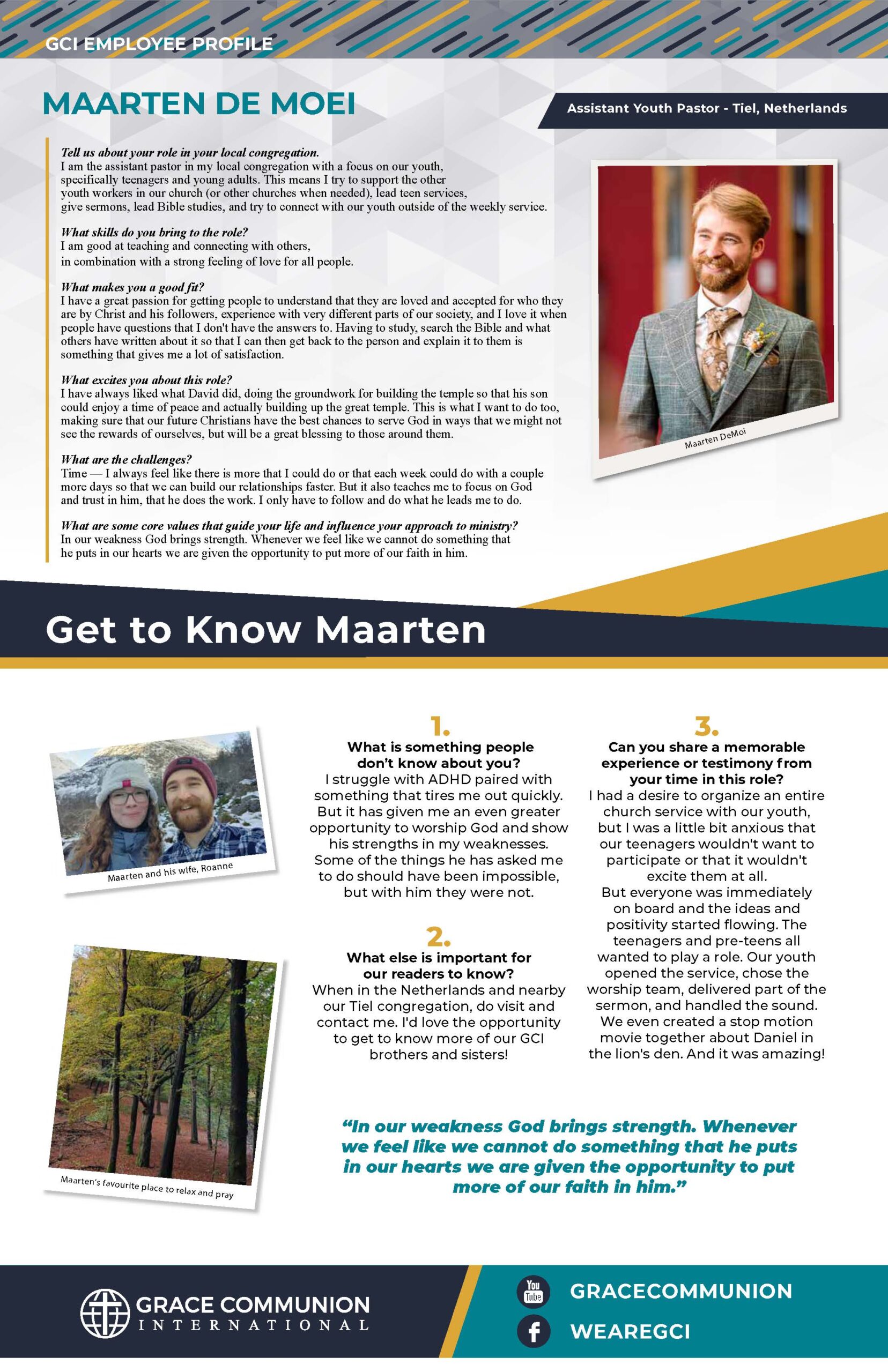
Meet Maarten de Moei

“In our weakness, God brings strength. Whenever we feel like we cannot do something that he puts in our hearts, we are given the opportunity to put more of our faith in him.”

Meet Assistant Youth Pastor Maarten de Moei. From Tiel, Netherlands, Maarten has a heart for youth ministry and passion for making God’s love shine through his service.

Read his GCI profile here.


Kingdom Citizens’ Toolbox—Emphasize Worship

Citizens of God’s kingdom understand the importance of worship. We believe worship includes singing and praise, but it is also a practice that involves our whole lives.

I appeal to you therefore, brothers and sisters, on the basis of God’s mercy, to present your bodies as a living sacrifice, holy and acceptable to God, which is your reasonable act of worship. Romans 12:1

We invite you to read below the conclusion of a free resource from Grace Communion Seminary (GCS), What Is Worship? A Survey of the Bible.

And check out these GCI worship resources.


Let’s conclude with a simple test that encapsulates some of the major themes of worship. To analyze a worship practice, we need to ask these questions:

    • Does it glorify God? That is one major purpose of worship.
    • Does it build up the body of Christ? That is another major purpose.
    • Does it help us be what God wants us to be in the world? Does it have practical results in our lives?

Of course, no matter how carefully planned and carried out, our worship is never perfect. This is due largely to the fact that our lives are imperfect. We try to be living sacrifices for God, but we don’t always do that right. As some have said, the problem with living sacrifices is that they keep crawling off of the altar. Like the people of ancient Israel, our lives are mixed with sin.

We do not have the faith that we’d like to have. We do not have as much love as we’d like to have. We do not pray as well as we wish we could. Our songs do not express our emotions as well as we’d like. We would like to present our king with sparkling jewels, but we have only plastic trinkets to give!

How do we face our shortcomings in worship? We respond in the same way that we respond for other areas of failure: we look to Jesus. He has offered the perfect sacrifice for all of us; he has given his life to God as an act of worship for all humanity. He is our substitute — this is what theologians mean by a vicarious sacrifice. What he did counts for us. He had no sins of his own, and yet he gave himself as a sacrifice for sin — our sins.

Many Christians realize that Jesus was our substitute when it comes to sacrifice. “Christ died for us” is part of the New Testament message. He has given the worship that we could not. But Jesus is our substitute in other ways, too, because our lives are hidden in him (Colossians 3:2), and he lives in us (Galatians 2:20). The prayers that we offer are not perfect, but we pray in Christ’s name, and he intercedes for us. He takes our defective prayers, removes the parts where we ask amiss, adds the details that we have neglected, and offers those prayers to God as perfect worship.

Because Jesus Christ is our representative, he offers perfect worship on our behalf, and our role is to join him in what he is already doing for us. Whether it is sacrifice, prayer, study, or response, he has already been there and done that for us. The worship he gives to God is a vicarious worship, done for us, on our behalf.

We do our best to “get it right,” but part of being “right” is admitting that we aren’t always right (1 John 1:8). So, the last word on worship is that we must look to Jesus as the one who is doing it right for us, and he invites us to join in what he is doing.

By Michael Morrison
GCS President