GCI Update
Connecting Members & Friends of GCI
Header Banner

Meet Diana Mayhew

“I have learned what the Holy Spirit’s voice sounds like within my being and know that listening to it (even when—and especially when—it’s very hard) is the only thing that brings God’s peace that surpasses all understanding.” –Diana Mayhew

Check out this month’s GCI profile to get to know Diana Mayhew, Member and Donor Services Representative.

To read her full profile, click the image below. #WeAreGCI


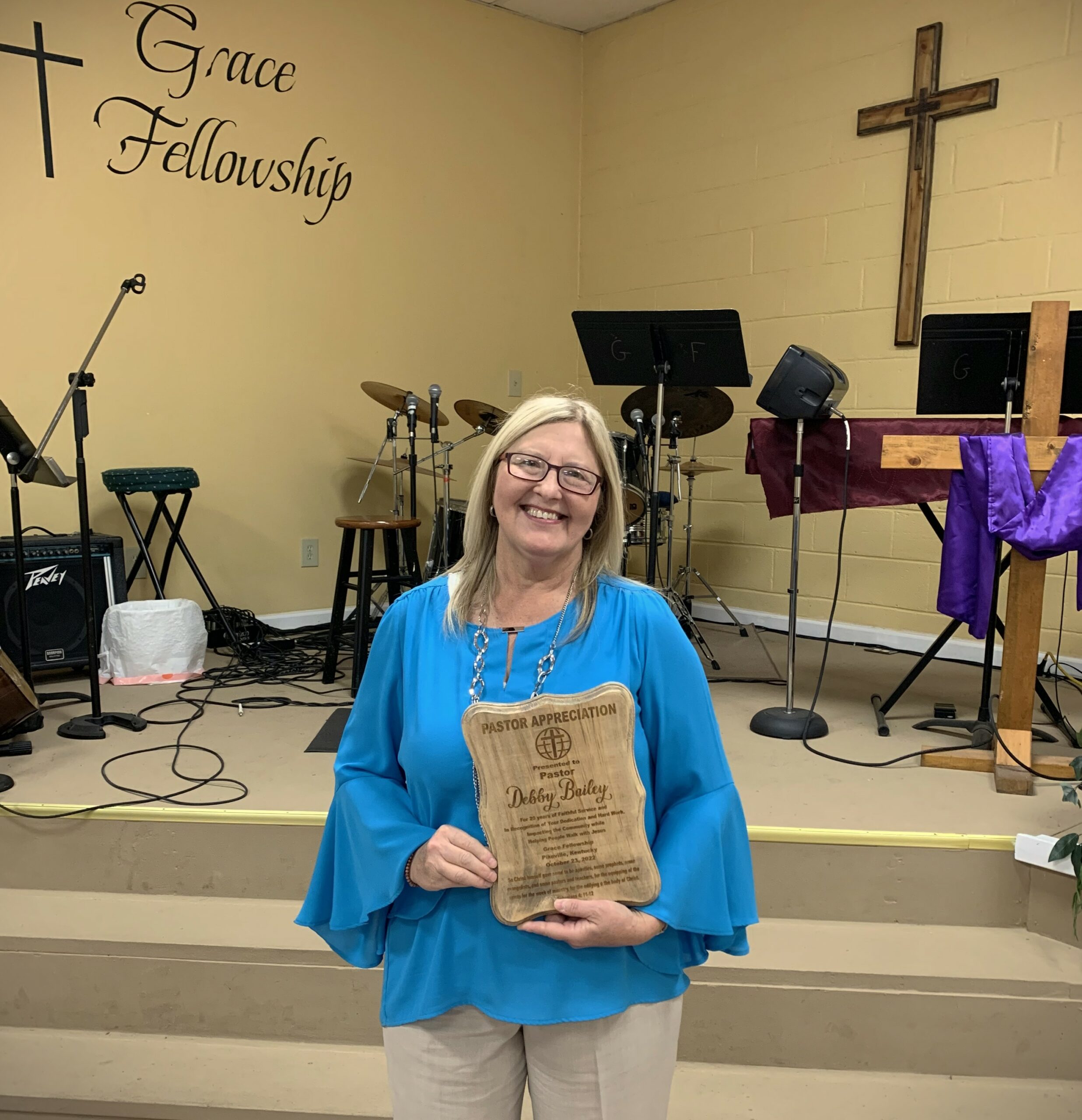
Celebrate Debby Bailey

Today is International Women’s Day, and we’re grateful for all the women in this fellowship. We mark this day by remembering when GCI officially recognized the gifts and calling of women as elders in 2007. We can celebrate this, while also acknowledging the struggle women have faced and at times, still face because bias and resistance toward women in leadership has not yet been fully rooted out and healed.

To honor this day, we celebrate Debby Bailey and what she represents as the first woman ordained as an elder in GCI. We asked her to share her story.


August will make 21 years I have served in a pastoral role. In my wildest dreams, I never imagined this being part of my journey. A friend had a dream in which she saw me standing in front of the congregation as pastor. I didn’t know any females in that role in our denomination. Yet, as crazy as it sounded, something resonated within me. Five years later, our congregation worked with our regional director to form a pastoral team, which included me, to lead the church. The Holy Spirit had been preparing me.

Both the congregation and I struggled with the role. A female pastor was new ground. I kept asking myself if a woman should be a pastor and then pondered whether God would open the door if it was wrong. I didn’t give a sermon for a year, until I had to as part of a preaching class led by my regional support. Unfortunately, after that sermon, a couple left the church. The wife, a friend, said she didn’t believe a woman should be preaching. Our advisory council then recommended that I shouldn’t be on the speaking schedule.

After three years, the church assessed if the pastoral team was how we would continue. I felt the Holy Spirit leading me to take a stand. I would only be considered for the pastoral team if I could function fully like the other team members—which included speaking. The congregation accepted this decision.

Over the years, I have experienced hurt and disappointment but also a lot of joy. There were many days I wanted to walk away, but every time God stepped in and made it clear I was to stay. I had the privilege of being the first female ordained as an elder in GCI. I was commissioned by Regional Director Rick Shallenberger as lead pastor in 2021. Serving as a pastor has been the most difficult, exciting, and rewarding experience of my life. Now I can’t imagine pastoring not being part of my journey.

By Debbie Bailey
Pastor, Pikeville, KY, US

Devotional—How Language Puts God in a Box

Language is subject to cultural influence, and if you’ve ever studied the origins of words, you know how culture and technology have changed our language. If we would’ve told our grandparents thirty or more years ago that we would “google” the weather forecast, they wouldn’t have known what we were talking about. Culture also affects the language we use in Christianity, which shapes our experience and perception of God.

Many Christians only talk about God using masculine terms or father metaphors, as if this is the only acceptable symbol or picture of God, rather than a reflection of the ancient patriarchal culture of the biblical writers. But Scripture provides us with a diversity of images: masculine, feminine, and non-gendered images.

Deuteronomy 32:18: “You were unmindful of the Rock that bore you; you forgot the God who gave you birth.” [Rock and Laboring Mother]

Psalm 27:1: “The Lord is my light and my salvation; whom shall I fear?” [Light]

Isaiah 66:13: “As a mother comforts her child, so I will comfort you; you shall be comforted in Jerusalem.” [Mother]

When we exclusively use male-gendered metaphors for God, it’s easy to assume God exists as a gendered being. But John 4:24 tells us “God is Spirit,” and spirit doesn’t have a gender.

Consider biblical examples where Jesus disrupts gender norms, especially in his actions toward women and children. Jesus came to break down the cultural norms of his day that boxed God into the patriarchal system that marginalized non-Jews, women, and children. By expanding the language we use to think about God, we can grow into the awe and mystery of being in relationship with our Father/Mother God, Jesus, and the Holy Spirit.

Prayer
Light of Life and lover of our souls, expand our hearts’ ability to see your love and care in new and meaningful ways. Amen.

By Nan Kuhlman
Monrovia, CA, US


Note: In GCI, we normally call God “Father” because that is the way Jesus taught us to pray, and the name by which he told us to baptize. Some people misunderstand, and think that the term indicates God’s gender, but it does not. God has roles similar to a human father, similar to a mother, similar to a shepherd, and similar to a king, but God cannot be equated with any of those terms. We continue to use the terminology Jesus gave us and seek to help people understand what the term does and does not mean.


Equipping the Saints

Greg and Susan Williams

Dear GCI Family and Friends,

Let’s begin this Update letter with a scriptural passage.

Now these are the gifts Christ gave to the church: the apostles, the prophets, the evangelists, and the pastors and teachers. Their responsibility is to equip God’s people to do his work and build up the church, the body of Christ. This will continue until we all come to such unity in our faith and knowledge of God’s Son that we will be mature in the Lord, measuring up to the full and complete standard of Christ. (Ephesians 4:11-13 NLT)

The various church offices are a gift that Jesus himself, through the work of the Spirit, gave to the church. Note what the Commentary Critical and Explanatory on the Whole Bible says about church leadership:

As the apostles, prophets, and evangelists were special and extraordinary ministers, so “pastors and teachers” are the ordinary stated ministers of a particular flock, including, probably, the bishops, presbyters, and deacons. Evangelists were itinerant preachers like our missionaries, as Philip the deacon (Acts 21:8); as contrasted with stationary “pastors and teachers” (2 Timothy 4:5). [Typically] The evangelist founded the Church; the teacher built it up in the faith already received. The “pastor” had the outward rule and guidance of the Church. The bishop had regional oversight with a group of churches.

This is a general explanation of church polity, an overview of the offices and operations of the church. (GCI uses the title regional director rather than bishop.) Our specific purpose for this article is found in verse 12. The primary responsibility of all church leadership is “to equip God’s people to do his work and build up the church, the body of Christ.” This equipping is careful preparation for the followers of Christ to recognize and understand how they fit and how they participate with Jesus through the community of the church.