GCI Update
Connecting Members & Friends of GCI
Header Banner

Resurrection Sunday

GCI President Greg Williams invites us to celebrate Resurrection Sunday with a reflection on John 20:1-18. We see the risen Jesus through the eyes of Mary, Peter, and John, and discover how his resurrection transforms fear into faith, sorrow into joy, and brings lasting hope in Christ.

Program Transcript


Resurrection Sunday

Greetings Church!

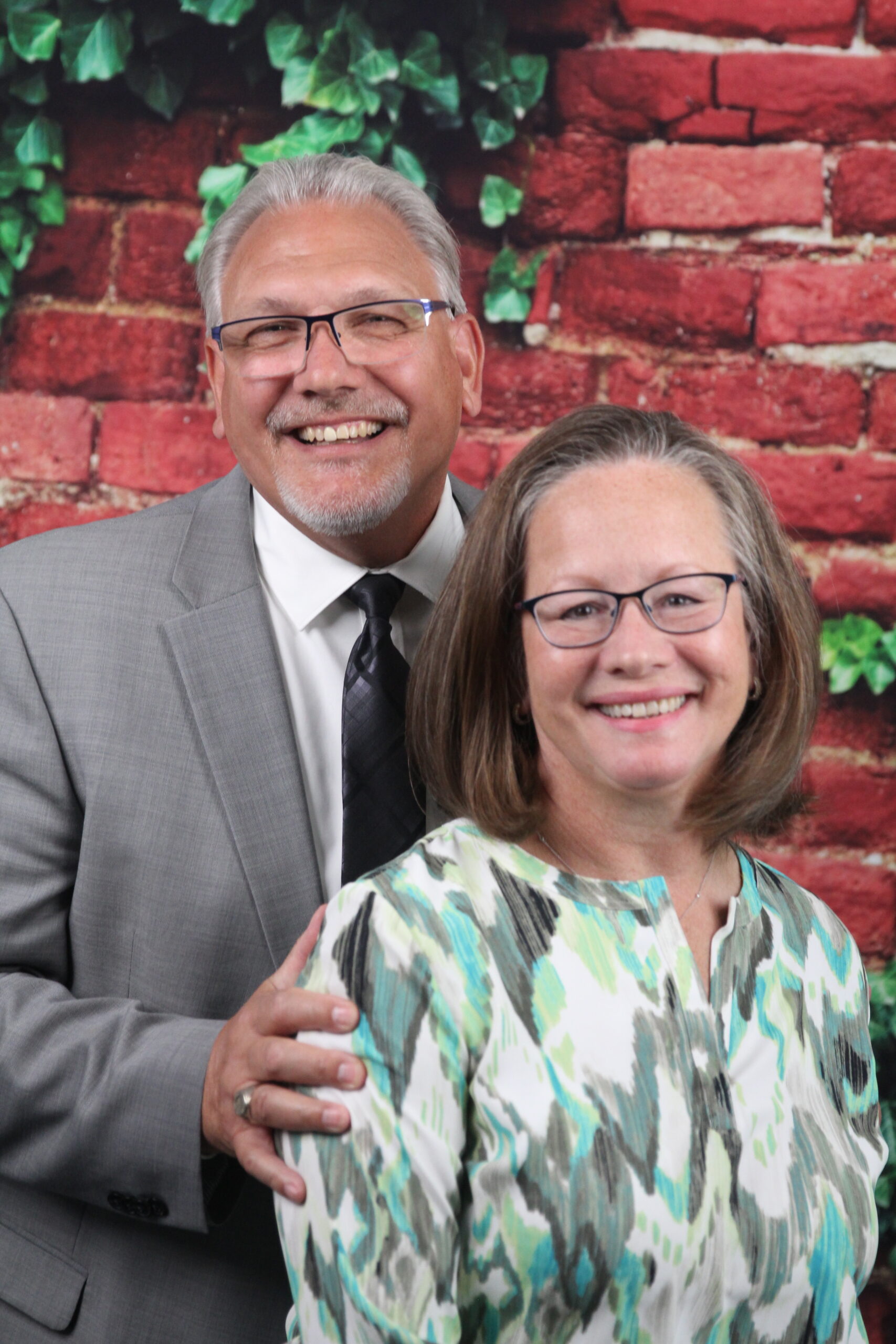
Susan and I are grateful to be coming to you this Easter Season. As we rehearse the activities and events that make up the Passion Week we are overwhelmed with emotion and curiosity.

Today in preparation for our remembrance of these transformational events, we get to travel back in our minds to the original Resurrection Sunday. This story is recorded in John’s Gospel 20:1-18. The story speaks for itself, so without commentary allow me to read the passage and let these words wash over you as Susan reads the passage.

1 Early on the first day of the week, while it was still dark, Mary Magdalene came to the tomb and saw that the stone had been removed from the tomb. 2 So she ran and went to Simon Peter and the other disciple, the one whom Jesus loved, and said to them, ‘They have taken the Lord out of the tomb, and we do not know where they have laid him.’ 3 Then Peter and the other disciple set out and went towards the tomb. 4 The two were running together, but the other disciple outran Peter and reached the tomb first. 5 He bent down to look in and saw the linen wrappings lying there, but he did not go in. 6 Then Simon Peter came, following him, and went into the tomb. He saw the linen wrappings lying there, 7 and the cloth that had been on Jesus’ head, not lying with the linen wrappings but rolled up in a place by itself. 8 Then the other disciple, who reached the tomb first, also went in, and he saw and believed; 9 for as yet they did not understand the scripture, that he must rise from the dead. 10 Then the disciples returned to their homes.

11 But Mary stood weeping outside the tomb. As she wept, she bent over to look[a] into the tomb; 12 and she saw two angels in white, sitting where the body of Jesus had been lying, one at the head and the other at the feet. 13 They said to her, ‘Woman, why are you weeping?’ She said to them, ‘They have taken away my Lord, and I do not know where they have laid him.’ 14 When she had said this, she turned round and saw Jesus standing there, but she did not know that it was Jesus. 15 Jesus said to her, ‘Woman, why are you weeping? For whom are you looking?’ Supposing him to be the gardener, she said to him, ‘Sir, if you have carried him away, tell me where you have laid him, and I will take him away.’ 16 Jesus said to her, ‘Mary!’ She turned and said to him in Hebrew, ‘Rabbouni!’ (which means Teacher). 17 Jesus said to her, ‘Do not hold on to me, because I have not yet ascended to the Father. But go to my brothers and say to them, “I am ascending to my Father and your Father, to my God and your God.”’ 18 Mary Magdalene went and announced to the disciples, ‘I have seen the Lord’; and she told them that he had said these things to her.
John 20:1-18

Thank you, Susan.

You’re welcome.

What do we learn from this Sunday morning almost 2,000 years ago?

We are witnesses to the faith and courage of Mary Magdelene. Her understanding of the reality of what has happened unfolds in stages. And even when Jesus appears to her and engages her, she doesn’t recognize him. C.S. Lewis interjects the idea that you can’t see anything properly while your eyes are blurred with tears.

It is notable that Jesus first appears to Mary (keep in mind that John, Peter and the others are back in the cover and safety of the private home). Jesus demonstrated his regard and value for Mary, and as an extension to women in general.

We get a snapshot of the personalities of John and Peter. We discover that John is a faster runner than Peter. Their almost simultaneous arrival at the tomb shows two contrasting approaches. John has a “stop – observe – reflect” approach. Whereas Peter has a “go forward – hands-on – experiential” approach. Either way, they both were overwhelmed by the evidence of the missing body of Jesus.

I wonder if the earlier teaching of Jesus when he said, “If you destroy this temple, I will raise it up in three days” was resonating in their memories? Were the pieces of the puzzle beginning to fit together? We know their understanding became real as the resurrected Jesus came to where they were in the house.

For the disciples, this original Resurrection Sunday had a backdrop of fear and mystery. Fear that this ministry ride with Jesus was over. What are they to do now?

Fear that the fervor from the Jewish leaders and the Roman soldiers doing their bidding may be coming to round them up and raise them on a cross of death.

Mystery in that they had resisted the preparatory teachings of Jesus that he would be raised up and killed, but that wasn’t the end.

In fact, that through his death and resurrection there was going to be a glorious new beginning.

What fears and mysteries do you and I face? We are not unlike Mary, Peter, and John. Our engagement with Jesus happens in stages of understanding, growth and reliance as well.

The celebration and recounting of Resurrection Sunday should quell our fears and provide answers to the question, “Who is Jesus?” He is the only begotten Son sent by the Father. The one who overcame sin and death for all humanity. This day declares his bodily resurrection, that he is firstborn of all creation, and glorified by the Father. Hallelujah!   

Our fears and doubts get swallowed up in Jesus. Our tears of anxiety and distraught become tears of joy. Jesus truly is the pioneer of our salvation and today we declare He is Risen, and we respond, “He is Risen Indeed!”

May the joy of Christ’s resurrection fill your hearts and homes this Easter. As you celebrate with loved ones, may you be reminded of the hope we have in Him—the hope that transforms fear into faith, sorrow into joy, and death into life. May the peace of the Risen Lord be with you now and always. Amen.

You’re Invited—LiLY Women’s Conference

REGISTRATION IS NOW OPEN!

2025 LiLY Women’s Conference
April 25-27, 2025
Embassy Suites in Independence, Ohio (in person)

Rose Hamrick, Shenequa Rogers, Salisa Bruce, Julie Frantz, Tanazia Morris, Robyn Dykstra 2024

Theme: As He Has Forgiven You

Be kind and compassionate to one another, forgiving each other, just as in Christ God forgave you. Ephesians 4:32 (NIV)

We have an amazing keynote speaker, Tess Scott, who has a special message for you. You can listen here.

There will be a Teen Session this year. Make sure to spread the word!


Registration Fee:

      • $75 Early Bird Pricing — Register by Friday, April 4, 2025
      • $85 Regular Pricing — Register by Friday, April 13, 2025
      • $95 Late Registration — After April 13, 2025
      • $50 Special Teen Rate — Ages 13-17

Online registration ends on April 13, 2025.

Hotel Reservation/Cost:

Embassy Suites, 5800 Rockside Woods Blvd. Independence, Ohio

Overnight hotel rate: $132 per night, per suite, 4-person room
(Total with tax is $310.20 ­­­­­­for both nights. Breakfast and manager’s reception is included for hotel guests only.)

Click here to make your reservation online.

Group Name: LiLY Women’s Conference
Group Code: LW5
Central Reservations Number: 1-866-344-7548
Deadline for hotel reservations at the special rate is Friday, April 4, 2025.
Register today online at gccle.church/lily


If not registering online, mail your registration fee with checks payable to:
Grace Communion Cleveland
4499 Canterbury Road
North Olmsted, Ohio 44070

(Please include your name, address, phone number, emergency contact name and address, and if you are staying for Saturday night dinner)

If you have any questions, please email us at: LiLYwomensministry@gmail.com

Rosa Hulse
Women’s Ministry Leader
Grace Communion Cleveland

Like/Follow us on Facebook at LiLYWomensConference.

Memorial for Mike Swagerty

Longtime pastor, Mike Swagerty, of California, U.S., died on Friday, February 7, 2025. Join us in holding his wife, Sandy, in our prayers. Pastor Kairis Chiaji of GC Sacramento shared the following invitation.


Remembering Pastor Mike

In loving memory of Michael V. Swagerty, you are invited to celebrate the legacy of a life well lived along with his family, friends, and global cohort.

Saturday, April 5, 2025 @ 1pm PDT

In-person:
Lakewood Memorial Park and Funeral Home
900 Santa Fe Avenue, Hughson, CA 95326

Virtual:
Zoom Link
Passcode: 640680

Kingdom Citizens’ Toolbox—Enter the Kingdom

Citizens of God’s kingdom look to Jesus’ teaching to understand kingdom living. What did Jesus say about entering the kingdom?

We invite you to read the following excerpt from a 3-part series, “What Did Jesus Teach.” Read the full article here.


“The tax collectors and the prostitutes are going into the kingdom of God ahead of you,” Jesus told the priests and elders (Matthew 21:31). How were they going in? By believing Jesus’ words about righteousness and repentance (verse 32) and by doing what God wants (verses 28-31). People enter the kingdom by repenting and believing the gospel.

We must “receive the kingdom,” Jesus said (Luke 18:17). He talked about how hard it was for rich people to “enter the kingdom” (verse 24). The disciples then asked, “Then who can be saved?” (verse 26). Here, we see several phrases used to indicate the same thing: receive the kingdom, enter the kingdom, be saved. These are different ways of talking about the same thing.

Jesus did not preach much about the details of the future kingdom. Rather, he preached about the way citizens of his kingdom can live and think in this age. He told us how our sins are forgiven. He told us to repent and believe the gospel. His disciples preached the same (Luke 9:6; Mark 6:12).

The kingdom of God is here, Jesus said. It begins right now. In the future the kingdom will have great glory — God will see to that. There will be fabulous future rewards, but the question that Jesus brings is, are we willing to be in the kingdom right now?

Right now, the kingdom is small (Matthew 13:31-33). Currently, the kingdom has both good and bad in it (verses 24-30). The kingdom is waiting for growth (Mark 4:26-29). Eventually, the kingdom will come in power, but now, it is small. The good news is that we can enter it.

Some Pharisees asked Jesus when the kingdom would come (Luke 17:20). He replied that the kingdom already existed in their midst (verse 21). But they could not yet see it. The kingdom will eventually be seen by everyone, but the King had to suffer and die first (verses 22-25).

Jesus also told the Pharisees, “If it is by the Spirit of God that I cast out demons, then the kingdom of God has come to you” (Matthew 12:28, Luke 11:20). The kingdom is here, he said, and the proof is in the power. The kingdom of God is demonstrating its authority over Satan’s rule — and this proof continues in the church today. Just as the kingdom could be seen in the ministry of Jesus, it is seen in the ministry of his church, too. Jesus predicted that his followers would do even greater works than he did (John 14:12). The kingdom is growing.

The kingdom of God is here, Jesus said. People did not need to wait for a conquering Messiah. God is already ruling, and we turn our hearts toward him now. The kingdom announcement demands a decision. It is a call to action. We do not need to wait — there are things to be done right now.

The good news about the kingdom is not just that it is near — it is that we can be part of it. Nearness is not good news if we miss out! Our sins would disqualify us, but in Jesus our sins are forgiven. We can believe in Jesus and turn toward God. We can be in the kingdom of God forever, and that is wonderfully good news!

Michael Morrison, GCS President
Glendora, CA, US

Kingdom Living—Joining God’s Mission

In February, a three-day transformative leadership gathering was held in Tegucigalpa, Honduras. Pastor Mauricio Diaz Burdett, our leadership team, and I hosted the gathering, titled “The Relational God and His Mission.” Pastor Marco Mejia, of the San Pedro Sula Honduras congregation, attended with 11 ministry leaders. One of our leaders from the fellowship group in El Salvador also joined us. We all came together in an atmosphere of deep reflection and spiritual growth, guided by the inspiring presentations of President Greg Williams and Pastor Heber Ticas, Superintendent for Latin America.

During the sessions, Greg Williams introduced the concept of the 5 D’s (Disruption, Discovery, Death, Design, Deploy) as experienced by the early church in the book of Acts, highlighting the transformative process within the first Christian community. He encouraged attendees to join the harmonious flow of the triune God. He reflected on Jesus’ movement towards us and through us by Jesus’ ministry of faith, hope, and love.

Additionally, he presented GCI’s vision and the path forward, reminding everyone of the building blocks toward Healthy Church and that the church’s fundamental mission is to be the healthiest expression of the Church of Jesus Christ that we can be.

Pastor Heber Ticas provided a valuable perspective on building a church MAP around the concept of the 5 D’s and how it relates to our local church’s movement toward Healthy Church. He also delivered profound teachings on faith, hope, and love, and their biblical and theological foundation that informs the practice of our ministry Avenues. He focused on building bridges between our current environments into a missional participation environment by identifying our focus group and developing a missional heart.

His presentation challenged all of us to activate our missional movements in a strategic manner. The Avenue champions from the Tegucigalpa congregation and their teams had the opportunity to reflect and map out a better path forward for each Avenue based on the teachings we received and the customized consulting that was provided by Greg and Heber.

The gathering culminated in an inspiring Sunday worship service attended by 98 participants, where Greg reaffirmed GCI’s commitment to being a healthy, Christ-centered church. The fellowship among attendees and the shared passion for the gospel left a lasting impact, reinforcing the importance of continuing to grow in faith and in our missional calling.

This gathering not only strengthened GCI’s vision in Honduras and El Salvador but also renewed each congregation’s commitment to moving forward in God’s calling and purpose for our church.

Joel Aleman, Associate Pastor
Tegucigalpa, Honduras

Devotional—King of the Feast

In Jerusalem, the LORD of Heaven’s Armies
will spread a wonderful feast
for all the people of the world.

It will be a delicious banquet
with clear, well-aged wine and choice meat.

There he will remove the cloud of gloom,
the shadow of death that hangs over the earth.

He will swallow up death forever!
The Sovereign LORD will wipe away all tears.

He will remove forever all insults and mockery
against his land and people.

The LORD has spoken! Isaiah 25:6-8 NLT

Throughout history, a king coming to town is momentous. From a villager’s point of view, a king and his army coming to town is bad news. Your family’s storehouses would be raided to feed his soldiers. They might butcher your livestock for meat or even consume next year’s seed corn. This could easily be a disaster for you and your village.

Isaiah dreams of a King who flips that script. Instead of taking your wealth and ruining your future, this King blesses us with plenty. He gives instead of taking. He fills our lives with the very best, out of his abundance, at no cost to us. Our King honors us with a royal banquet and spares no expense in enriching our lives. Our future with him is one of celebration, not sorrow.

We who are enlisted in his service and enlivened by his love look to his lead. When we “come to town,” we can be his agents in announcing and enacting a kingdom that is like this King.

Prayer:
Lord, may we find an end to our want and our loss in the abundance of your love. Meet us at your table of mercy. May we be quick to rejoice in your goodness and live out your good news for the sake of our communities!

Matt Royal, Church Plant Team Member
Durham, NC, US

Lessons of Leadership

Greg and Susan Williams

Dear GCI Family and Friends,

I am pleased to have Kalengule Kaoma (KK), GCI Superintendent for Africa, write the letter for this edition of Update. We have more GCI members in Africa than any other continent and the work of preparing, recognizing, and launching new leaders is important for the present work and future growth that we anticipate. KK has done intentional work alongside his four regional directors, who have also been integral in helping to establish national directors who have direct impact on our wide array of pastors. This multiplication and empowerment of leaders is the groundwork that’s needed to have the capacity to receive those whom the Lord calls. Our prayers go up for Jesus to bless this group of newly appointed leaders.


In GCI across Africa, we are faced with several opportunities to transition our leaders. These opportunities are available on congregational and regional levels. As a result, we have experienced several transitions in the last twelve months.

Dictionaries indicate that transition refers to a process of change. In this article, I limit transition to change of leaders in congregational and or regional offices.

The reason for transitioning leaders has mostly been age-related. Most of our leaders who have transitioned out of their offices are at least 70 years of age. Energy levels, mobility, health, length of service, availability, and travel demands also contributed to decisions leading to transitions.

Benefits of timely transitions

Our leaders who have served the Lord for a long time have accumulated vast experiences, knowledge, and maturity. These traits must be passed on to younger leaders. Transitions are like a relay race. The oncoming runner passes the baton to the next runner who takes off at greater speed. But the runner who brought the baton runs on for some distance. In effect, the two runners run together for a while. This effectively provides support to the runner who has picked up the baton.

In our leadership transitions, experienced leaders have the opportunity to come beside the new leaders. Experienced leaders give support, counsel, guidance, and answers to what may seem like new, perplexing, and challenging situations that arise while the new leaders are adjusting to their roles. In executing the process of transition, we have drawn from biblical narratives because we desired smooth transitions.

Share Your Experiences

Would you help us highlight our 2025 theme, Kingdom Culture?

Learn more about the kingdom in this GCI Buzz.

Even though we live in the tension of the “already but not yet” — signifying that the kingdom is here now, but not in its fullness — we want to embrace the “nowness” of the kingdom. We want to demonstrate the goodness of Jesus as we bear fruit in every good work. We want to proclaim the goodness of Jesus as we point others toward Him in all opportunities.

Through Update, we want to stay connected as a global family and learn from one another. Would you be willing to help us? Send us your pictures and stories of how your congregation is collectively living as citizens of the kingdom! Email elizabeth.mullins@gci.org