Sonia Orozco, GCI’s pastor in Barranquilla, Colombia, recently led an outreach event in the neighborhood where her church meets. The event included food, singing, dancing, poetry and performances from the children—multiple ways to share God’s love for all people. Here are some pictures:
Parents and children’s ministers will find helpful the video embedded below, in which Paul Tripp offers some helpful insights concerning raising Kingdom-minded children.
Surgay is now in a nursing home in Minot, North Dakota. Though he still can’t move his legs or sit up, he is alert and trying to eat more solid food. They are giving him more physical therapy, although it is difficult for Surgay to sit and stand.
Understandably, Surgay’s wife Jan is quite concerned about Surgay and about their farm. Their son Surgay, Jr., is doing his best to sell their farm products so that expenses can be covered.
Please continue to pray for Surgay’s healing, for Jan and for the farm.
Commenting on the differences between men and women, comedian Pam Stone noted that, “Men and women have always had problems relating. As children, men were told, ‘Be a man; don’t cry!’ And women were told, ‘Let it out. Cry; you’ll feel better!’” Then she concluded, “And that is why women become emotional and men become snipers!”
Funny, yes; but also a reminder of a growing “Wild Wild West” culture within America where violence is rampant.
As an officer in the U.S. Army and a professor of psychology at West Point, Dr. David Grossman spent nearly a quarter of a century teaching soldiers how to kill. In his book On Killing: The Psychological Cost of Learning to Kill in War and Society, he noted that most soldiers have a built-in inhibition against killing and thus must be taught to kill. Following the Civil War battle of Gettysburg, 90% of the guns retrieved had not been fired. Soldiers on both sides were willing to die for their beliefs but not kill for them. Dr. Grossman’s job was to break down such inhibitions. Today, U.S. troops have a 90% kill rate. However, Dr. Grossman pointed out that if you use these psychological techniques to train men and women to kill, you must also build in internal restraints.
Sadly, such restraints are often lacking in our world, where violence reflects a shocking lack of respect for others. What is needed is an internal moral compass based on an understanding that human existence is contingent upon the life that flows to us from God through Christ. That truth leads us to understand that we are answerable to God who created us. As the Bible teaches, “The fear of the Lord is the beginning of wisdom, and knowledge of the Holy One is understanding” (Proverbs 9:10 NKJV).
Nevertheless, “macho-man” voices within some Christian circles decry what they see as the “feminization” of our culture. One such teacher, who is famous for proclaiming, “God hates you!” fears that both the dominant culture and the church are becoming feminized. He calls for macho, “manly men” to rise up and assert leadership.
It seems that some evangelical Christians like to think of Jesus as the ultimate “alpha male.” They ridicule images of Jesus that show any hint of “wimpiness.” But Jesus was not afraid to show compassion. On one occasion, he said that he felt like a “mother hen” in his desire to gather sinners to himself (Luke 13:34).
We must be careful not to build a one-dimensional picture of Jesus. He had a godly sensitivity that the church should exemplify. The church is, after all, pictured as the bride of Christ—not his hunting companion or golf partner.
Jesus was clear concerning the approach to leadership that he expected from his followers: “You know that the rulers of the Gentiles lord it over them, and those who are great exercise authority over them. Yet it shall not be so among you…” (Matthew 20:25-26 NKJV).
Bullying, fighting and killing are not among the spiritual gifts listed in Scripture. If compassion, gentleness and concern for others are perceived as feminization, then let’s have more of it! Of course, these characteristics are neither exclusively masculine nor feminine, but come from God and so are expressed in the life of the man Jesus.
I pray that the Holy Spirit will help us follow our Lord in this area.
I am reminded of my mom’s favorite proverb, “A soft answer turns away wrath” (Proverbs 15:1 NKJV). She taught me this at an early age, and I was a firsthand witness to her ability to deliver soft answers. I confess that I have not always followed her example, but I have learned that it is a blessing to interact with humility, consideration, grace and gratitude. The way of Jesus gives tremendous peace of mind.
This reminds me of the story of Abigail. Her ungracious, inconsiderate and vain husband, Nabal, had refused food for David and his men and sent them away (1 Samuel 25:4-12). One of Nabal’s assistants reported this incident to Abigail. He said that Nabal had “reviled them” (verse 14 NKJV). Apparently, David was not in a gracious mood either because he gathered 400 of his men, and set out to “persuade” Nabal to rethink his response. Abigail must have known the wisdom of the proverb, because she went to intercept David. Her soft answer turned away the wrath that David had toward Nabal (verses 18-35).
I don’t think anyone could have accused Paul of being a wimp. He lived, as we do, in a time when aggression and violence were part of daily life. Thus we who serve as elders need to give careful heed to Paul’s instruction that church overseers be “not a bully but gentle, not quarrelsome, not greedy” (1 Timothy 3:3, HCSB). This strength of character comes from our Lord Jesus Christ, who in loving compassion gave his life for us and continues to serve us.
We are saddened to learn from Canadian National Board member Gerry Sinkler that his wife Maria passed away on September 30. Here is Gerry’s note (and click here for his earlier report).
Maria with her oldest brother Gerry Kosior
It is with a heavy heart that I must tell you that Maria passed away peacefully at 1:20 this morning. I was staying with her overnight so she was not alone.
Maria’s condition had deteriorated, and she was unresponsive for most of the last two days. Throughout the previous day, almost all of her close friends were able to stop by and see her.
Maria was originally diagnosed with breast cancer in June 2010. Since then the cancer spread to her bones and liver. She was admitted to the Cross Cancer Institute on September 20th for treatment of her high calcium levels. Her condition gradually deteriorated while in hospital.
Though she suffered great pain at times, she still tried to do as much as possible, and enjoy life. She was still able to get around with the aid of her cane, a walker, and Brianna and me.
Two weeks ago, we attended a performance of the Edmonton Symphony together, and for a brief moment it was like old times; we were out on a date together, enjoying the show, with no pain and no worries.
Maria and I were married just over 25 years—our 25th anniversary was on September 27th.
Thank you all for your support and prayers during this time,
Gerry Sinkler
Maria was 51 years old at the time of death. In addition to her husband Gerry Sinkler, she is survived by her daughter Brianna Sinkler; brothers: Gerry (Karen) Kosior, Chris Kosior, and Daniel Kosior; sister Rita (Mike) Barnes, nephews: Jovon, Jeremy and Jack; nieces: Simone and Lindsey, as well as numerous other family and friends. She was predeceased by her parents John and Olive Kosior (Mikulin), and brother James Kosior. Maria’s memorial service will be held on October 5. Cards may be sent to:
Gerry Sinkler
13 Emery Ct
St Albert, AB T8N 5T3
CANADA
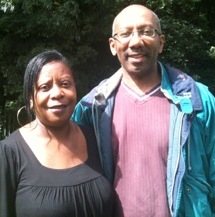
David Gibbs, pastor of GCI’s Birmingham, England church and his wife, Alberta, attended the same school as they grew up. David was a year ahead and in the same class as Alberta’s sister. But Alberta won his heart and in November 2011 they celebrated their 25th anniversary.
David and Alberta have a passion for children. Not only do they have two children, Sarah and Michael, but also for the past five years, they have served as Foster Carers (Parents) looking after very young children until the children are adopted or go back to their birth parents. They’ve had their share of tragedies along the way. “Some of the hardest times in our lives were suffering four miscarriages, two before Sarah was born, and two more before Michael.”
Though both of David’s parents are Jamaican, David was born and raised in the same town he now serves as pastor. Still, his Jamaican heritage was a major influence in his life, often encouraged by his grandparents. “One of my rich experiences growing up was having my paternal grandparents live with us for many years.”
David did well in school, but preferred sports to study. He did well enough to go through college and to this day David still loves to learn. And he has always enjoyed reading.
David’s family started attending WCG when he was about 13 years old. The family had attended a Baptist church and several Pentecostal churches. “Then my Dad started to search and was given some WCG booklets to read, and the rest is history some 37 years later.” David considers his WCG background as a teenager a major influence in his life. “Through my church experience, I have had the opportunity to travel and attend Ambassador College, making friends from all around the world.”
David was ordained shortly after GCI’s doctrinal changes took place. “Because of my college experience, natural leadership abilities and support of the congregation I was ordained an elder. Now I serve as one of three members of the pastoral council.” David is thankful for this council. For many years he carried the responsibility for the congregation pretty much alone. “I am grateful that we now have a council to look after our local church affairs.”
When asked what he enjoys most about being a pastor, David said, “I enjoy helping people. I enjoy preaching. I enjoy good fellowship—mutually encouraging each other with the good news. I enjoy the privilege of people opening their heart to you, and not just within my own congregation.”
David loves being a part of GCI. He has served on the UK board of trustees for a period of time and he loves “the connectedness of people all around the world.” Because of the years in Ambassador College, David and Alberta feel like the United States is their second home. And they love Africa. “We have a close affinity with Malawi especially since Alberta went on a mission project there in 2010 to teach in a school. My best friend was the person who encouraged her to go.”
Working on a gospel radio show was one of David’s most memorable experiences. “I was greatly encouraged by the comments of many listeners who stated what a difference it made. One person said that when I preach it is like my voice and the word blend together. It is so humbling that God has blessed me with so much and given me the opportunity to touch so many lives.” David was also nominated as pastor of the year because of his community work. “I didn’t win,” he adds.
David’s passion is that people know God. “As I draw older my view of a number of things has changed but my constant prayer remains that we will find favor with God and man. Everything we do is influenced by our faith and eagerness to see others do well, whether part of our church community or not, especially to have a relationship with Jesus.”
When asked when he feels closest to God, David said, “When I’m reminded of God’s great love for me and the whole of humanity, I’m encouraged. I mess up on a regular basis but I am forgiven. When I look at God’s people each week and realize that he has called me to pastor them and others outside of the flock, I am in awe and am grateful.”
This update from GCI Pastor Pedro Rufian in Spain, is a follow-up to the previous prayer request for his wife Brigida.
Thanks to God, we have good news! Brigida and I recently visited her doctor to receive the results of the biopsy of Brigida’s myoma. Her doctor said that the results were OK, and that there was not anything to worry about. She will continue taking iron tablets for her anemia and her doctor has set an appointment for a follow-up ultrasound.
Thank you for your prayers and concern for Brigida’s health. It is encouraging and reassuring to know that we are not alone in our needs but that many brothers and sisters are bringing them along with us in prayer before our loving and caring Father and Lord.
This update is from Rod Matthews, GCI’s mission director for Asia.
India
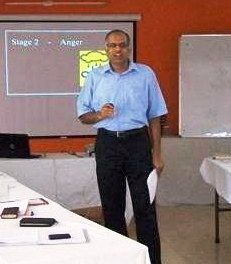
Daniel Zachariah (pictured at right), pastors GCI’s congregation in Secunderabad, India. He was asked recently by the Director of Person-to-Person Institute for Christian Counseling, Samson Gandhi, to present two seminars on his behalf. Mr. Gandhi is recovering from an accident that dislocated his shoulder.
Mr. Gandhi, who has preached in the GCI Secunderabad congregation on several occasions, appreciates our approach and emphasis on counseling in church, and as a result he invited Dan to join with him to help the churches and people of the Hyderabad/Secunderabad twin city area.
Dan has been volunteering as a counselor ever since and conducting seminars for the Institute’s program to train counselors. Dan also reported that recently the Director of Agape Bible Academy (an informal Bible school ) asked if he could conduct some classes for them. Their leadership asked him to teach a class on “Essentials of the Christian Faith” and after one session, requested he continue with two classes a month until the end of the year.
Sri Lanka
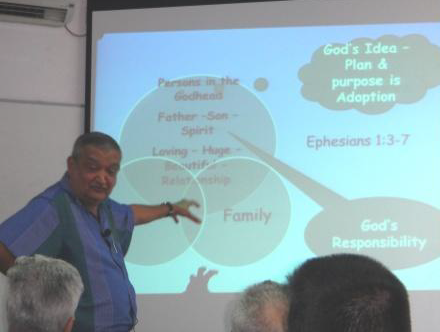
Mohan Jayasekera (pictured at right), is GCI’s National Director in Sri Lanka and the Senior Pastor of GCI congregations in Western Australia. He was invited recently to Sri Lanka to be guest lecturer for a four-day course at the Colombo Theological Seminary (CTS), titled Views of Scripture. The course covered important attributes of Holy Scripture, addressing such important questions as: How did the scriptures come into being? Did God override the personalities and personal efforts of the writers? What does “inerrancy” of the scriptures really mean? Mohan also presented a condensed version of the course at the Calvary Theological Seminary in Colombo.
The Colombo Theological Seminary’s publishing division printed both the Sinhala and Tamil editions of GCI’s course Discipleship 101 and the booklet The God Revealed in Jesus Christ. Discipleship 101 is used as a text in one of CTS’s entry level classes, and the Sinhala edition of the booklet has been distributed to hundreds of Anglican pastors across Sri Lanka.
New Zealand
At a recent special dinner in New Zealand’s national capital of Wellington, the CEO of the National Institute of Water and Atmospheric Research (NIWA), John Morgan, presented the first-ever NIWA Excellence Awards. These awards were established to recognize people who have made exceptional contributions to NIWA, New Zealand’s premier research organization. The final award of the evening was presented to GCI New Zealand elder Dennis Gordon. In a special Executive Update, John Morgan stated:
Dennis Gordon, Group Manager, Marine Biodiversity, Wellington, won the Research Excellence Award for his central role in the creation of the three-volume New Zealand Inventory of Biodiversity—documenting all the known species in New Zealand, over all time. Dennis instigated the project, managed the contributions of over 200 scientists, and oversaw the arrangement of taxa and editing, as well as making the inventory highly readable.
An article in The Wellingtonian reported,
For Mr. Gordon, compiling the catalog meant working with 238 scientists from 19 different countries to produce chapters on each living and fossil species of New Zealand’s plants, animals, fungi and micro-organisms…. He launched the project at a millennial symposium in 2000…. Volume one was published in 2009, volume two in 2010 and volume three earlier this year. He said it was challenging to find authors to describe all the groups of species, so he wrote 11 chapters himself.
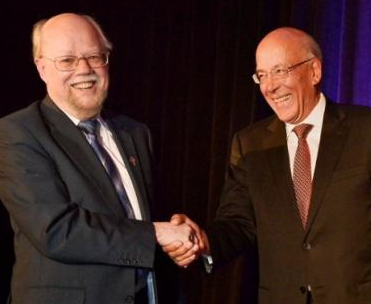
The picture above shows Dennis (at left) being congratulated by the Chairman of the NIWA Board Chris Mace. Dennis commented later:
I was utterly stunned—there are so many excellent scientists in NIWA far more deserving and cleverer than I am. There was a financial reward and a bottle of Moët & Chandon that went with the award but that is small compared to the recognition by one’s peers (and the executive). I was overjoyed.
The boxed set of the New Zealand Inventory of Biodiversity is being made available to New Zealand schools.
Here’s sound advice from a seasoned pastor in the form of Ten Reminders for Christian Life and Leadership:
No matter what other people tell you…Don’t think that you have all the answers. (That omniscient position has been permanently and effectively filled.)
Don’t think that you should have all the answers. (Just wrestling with the right questions is hard enough.)
Don’t think you know exactly what others should do. (While we can lead in biblical paths, we must leave final footprints to God.)
Don’t think you can resolve every problem. (If you could, Jesus would be unnecessary.)
Don’t ever motivate someone by using guilt. (While it may seem to work in the short-term, it always creates deep wounds and anger.)
Don’t ever absorb someone else’s guilt. (Martyrdom is a call to be accepted, not a long-term profession to be perfected.)
Don’t think that ministry is supposed to be easy. (If you do, you haven’t been reading your Bible enough.)
Don’t allow secrets, but keep confidences. (The difference is that the first is based on maintaining power, while the latter seeks to protect the weak.)
Don’t forget that trust is a powerful but fragile, priceless thing. (Once trust is broken, the glue of repair seems to take forever to dry.)
Don’t think you can change others. (You can teach them, lead them, support them, and love them and model health for them, but you cannot change them. Only the Holy Spirit does long-term persuading.)
In Clean Jokes and Inspirational Stories, Rod Dykstra tells about a successful young executive who was driving through the neighborhood in his new Jaguar. Suddenly a brick smashed into the side of his car. He slammed on his brakes, and jumped out to confront a guilty-looking small boy standing nearby.
“Who are you and what is going on here?” yelled the executive. “This is a new car and what you just did is gonna cost you a lot of money. Why did you throw that brick?”
The boy was apologetic and said, “Please mister, I am sorry. I didn’t know what else to do. I threw the brick because no one else would stop. With tears streaming down his face, he pointed to a person lying on the ground by the parked car. “It’s my brother,” he said, “and he rolled off the curb and fell out of his wheelchair and I can’t lift him up. He is hurt and is too heavy for me. Would you please help me get him back into his wheelchair?”
Now moved beyond words, the driver lifted the handicapped boy back into the wheelchair. He took out his handkerchief and dabbed gently at the fresh scrapes and cuts. A quick look told him that everything was going to be okay. He never did get the dent in his car repaired. He left it there to remind himself that he should not journey through life without helping others.
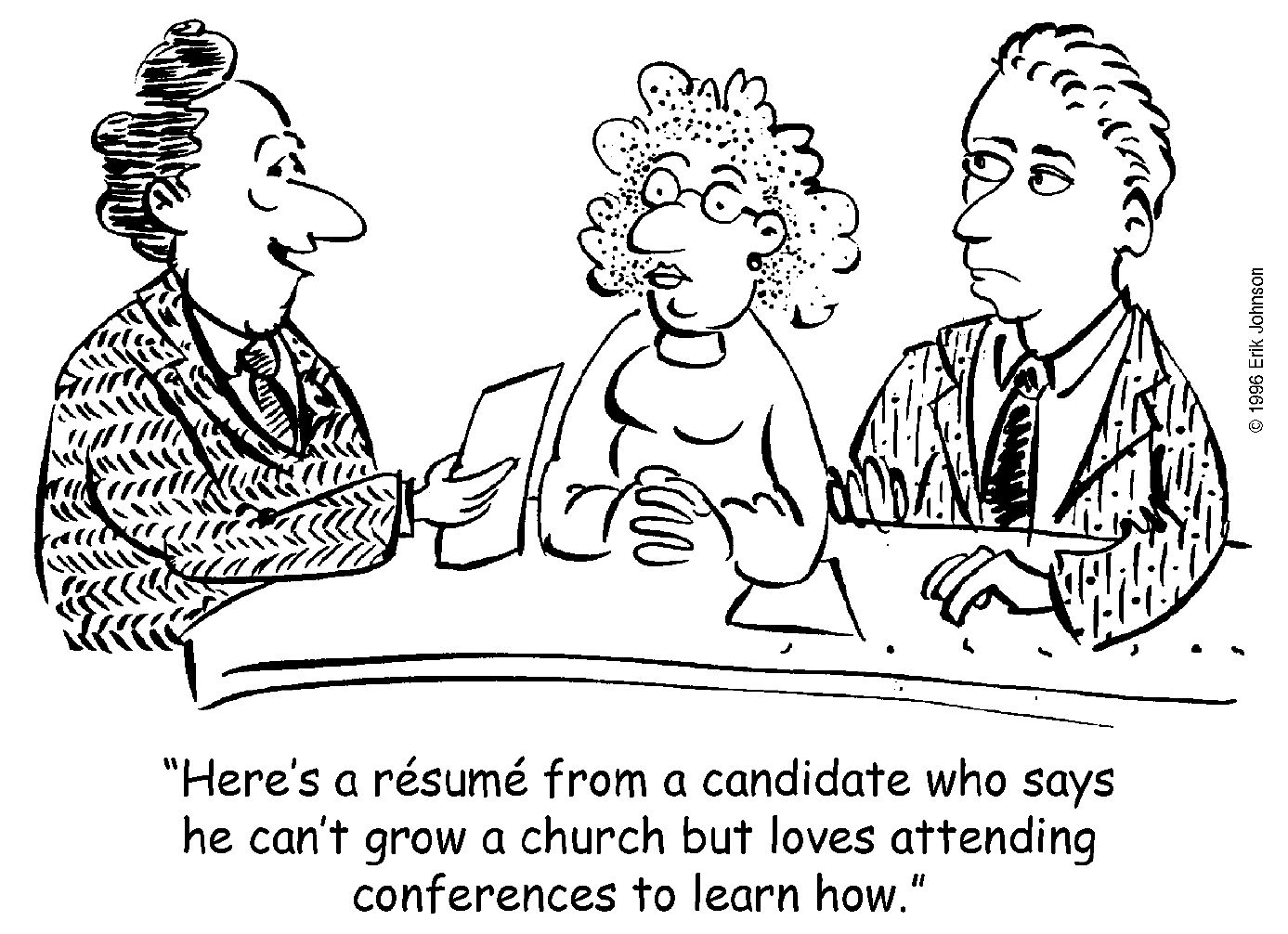
Copyright 1996, Eric Johnson and Christianity Today International/BuildingChurchLeaders.com. Used with permission.
We have just completed the 2012 round of U.S. Regional Conferences. The theme was our participation in mission with Jesus. I was asked a few times, why are we so concerned about mission? If God has already reconciled all people to himself in and through Jesus Christ (2 Corinthians 5:17-19), why are we so concerned with “reaching” them? Though these questions are logical, they imply that the mission of reaching people with the gospel is merely one option on a menu that God has given to the church from which to choose. But mission is not an option for us, and if we think it is, we need to reorient our thinking. In fact, doing so was the over-arching theme of this year’s conferences.
In his conference presentations, Gary Deddo reminded us that we first must ask the question, who is God? The Bible answers that the one God exists as a triune communion of love. In his being (nature) he is love (1 John 4:8), and this explains everything that he does and how he does it. In love, God created the cosmos as a time and place in which to share his triune love and life with his creation. Because his love never ceases or diminishes, he became Redeemer to rescue his creation from its inability to live in communion with him. Before the beginning of time and space, as we experience them, God our Creator and Redeemer has been “on mission.” God the Father sent his Son Jesus to accomplish that mission and Jesus trained others, who in turn trained others. We are part of a long line of those who are called to receive this training.
This, then, is how we should see ourselves. Jesus sends the Holy Spirit to call, form and equip the church to share in his ongoing ministry, which is fulfilling the Father’s mission to the world. In other words, the church exists because of, and for, God’s mission. God has not given us a choice of spiritual “busy work” just to keep us occupied. We are called by God to participate as partners and co-workers in his mission. The Christian life is not a spectator sport. We are following Jesus as he continues by the Holy Spirit to seek true worshipers of his Father.
In her conference presentations, Cathy Deddo spoke about understanding our participation in God’s mission. Since the Ascension and Pentecost, what God is doing in the world in and through the church has principally to do with discipleship—becoming followers of Jesus in daily communion with him. This aspect of God’s mission is not so much about “getting people saved,” because God has accomplished that already. Rather, the mission is about illumination, education and application, all of which involve repentance and living trust in our living Lord. Jesus is working in people’s lives in all three of these areas through the Holy Spirit. The church is called to bear witness to Jesus (Acts 1:8) by proclaiming who he is and what he has done for us, sharing as we do in his ongoing acts of healing, mercy and forgiveness. This is why we proclaim the stunning truth of the gospel, and invite others to join us as disciples who are being transformed into his likeness day by day.
In my conference presentation, I illustrated how many of our members around the world are already doing this. Dan Rogers showed how Jesus commissioned people to participate in his ministry in the New Testament church. The other presenters further reinforced how we, as congregations and individuals, can be involved with Jesus in ministering to others.
Do you see the difference between choosing what kinds of things to do as ministry, and actually participating in the already ongoing ministry of Jesus? It does require a shift in our thinking, which in turn leads to reordering our priorities. It is not our job to make something happen that is not happening. Rather, we are called to discern where and how to “get with the program” that Jesus by the Holy Spirit is actively working out and equipping us to share in. We get to go to work with God as he directs and enables us. Cathy pointed out how Jesus’ feeding of the 5000 with the disciples’ few loaves and fish is a great example of how Jesus gets us involved in what he’s doing, using what we have.
Participating in mission with Jesus involves being in the world, even though we are also cautioned to be not of it. We cannot remain aloof from the world’s problems, and we must be responsive even when the world “heaves a brick at us” to gain our attention. As Karl Barth once pointed out, the church cannot say “yes” to the world, if it cannot also say “no.” Jesus was a friend of sinners, yet without sin of his own. Today, Jesus is doing this ministry principally through his human presence in the world, in and through his body, the church. We are called to stand with Jesus in solidarity with the world, sharing its plight, proclaiming and demonstrating to our fellow human beings our one and sure hope.
This, then, is the answer to the question, Why should the church be concerned about mission? The answer is simply this: mission is what we are for. So let us be among our Lord’s devoted disciples—those who not only hear his voice, but actively join with him as he, in the power of the Holy Spirit, helps people live into the reconciliation with God that forever is their’s in and with him.
I am delighted that most of us do not need a brick thrown at us to awaken us to what we can be doing with Jesus. It is with great thanks that I can say, surely the Spirit of the Lord is graciously and vitally at work among us!