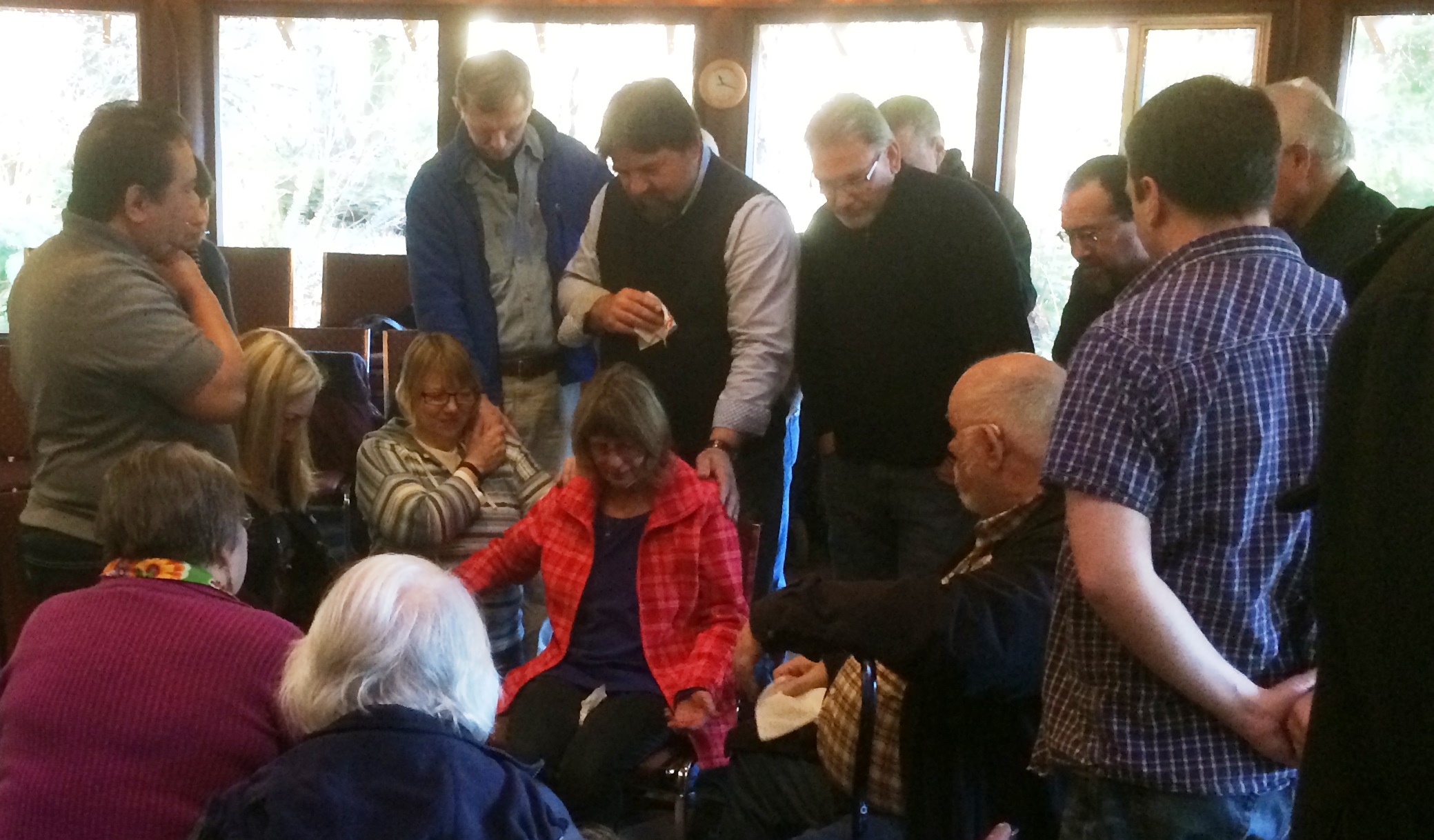
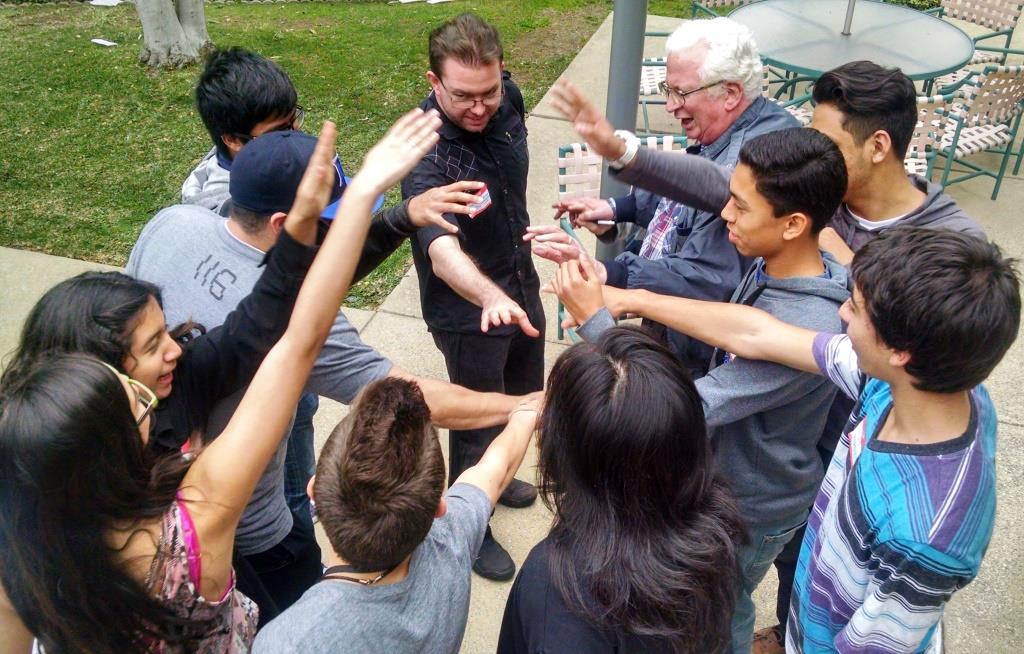
New Hope Christian Fellowship in Eagle Rock, California, recently hosted a Journey with the Master weekend attended by about 50 churched and unchurched teens and young adults, along with a score of older adults. The focus was to discover and deeply understand one’s identity in Christ.
Anthony Mullins, national coordinator of GCI Generations Ministries (GenMin), led the weekend using a guide for the first part of the four-part Journey with the Master, entitled “Epic Story.” Through a variety of speakers together with videos, conversation, games and testimonials, participants were helped to hear and reflect on what Anthony referred to as “the mind-boggling [epic] story that God is telling us.”
On the second day, everyone was invited to take a relationship styles assessment based on the book The Platinum Rule. The assessment shows not just what makes a person “tick,” but how they relate to others—helping them understand how God places each of us in the body of Christ to complement and work together. Along the way there was plenty of food, fellowship, and fun.
Many said they can hardly wait for the next part of the Journey! The older adults who attended were greatly encouraged by the variety and commitment of the youth who participated.
As followers of Jesus, our high calling and privilege is to join with Jesus in his continuing disciple-making ministry, which, through the Spirit, is fulfilling the Father’s mission to the world. The March issue of Equipper (https://www.gci.org/files/Equipper10.3.pdf) focuses on this topic, looking at its theological foundations and ministry applications.
Public domain.
You might also find helpful two articles that address various aspects of this topic:
In 2015, GCI-USA is hosting retreats for lead pastors (and equivalent leaders) and their spouses. Doing so aligns with a primary goal Greg Williams (director of GCI-USA Church Administration and Development) set for the year—to facilitate closer relationships between pastors, and between pastors and denominational leaders, as the new regional structure is implemented.
Four pastors’ retreats have been held so far this year. The first was in Southern California (click here for a report) and three were held recently near Salem, Oregon; Shreveport, Louisiana; and Atlanta, Georgia. Each retreat focused on worship (prayer and singing), reflection on scripture, discussion and fellowship at meals along with relaxed conversation and solitude in the beauty of the retreat site.
Salem
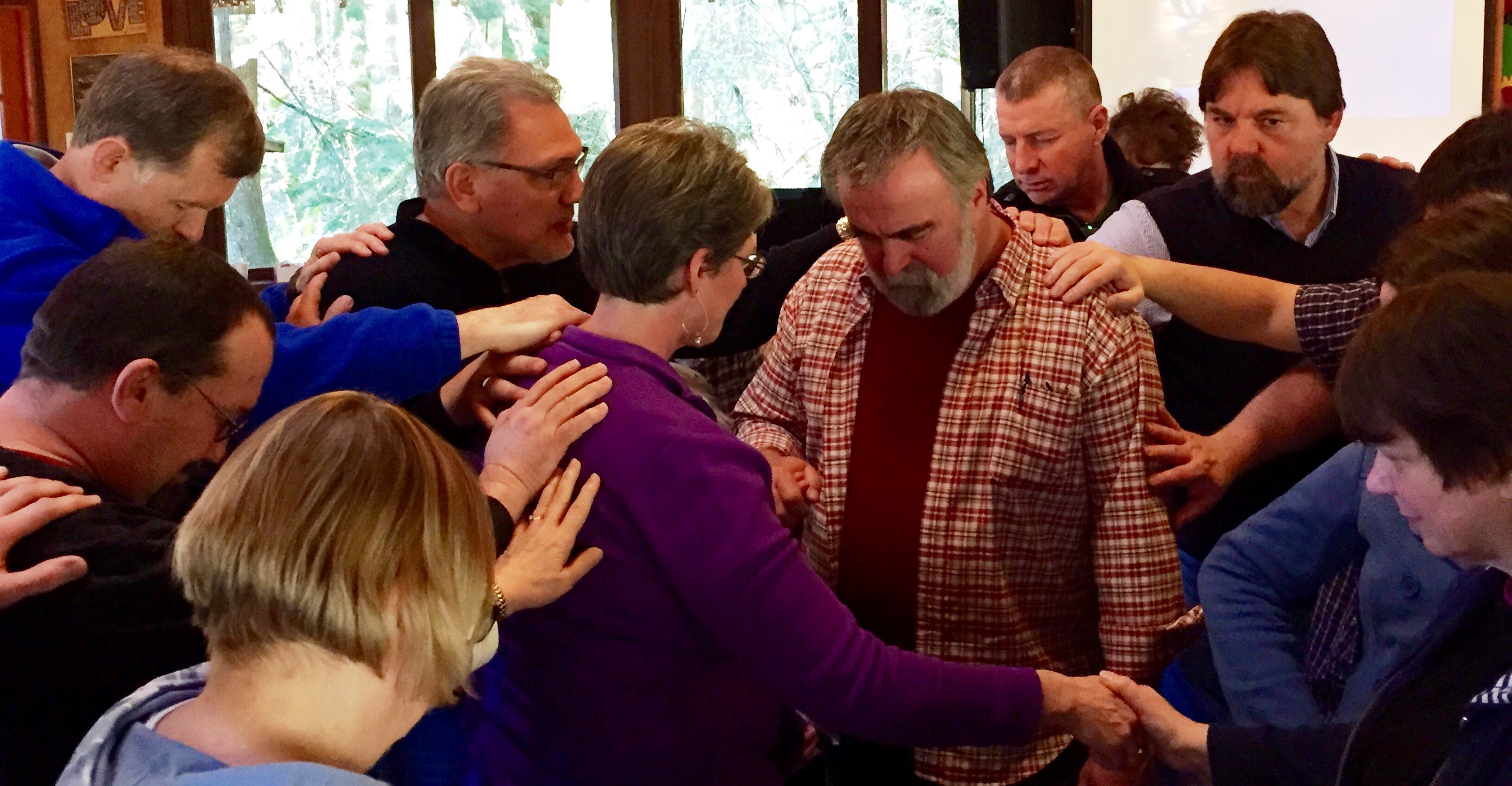
The retreat near Salem, attended by 28 leaders from several Northwest states, was hosted and led by NW associate regional pastor Tim Sitterley. It was held at a Christian retreat center in the Cascade Mountain where GCI has held prayer retreats for 15 years running. One of the center’s leaders joined the group for opening worship and noted that he and his family had been praying for GCI long before GCI began meeting there 15 years ago. As a reminder that pastors run the risk of becoming ministerial “hat racks,” each participant came to Friday worship wearing a hat (see picture above). During prayer they removed the hats, symbolically setting down their titles and responsibilities for the duration of the retreat. Encouraged by prayer for each participant (see picture below), and guided by the words of Ephesians 4, the group picked up their hats on Sunday and headed back to their pastorates.
One of the highlights of the retreat was a ceremony in which Greg Williams commissioned Tim Sitterley as associate regional pastor (serving with regional pastor Lorenzo Arroyo)—see picture below.
Shreveport
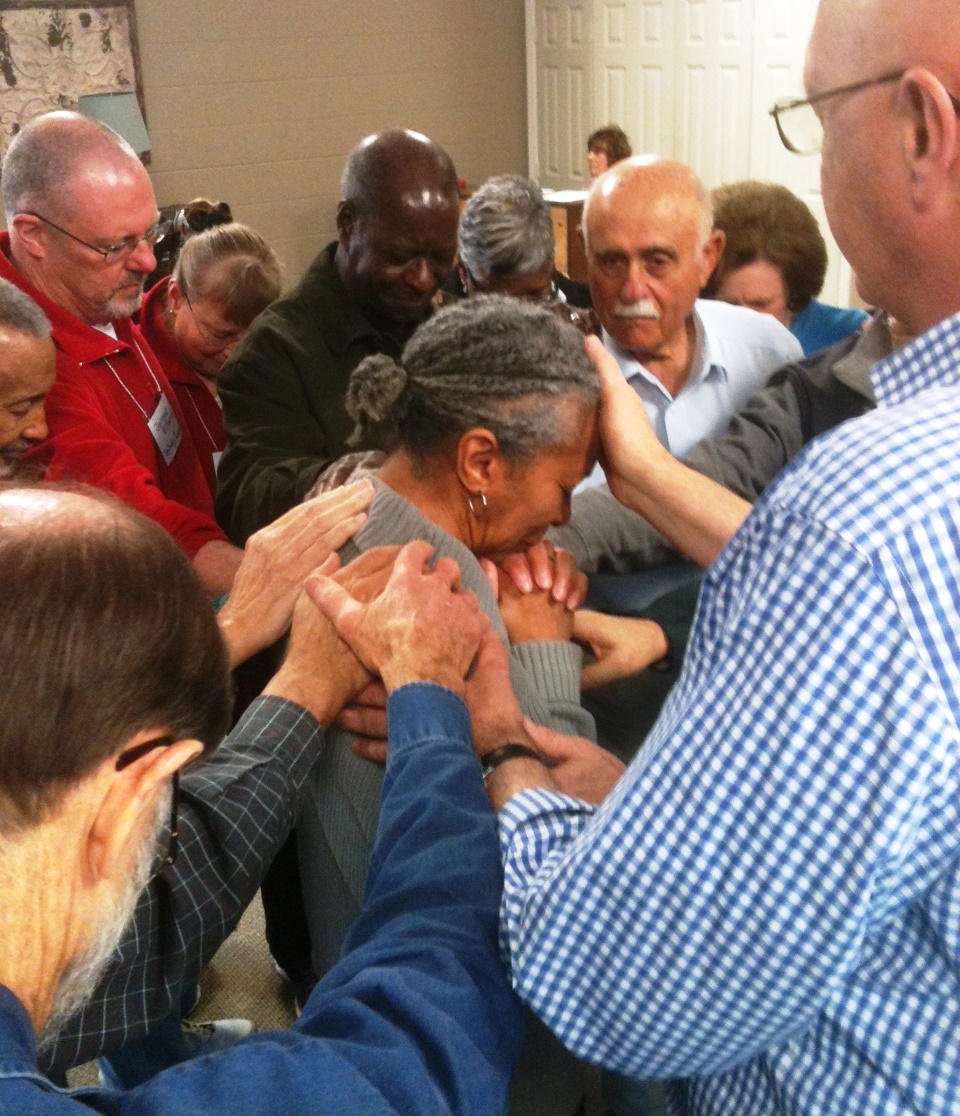
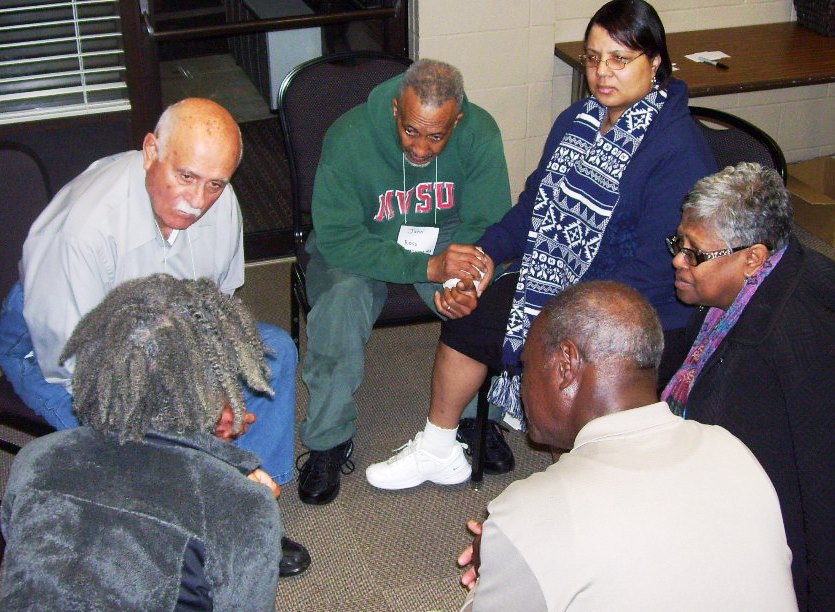
The retreat near Shreveport was held at a Baptist camp and retreat center. Attended by 20 leaders from Mississippi, Arkansas, Louisiana and Texas, the retreat was hosted by pastor Lee Berger and his wife Sue and led by regional pastor Ted Johnston. Time was devoted to getting to know one another since those attending formerly gathered in different districts. A highlight was the ordination of Kathy Houston as an elder (see picture at right). Kathy pastors the GCI church in Pine Bluff, Arkansas. She led the group in an “ice-breaker” discussion that was followed by a time of intimate sharing and prayer in small and large groups in which connections were made, friendships renewed, encouragement given and helpful advice shared (see pictures below). An emphasis that arose in the discussions was summarized by discussion leader, pastor Mike Booze, as “putting the communion back into Grace Communion International.”
Atlanta
The retreat near Atlanta was held at a Presbyterian camp and retreat center. Attended by 25 leaders from Georgia, Alabama and Tennessee, the retreat was hosted by pastor Dennis Wheatcroft and his wife Sidni and led by regional pastor Ted Johnston. One of many highlights at the retreat was a discussion about rallying as a family of churches in support of pastor Rannie Childress who recently left his career with the State of Alabama to focus more of his time on developing the newly planted GCI church that he now pastors in Attalla, Alabama.
Comments
Here are representative comments from Salem-area retreat participants:
The prayers of blessing and encouragement we offered for one another and for other local churches capped the retreat wonderfully for me. It was three hours of divine communion with our Lord and with each other. During our time of prayer, the Spirit inspired me with these words, “Lord, open our minds that we can contemplate on your wonders and mysteries. Open our eyes that we can see that the fields are ripe for harvest. Open our mouths that we can praise you and proclaim the gospel. Open our hearts that we can love unconditionally. Open our arms that we can embrace all kinds of people.” – Dee Bulante
It was wonderful to become better acquainted with our fellow elders and to make new friendships. I used to feel intimidated around ministers, now they are all my friends and always show care and concern for individual members. Praise God for His grace and Love. – Jim Harries
I am still floating and full of the Spirit and treasuring every minute of it…what a blessing. – Anne Gillam
I enjoyed the fellowship, prayers and the worship more than I can explain. I wish we could have this kind of meeting every week. – Dan Winger
We were saddened to learn of the death of Michele (Mike) Bertuzzi, 51 year-old son of deceased GCI pastor Bob Bertuzzi and his wife Coco. Mike died in a one-car accident late last Saturday night in Deltona, Florida while returning from visit with a long-time friend. He is survived by Kimberly, his wife of ten years, their son Robbie, several step-children, Mike’s mother Coco, and Mike’s sister Erin.
Bob Bertuzzi formerly pastored the GCI church in Orlando, Florida. Though they no longer live nearby, Coco and Erin often attend the Melbourne, Florida church. We extend to them, and all the family, our deepest sympathy.
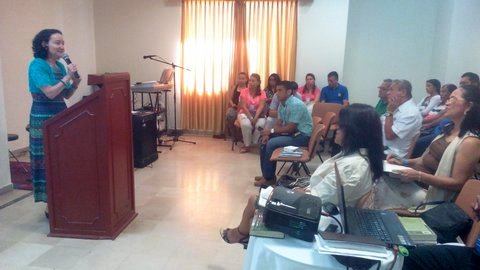
GCI’s congregation in Barranquilla, Colombia, which is pastored by Sonia Orozco, recently held its annual conference in the city of Santa Marta. The conference was attended by 59 adults (including three from the Bogotá church) and 8 children (see the group picture at right).
Guest speakers were Héctor and Paulina Barrero. Hector is GCI’s mission director for Latin America. The main topic addressed during the conference revolved around the question: What is prophecy?
During the conference, Jairo Florez and Paulo Offshore were commissioned as deacons to serve the Barranquilla congregation. Also Barranquilla members Nestor and Giselly Carreño renewed their wedding vows.
Lloyd Briggie, pastor of GCI’s congregation in Bowling Green, Kentucky, requests prayer for his wife Marcia who recently was diagnosed as having diabetes.
Here is a prayer request from GCI-Canada pastor Colin Lauchlan concerning his wife Sue. Colin pastors GCI churches in the London, Windsor and Sarnia areas of southwestern Ontario, Canada.
Sue and Colin Lauchlan
Sue went into the hospital on February 2 and was released following surgery on February 6. She suffered severe nausea and was unable to eat much, so the doctors upped her anti-nausea medication. This enabled her to start eating, which led to severe stomach cramps. She was readmitted to the hospital with a suspected bowel blockage. She was given a course of antibiotics and the problem cleared up. She was released from hospital on February 20. She is feeling a lot better, although she has lost a lot of weight.
We also got the pathology report back, which indicates that Sue’s cancer has not spread and so she will not require follow-up chemotherapy or radiation. We are very thankful for that.
Cards may be sent to:
Colin and Sue Lauchlan 90 Westridge Road London, ONT N6K 3R7 CANADA
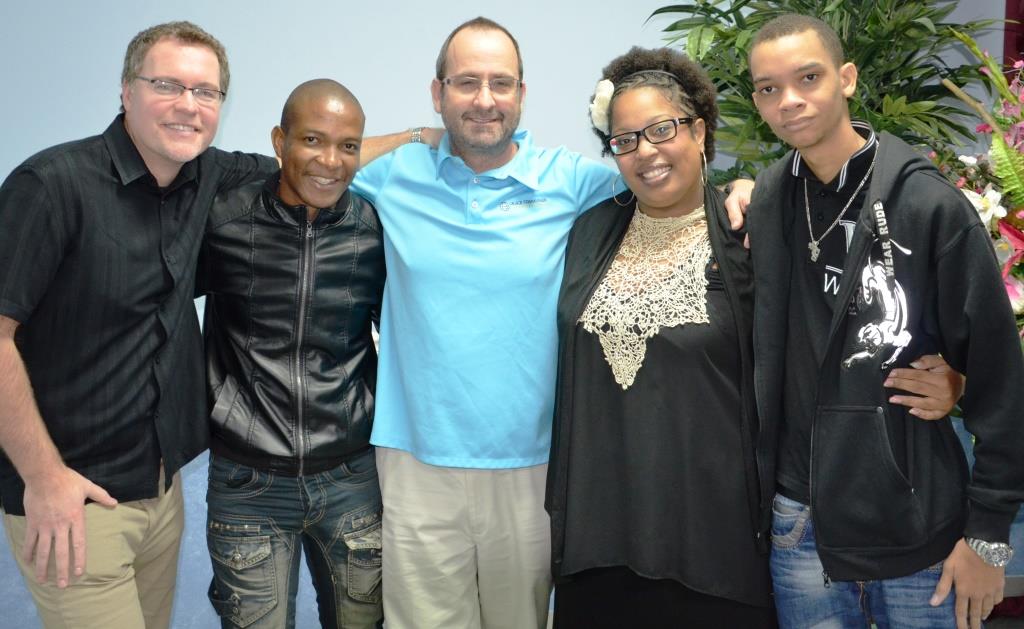
GCI youth ministry leaders from throughout the Caribbean met recently in Nassau, Bahamas to discuss youth ministry strategy. The 25 participants represented GCI churches in Trinidad, Martinique, Haiti and the Bahamas.
Guest speakers at the event were Anthony Mullins (GCI-USA Generations Ministries national coordinator, at left in the picture at right) and Charles Albrecht (GCI-USA Church Administration and Development assistant director, in the center in the picture at right).
Among other agenda items, the group worked to establish a “community of practice” that will focus together on how best to serve GCI’s Caribbean youth and reach out with God’s love to the children and communities of the Caribbean Islands.
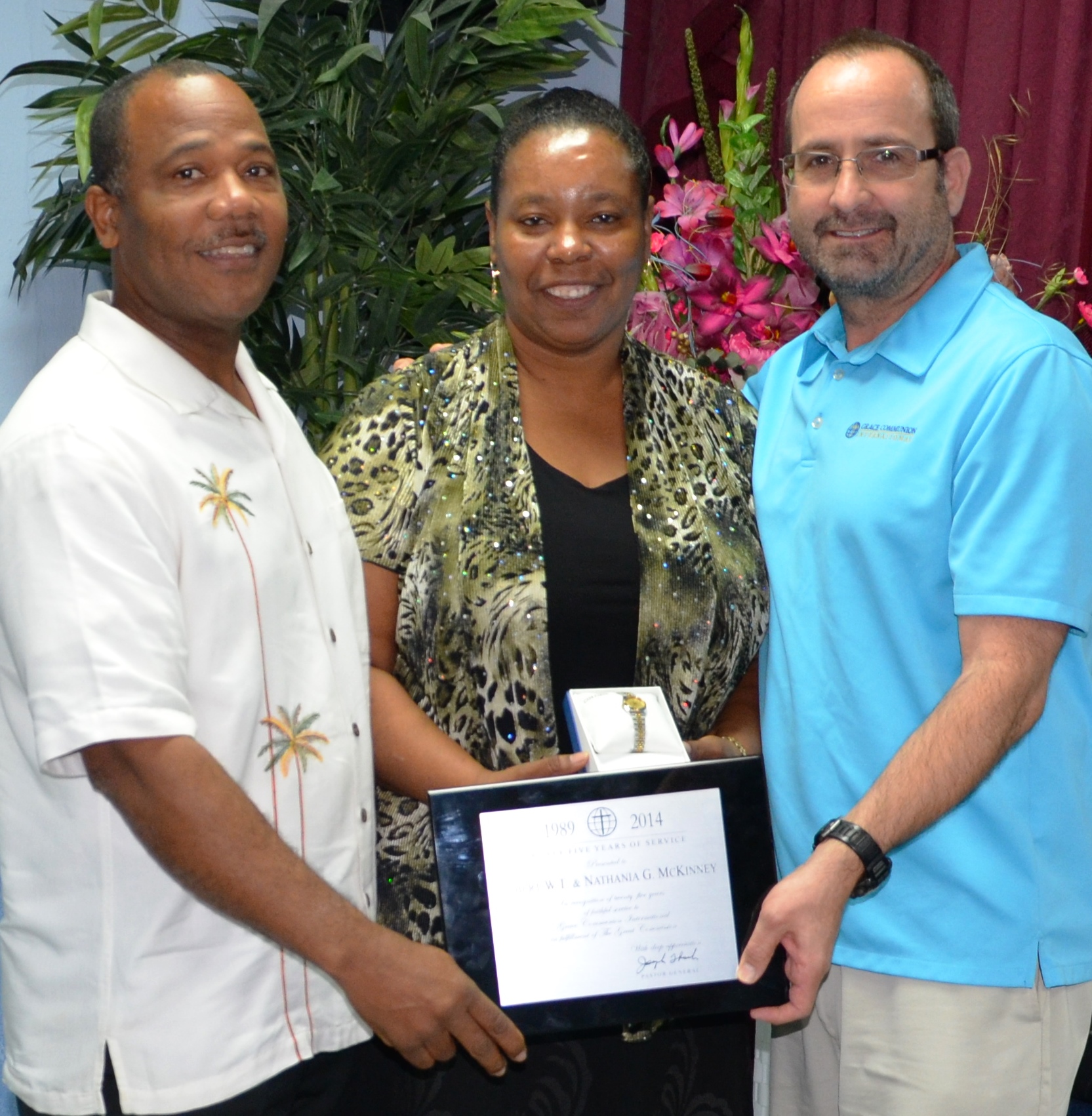
At the event, a worship service was held with about 100 people attending. During the service, Charles Albrecht presented Robert and Nathania McKinney with a plaque and watches to thank them for 25 years of full-time employment in GCI pastoral ministry (see picture at right). The pastoral leaders present laid hands on the McKinneys, offering a prayer of thanksgiving and a request for the Spirit’s continued guidance. (Robert currently serves as the senior pastor of GCI’s church in the Bahamas—for a previous Update article about Robert and Nathania, click here.)
Scripture tells us that Jesus, our High Priest, was “tempted in every way, just as we are—yet he did not sin” (Hebrews 4:15). This powerful truth is represented in the historic Christian teaching that Jesus, in his humanity, is the “vicarious man.”
Vicarious is a Latin word that means “in place of another,” or “on another’s behalf.” Through the Incarnation, the eternal Son of God, while remaining God, became human. Calvin referred to this as the “wondrous exchange.” T. F. Torrance used the word substitution: “In the incarnation, the Son of God abased himself, substituted himself in our place, interposed himself between us and God the Father, taking all our shame and curse upon himself, not as a third person, but as one who is God himself” (Atonement, p. 151). In one of his books, our friend Chris Kettler refers to “the deep interaction between Christ’s humanity and our humanity at the level of our being, the ontological level.”
Temptation of Christ by Ary Scheffer (1854). Wikimedia Commons, public domain.
In his vicarious humanity, Jesus represents all humanity. He is the second Adam who is far superior to the first. Representing us, Jesus was baptized for us—the sinless one baptized for sinful humanity. Our baptism then is a participation in his. Representing us, Jesus was crucified and died for us so that we may live (Romans 6:4). Then Jesus rose from the grave, making us alive with him (Ephesians 2:4-5). Then he ascended, seating us with him in the heavenly realms (Ephesians 2:6). Everything Jesus did, he did in our place, on our behalf. And that includes being tempted on our behalf.
I find it encouraging to know that Jesus went through the same temptations I face and overcame them in my place, on my behalf. To face our temptations and overcome them was one of the reasons Jesus went into the wilderness following his baptism. Even though the enemy was there to interfere, Jesus prevailed. He is the overcomer—on my behalf, in my place. Understanding this makes a world of difference!
In my Weekly Update letter last week, I wrote about the crisis that many face concerning their identity. I shared three unhelpful ways that people typically identify themselves: by what they do, by what others say about them and by what they possess. It’s interesting to note that the three temptations faced by Jesus in the wilderness had to do with all three of these identity factors.
You will recall that in the Gospel accounts of Jesus’ temptation in the wilderness (in Matthew and Luke), the Holy Spirit led Jesus into the wilderness to be tempted by the enemy. Jesus did not go through these trials alone. He was accompanied by the Holy Spirit. He was never alone—just as we are never alone.
After 40 days of prayer and fasting, the enemy came to Jesus and said, “If…” Now that’s a big word, and I suggest that many of our own temptations start with the word “if.” “If I could just…” “If you are…” “If you had your way…” etc. Satan taunted Jesus with the words, “If you are the Son of God…” In doing so, Satan was tempting Jesus to doubt his true identity in relationship to his heavenly Father—to lead him to think he needed to prove his identity and act in certain ways to secure it for himself.
Satan sends similar temptations our way—calling into question our relationship to God and leading us to think that we, by our own efforts, must achieve our identity as children of God. But Jesus exposes the lies of these temptations hidden behind all of the “ifs.”
Jesus’ first temptation involved the false assumption, I am what I do. Satan said, ”If you are the Son of God, command these stones to become loaves of bread.” In other words, prove to yourself that you really are the Son of God. See if you have miraculous powers to feed yourself and demonstrate your self-sufficiency!
The second temptation involved the false assumption, I am what others say about me. Satan said to Jesus,“If you are the Son of God, throw yourself down and let the angels rescue you.” In other words, prove to yourself that you are the Son of God by seeing if the angels will obey your command and then if others witnessing this spectacle will confirm to who you are.
Jesus’ third temptation involved the false assumption, I am what I possess. Satan said, “If you are the Son of God, fall down and worship me and I will give you all the kingdoms of the world.” In other words, prove you are the Son of God by having all the rulers of the world under your authority as you ought to. Simply submit to my authority to take possession of them all.
Jesus saw through the false assumptions behind each temptation. With each one he replied, “It’s a lie!” For Jesus, there was no “If I am the Son of God,” but always “Because I AM the Son of God.” Jesus knew there was nothing he needed to do or possess to be who he truly was. Jesus knew who he was and remained secure in his relationship with the Father, confident in the Father’s faithfulness. Under the pressure of temptation, the Holy Spirit, who had sent him into the wilderness in the first place, was there to remind him. Knowing who he was, Jesus had no need to prove it to himself. He had no need to act independently from his Father, out of unbelief, as if he could not trust his Father’s love and provision.
Torrance reminds us that Jesus, being the Son of God, did not need to go through and overcome temptation for himself. In his vicarious humanity, Jesus met and overcame these temptations on our behalf: “It was for our sakes and in our place that Jesus lived that vicarious life in utter reliance upon God and in laying hold upon his mercy and goodness” (Incarnation, p. 125). Jesus did this for us knowing clearly who he was—the Son of God and the Son of Man.
For us to be delivered from temptations in our lives, it’s essential that we know who we truly are. As sinners saved by grace, we have a new identity—we are Jesus’ beloved brothers and sisters, God’s dearly loved children. This is not an identity we earn, and certainly not one others can give us. No, it’s something God has given to us through the vicarious humanity of his Son. We simply trust him to be who he is for us and then receive from him this new identity with much thanksgiving.
We take strength knowing that Jesus overcame for us the deceit of Satan’s subtle, yet powerful temptations concerning the nature and source of our true identity. As we live in Christ, secure in that identity, we will find that what used to tempt us and make us fall becomes less and less powerful. We grow in strength as we embrace and live into our true identity—secure in knowing it is ours in relationship with the triune God who is faithful and full of love for us his children.
If we are not secure in our true identity, temptations likely will set us back. We may doubt we are Christians, or that God loves us unconditionally. We might be tempted to think that being tempted means God has begun to withdraw from us. But knowing our true identity as God’s dearly beloved children is a freely-given gift. We can rest secure knowing that Jesus, in his vicarious humanity, overcame all temptation for us—in our place and on our behalf. Knowing this enables us to stand back up when we fall (and we will), make whatever amends we need to make, and trust God to lead us forward. In fact, confessing that we have fallen and are in need of God’s forgiveness are signs that God remains unconditionally faithful to us. Were he not, had he actually abandoned us, we never would turn back to him to receive again his freely-given grace and thus be renewed in his welcoming embrace.
Let us look to Jesus who was tempted in every way we are, yet without sin. Let us rely on his mercy, his love, his strength. And let us praise God because Jesus Christ, the vicarious human, has overcome for us.



 Anthony Mullins, national coordinator of GCI Generations Ministries (GenMin), led the weekend using a guide for the first part of the four-part Journey with the Master, entitled “Epic Story.” Through a variety of speakers together with videos, conversation, games and testimonials, participants were helped to hear and reflect on what Anthony referred to as “the mind-boggling [epic] story that God is telling us.”