GCI Update
Connecting Members & Friends of GCI
Header Banner

Why be concerned about mission?

Dear Brothers and Sisters in Christ,
In Clean Jokes and Inspirational Stories, Rod Dykstra tells about a successful young executive who was driving through the neighborhood in his new Jaguar. Suddenly a brick smashed into the side of his car. He slammed on his brakes, and jumped out to confront a guilty-looking small boy standing nearby.

“Who are you and what is going on here?” yelled the executive. “This is a new car and what you just did is gonna cost you a lot of money. Why did you throw that brick?”

The boy was apologetic and said, “Please mister, I am sorry. I didn’t know what else to do. I threw the brick because no one else would stop. With tears streaming down his face, he pointed to a person lying on the ground by the parked car. “It’s my brother,” he said, “and he rolled off the curb and fell out of his wheelchair and I can’t lift him up. He is hurt and is too heavy for me. Would you please help me get him back into his wheelchair?”

Now moved beyond words, the driver lifted the handicapped boy back into the wheelchair. He took out his handkerchief and dabbed gently at the fresh scrapes and cuts. A quick look told him that everything was going to be okay. He never did get the dent in his car repaired. He left it there to remind himself that he should not journey through life without helping others.

Copyright 1996, Eric Johnson and Christianity Today International/BuildingChurchLeaders.com. Used with permission.

We have just completed the 2012 round of U.S. Regional Conferences. The theme was our participation in mission with Jesus. I was asked a few times, why are we so concerned about mission? If God has already reconciled all people to himself in and through Jesus Christ (2 Corinthians 5:17-19), why are we so concerned with “reaching” them? Though these questions are logical, they imply that the mission of reaching people with the gospel is merely one option on a menu that God has given to the church from which to choose. But mission is not an option for us, and if we think it is, we need to reorient our thinking. In fact, doing so was the over-arching theme of this year’s conferences.

In his conference presentations, Gary Deddo reminded us that we first must ask the question, who is God? The Bible answers that the one God exists as a triune communion of love. In his being (nature) he is love (1 John 4:8), and this explains everything that he does and how he does it. In love, God created the cosmos as a time and place in which to share his triune love and life with his creation. Because his love never ceases or diminishes, he became Redeemer to rescue his creation from its inability to live in communion with him. Before the beginning of time and space, as we experience them, God our Creator and Redeemer has been “on mission.” God the Father sent his Son Jesus to accomplish that mission and Jesus trained others, who in turn trained others. We are part of a long line of those who are called to receive this training.

This, then, is how we should see ourselves. Jesus sends the Holy Spirit to call, form and equip the church to share in his ongoing ministry, which is fulfilling the Father’s mission to the world. In other words, the church exists because of, and for, God’s mission. God has not given us a choice of spiritual “busy work” just to keep us occupied. We are called by God to participate as partners and co-workers in his mission. The Christian life is not a spectator sport. We are following Jesus as he continues by the Holy Spirit to seek true worshipers of his Father.

In her conference presentations, Cathy Deddo spoke about understanding our participation in God’s mission. Since the Ascension and Pentecost, what God is doing in the world in and through the church has principally to do with discipleship—becoming followers of Jesus in daily communion with him. This aspect of God’s mission is not so much about “getting people saved,” because God has accomplished that already. Rather, the mission is about illumination, education and application, all of which involve repentance and living trust in our living Lord. Jesus is working in people’s lives in all three of these areas through the Holy Spirit. The church is called to bear witness to Jesus (Acts 1:8) by proclaiming who he is and what he has done for us, sharing as we do in his ongoing acts of healing, mercy and forgiveness. This is why we proclaim the stunning truth of the gospel, and invite others to join us as disciples who are being transformed into his likeness day by day.

In my conference presentation, I illustrated how many of our members around the world are already doing this. Dan Rogers showed how Jesus commissioned people to participate in his ministry in the New Testament church. The other presenters further reinforced how we, as congregations and individuals, can be involved with Jesus in ministering to others.

Do you see the difference between choosing what kinds of things to do as ministry, and actually participating in the already ongoing ministry of Jesus? It does require a shift in our thinking, which in turn leads to reordering our priorities. It is not our job to make something happen that is not happening. Rather, we are called to discern where and how to “get with the program” that Jesus by the Holy Spirit is actively working out and equipping us to share in. We get to go to work with God as he directs and enables us. Cathy pointed out how Jesus’ feeding of the 5000 with the disciples’ few loaves and fish is a great example of how Jesus gets us involved in what he’s doing, using what we have.

Participating in mission with Jesus involves being in the world, even though we are also cautioned to be not of it. We cannot remain aloof from the world’s problems, and we must be responsive even when the world “heaves a brick at us” to gain our attention. As Karl Barth once pointed out, the church cannot say “yes” to the world, if it cannot also say “no.” Jesus was a friend of sinners, yet without sin of his own. Today, Jesus is doing this ministry principally through his human presence in the world, in and through his body, the church. We are called to stand with Jesus in solidarity with the world, sharing its plight, proclaiming and demonstrating to our fellow human beings our one and sure hope.

This, then, is the answer to the question, Why should the church be concerned about mission? The answer is simply this: mission is what we are for. So let us be among our Lord’s devoted disciples—those who not only hear his voice, but actively join with him as he, in the power of the Holy Spirit, helps people live into the reconciliation with God that forever is their’s in and with him.

I am delighted that most of us do not need a brick thrown at us to awaken us to what we can be doing with Jesus. It is with great thanks that I can say, surely the Spirit of the Lord is graciously and vitally at work among us!

With love in Christ’s service,

Joseph Tkach

Maria Sinkler

This update is from Canadian National Board member Gerry Sinkler concerning his wife Maria. It updates a prayer request in the March 16, 2011 Weekly Update.

It’s been a while since I gave an update on how my wife is doing and I want to request prayer for Maria, for our daughter Brianna and for myself.

In June 2010, Maria was diagnosed with breast cancer. It then spread to her bones and later to her liver. In April of this year, we went to the Mayo Clinic in Rochester, Minnesota for a review of her case and a second opinion regarding treatment options. Despite more aggressive treaments, Maria’s cancer continued to spread and now she may have only a couple of days left, maybe less. She isn’t in any distress, her face is clear and calm. Her breathing is quite shallow and she sleeps much of the time.

Briana and Maria

A couple of days ago, 21 people came to visit Maria, including 8 people from her office. Despite her condition, she insisted on having pictures taken with all of them. At one point she was sitting in her wheelchair and our daughter Brianna knelt down beside her so we could take their picture. Maria stopped and very slowly lifted her arm to put it around Brianna. It was heartbreaking.

We have done all we can for Maria physically, and before we left the other night, Brianna and I said a short prayer by her bedside leaving her in God’s merciful hands.

Thanks for your prayers.

Cards may be sent to:

Gerry Sinkler
13 Emery Ct
St Albert, AB T8N 5T3
CANADA

The Story of God

Steve Sabol, the creative force behind NFL Films, died this week at age 69. Steve was considered by many to be a great cinematic story-teller. He was fond of saying, “Tell me a fact and I’ll learn; tell me the truth and I’ll believe; but tell me a story and it will live in my heart forever.” This is an important observation for film-makers, and also for those who seek to participate with Jesus in his ministry of proclaiming the gospel — telling the greatest story of all: The Story of God.

For a video that powerfully presents the gospel in dynamic narrative fashion, watch this:

Found on YouTube at http://youtu.be/A4WL0w3it0s.

From Ted Johnston, GCI ministry developer

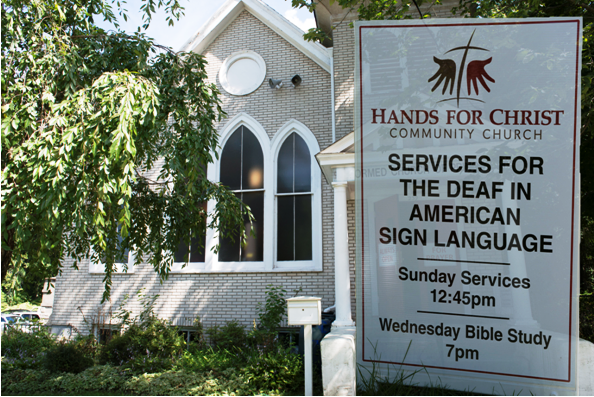
Hands for Christ launched

We are pleased to announce that the “launch service” for Hands for Christ — the newly planted GCI congregation in Staten Island, New York — occurred on September 16. Here is a report from Pastor Mary Bacheller.

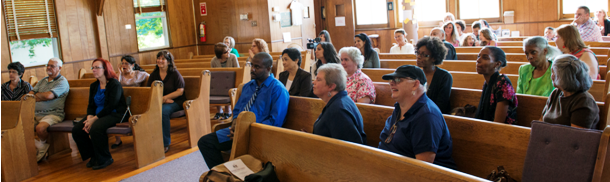
What a great day it was! God was surely present. Our Launch Sunday service had 38 people (33 adults and 5 children) in attendance. The average age was about 38.

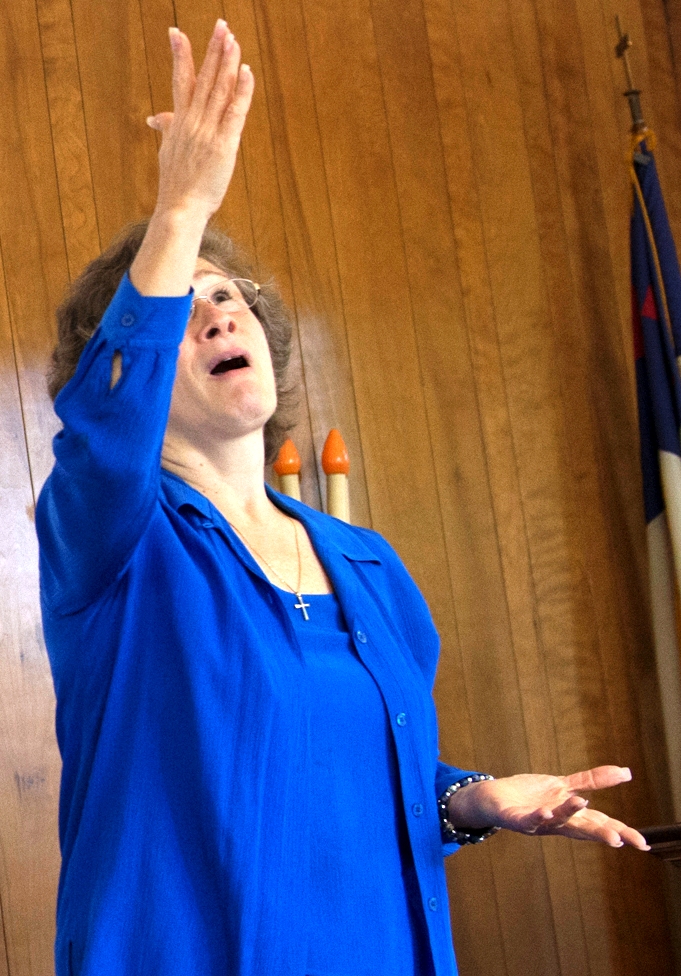
We opened with prayer and the whole service was conducted in American Sign Language with no voicing. It was truly wonderful! Following the service we met in the fellowship hall downstairs to celebrate the birth of a new church for the deaf: Hands for Christ Community Church!

Pastor Mary preaching in American Sign Language

The birth of this new church has been greatly helped by several people. First I want to mention the capable assistance given to me by Randy Bloom and Becky Deuel from GCI’s Church Multiplication Ministries (CMM). Also I have learned a great deal by attending Exponential conferences. I also want to give thanks for the love, support and prayers from our mother congregation, GCI’s New Life In Christ church in Queens, New York, led by its dedicated pastor, John Newsom and its ever-thoughtful elder, Jonathan Browne. I thank all these people from the bottom of my heart!

Note in the picture below the joy reflected in the smiles of those who attended this first service. Their generous offering reflected that joy and was an awesome tribute and praise to our Living God! I thank God for giving me the opportunity to lead a wonderful team in starting this new GCI church for the deaf in Staten Island.

Death of David Wainwright

We are saddened to learn of the recent passing of Dr. David P. Wainwright. He died peacefully in his sleep on September 15. He would have turned 77 later this month and would have celebrated in October the 49th anniversary of his marriage to his wife Sarah. Dr. Wainwright is survived by Sarah and by their two married children, Elizabeth and Matthew. Dr. Wainwright’s funeral is scheduled for October 12 at the Vaca Hills Chapel in Vacaville California.

Dr. Wainwright was hired at the Ambassador College campus in Bricket Wood, England in 1959. He later served on the faculty there and pastored churches in the U.K. After the Bricket Wood campus closed, he transferred to Ambassador College in Big Sandy, Texas in 1976. When the College there closed in 1977, he transferred to Pasadena, and then, when AC in Pasadena closed in 1990, he transferred back to Big Sandy. He then retired from active employment with Ambassador University in 1996. The Wainwrights have lived the last few years in Vacaville.

Cards may be sent to:

Sarah Wainwright
236 Bartlett Lane
Vacaville, CA 95687-3117

Birth of Holms’ grandchild

This birth announcement comes from GCI pastor Rand Holm and his wife Beth.

We are pleased to announce the birth of our first grandchild, Grace Caroline Huynh. She was born after about 60 hours of labor on August 31 (on a full moon — actually a blue moon!).

Grace is doing well, as are her mother, our daughter, Sharran and her father David. Thanks for the many prayers and well-wishes. It’s wonderful to be a grandparent 🙂

New GCI pastor Linda Rex

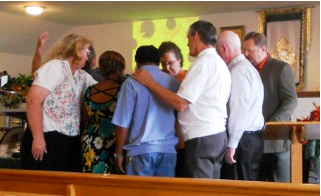
Sunday, September 16 was a day of great celebration as Linda Rex was commissioned as the new senior pastor serving Good News Fellowship, the GCI church in Nashville, Tennessee; and New Hope Fellowship, the GCI church in Murfreesboro, Tennessee.

District pastor Rick Shallenberger led the commissioning service. First he gave a sermon that included instruction to both Linda and the congregations. Then he, along with the leadership teams from both congregations, laid hands on Linda, commissioning her as the new senior pastor. The service was followed by communion and a meal with a celebration cake as the two congregations welcomed their new pastor Linda and her daughter Eva.

Shoebox mission

GCI’s Crossing Borders mission program goes into Mexico twice each year: for a week in the summer to be involved in a variety of mission activities and for a weekend in the winter to deliver hundreds of shoebox gifts to needy children. This year’s shoebox trip will occur on December 7-10 and Crossing Borders invites your involvement.

Due to the generosity of several GCI churches, Crossing Borders delivered about 400 shoeboxes of gifts to needy children last year. If you can help this year, see the instructions on the Crossing Borders website at www.cbmission.org (click on the Shoebox Ministry link).

It’s not too early as a church, school club, women’s group, community service club, neighbors, friends and family to start collecting items to pack into the shoeboxes — or to budget to help pay some of the expenses for the delivery trip. This ministry functions mainly by word-of-mouth, so we appreciate your passing news of this opportunity along to others.

Also, the invitation is open for anyone age 15 to 99 to come along on the trip to deliver the shoeboxes to Mexico. This is a great way to get a taste on a short trip of what cross-national mission work is like. It is always a life-transforming experience.

Questions? Contact Crossing Borders’ leaders at info@cbmission.org or at 903-746-4463.

Creation out of nothing

Dear Brothers and Sisters in Christ,

One of the more enigmatic questions posed by our understanding of the cosmos is this: Why is there something instead of nothing?

Some people might think this is a dumb question, but to many scientists, it is of major importance, along with two related questions: Why does matter exist at all? And given that it does exist, where did it come from?

The Bible’s first words inform us that God created the heavens and the earth. This fundamental revelation guided the children of Israel away from Egypt’s false gods toward the true Lord God of all creation. Through prophetic revelation, God taught Israel foundational truths in language they could understand. Those truths concerned his identity and the nature of his relationship with all of creation.

Genesis was not intended to be the last word about the inner workings of the cosmos. Modern scientific methods and tools help us research such details. However, the biblical revelation has not been superseded as a first word and starting point for this research. The biblical revelation presents theological/philosophical presuppositions that science cannot provide on its own. Grounded upon these presuppositions, scientific research concerning the cosmos can proceed in fruitful ways.

Of course, many scientists scoff at the biblical and Christian answer as to why there is a cosmos at all, considering it to be science fiction (with an emphasis on fiction). Now, I enjoy good science fiction, particularly the Star Trek series. Captains Kirk, Picard, Sisko and Janeway tackled all kinds of social and moral issues with a backdrop of all kinds of imaginative devices to beam them from one place to another, travel at warp-speed, eat and drink items synthesized from a machine and explore all kinds of life forms.

What makes Star Trek so good is that it has a real basis in science. You can read about it in the book The Physics of Star Trek, by theoretical physicist Dr. Lawrence M. Krauss. Krauss also wrote A Universe from Nothing: Why There is Something Rather Than Nothing. Krauss is one of several scientists who try to prove that every particle and force in the universe sprang into being from nothing, without God being part of the process. To reach this conclusion, Krauss theorizes three kinds of nothingness.

The first kind is a concept inherited from Greek thought, which Krauss refers to it as The nothingness of empty space. Today we know that this “nothingness” is not empty — rather it is teeming with energy and particles. We currently have the ability to detect about 6% of what is there. The remaining 94% we refer to as “dark matter” and “dark energy,” which are beyond the reach of our physical senses and scientific instruments. We can’t explain exactly what these features of the cosmos are or how they work. However, we know that they exist, based on their effect on what we can directly detect.

Krauss then refers to a second kind of nothingness, which he calls The nothing without space and time. His conjecture is that whole universes bubble up out of this kind of nothingness. Each bubble has its own space-time and simply pops into existence. But even if this is true, as Krauss notes, we are left wondering, where did this bubbling something come from?

Krauss’s third kind of nothingness is a more profound kind in which even the laws of physics are absent. He attempts to explain how this happens by saying that an infinite assembly of universes (what he calls the multiverse) exists in this nothingness. Each universe has its own randomly determined rules, particles and forces. For Krauss, this is where the story ends. But does it? If the multiverse contains an infinite assembly, we still must ask, “Where did that infinite assembly come from?” And furthermore, what empirical scientific research has provided any evidence for the multiverse?

Science fiction author Theodore Beale addresses a fatal flaw in Krauss’s thinking:

There is, of course, a fourth type of “nothingness.” And that is the amount of scientific validity contained in Krauss’s desperate attempt to use a fraudulent veneer of science to avoid the obvious conclusions driven by the relevant philosophic logic. This isn’t even science fiction; it’s just purely evasive fantasy. If I were to seriously propose that full-grown unicorns, little rainbow-colored horned equines, could simply pop into existence, like bubbles in boiling water, ex nihilo, people would rightly dismiss me as a fantasist and a possibly insane one at that. But substitute “universes” for “unicorns” and suddenly, we’re talking science!

As Beale notes, Krauss’s position is not the result of scientific experiment, but rather of philosophical speculation. His theory amounts to saying nothing more than that there has always been something of some sort, and that the universe we currently know came from other stuff that simply existed in a different form. Krauss is unable to answer the question, Why is there something rather than nothing?

The biblical and Christian approach to the question is entirely different. Its answer is theological, based on God’s revelation to particular people — a revelation preserved in Scripture that begins with Genesis 1, but does not end there. In the Gospel of John we read that, “all things came into being through him [the Word of God], and without him not one thing came into being” (John 1:3, NRSV).

Speaking of Jesus, Paul notes: “for from him and through him and to him are all things (Romans 11:36), and “in him all things in heaven and on earth were created, things visible and invisible, whether thrones or dominions or rulers or powers — all things have been created through him and for him. He himself is before all things, and in him all things hold together” (Colossians 1:16-17, NRSV). Paul also proclaims that, “for us there is one God, the Father, from whom are all things and for whom we exist, and one Lord, Jesus Christ, through whom are all things and through whom we exist” (1 Corinthians 8:6, NRSV).

The author of Hebrews states that, “by faith we understand that the worlds were framed by the word of God, so that the things which are seen were not made of things which are visible” (Hebrews 11:3, NKJV).

Considering this scriptural testimony (and more), a consensus of theological understanding has developed throughout the church that all that has ever existed was created by God from nothing (theologians refer to this as creation ex nihilo). Other biblical authors speak of all that is by using words such as “all things,” “worlds,” “creation,” “heaven and earth,” “cosmos” and “the universe.” The point is that all created “things” (including any “bubbles,” “multiverses,” and time and space itself!) did not exist prior to God beginning to create. God did not make the universe from anything that preexisted nor did he make things out of himself. So we say, God made it from nothing.

The sum of biblical revelation is that there was a time when the cosmos was not. There was only God and nothing else in any form. This means that creation has not existed eternally along with God. God does not exist alongside or within the time and space of any universe or multiverse. Time and space are created things that came into being by the agency and act of God. So the Christian answer is neither that the cosmos existed eternally, nor that it was generated by nothing. God, who alone is eternal, gave existence itself to all that exists, and in fact, continues to hold everything in existence. If God forgot about the universe even for a nanosecond, all that is not God would cease to exist! Now there is an answer to the question of why there is something instead of nothing!

We continue to make astounding scientific discoveries that increase our understanding of the cosmos and its history. But those working at the leading edges of these investigations — at both the macro and micro scales — admit that they are just scratching the surface. Each breakthrough seems to open up new phenomena to investigate. In describing their work, quantum physicists must resort to language that is more metaphysical than scientific. Some admit that, scientifically, there may be a limit to “knowability.” And it is widely acknowledged, especially by philosophers of science, that the entire scientific enterprise is based on philosophical (or theological) assumptions that the scientific method itself cannot provide.

That is why those first words of Genesis should be taken seriously. God told us something we cannot discover for ourselves, and cannot disprove. Why is there something rather than nothing? Because, in the beginning, God created the heavens and the earth, making a cosmos that we can touch, feel and measure — all out of, well, nothing.

Your brother in Christ’s service,

Joseph Tkach
P.S. I am pleased to note that we have released our new online version of Christian Odyssey magazine. I encourage you to take a look by going to www.christianodyssey.org. After this next issue, the magazine will be available only through the website. While this opens up a whole new audience that printing the magazine didn’t let us reach, some people in your congregations and church areas may not be able to access it now that it is online. We offer a PDF version on the website that can be easily printed and given out to those without access. Questions? Email info@gci.org.