GCI Update
Connecting Members & Friends of GCI
Header Banner

An incarnational Trinitarian perspective on ministry

Youth pastor Brad Turnage presented a “conver-session” at the recent GenMin Converge 2015 conference in Ohio. He helpfully presented an incarnational, Trinitarian approach to youth ministry that is applicable to ministry to and with all age groups. Here is a video of his presentation:

On YouTube at http://youtu.be/aNPGwRSwCQk. Additional videos of Converge 2015 presentations are posted at www.generationsministries.org/converge-2015-highlights.html.

Harry Garden

Harry Garden, long-time GCI elder in the Wichita, Kansas area is in hospice care and his wife Mary Ann was told on April 7 that Harry has only a couple of days left. He has mesothelioma, a condition likely brought on by years of working with asbestos in construction.

GardenDespite being very weak and now no longer able to eat, Harry has been a joy to his caregivers in the hospital and now hospice care. When asked how he feels, he says he “is going to meet Jesus sooner than he expected.”

Harry’s pastor Don Engle, who also is a hospice chaplain, is helping care for Harry and Mary Ann (seated at right in the picture). Don reports that their faith “remains very strong even though Harry is having quite a rough time.”

The family requests prayers that Harry’s transition from this life to the next will be as comfortable as possible. Cards may be sent to:

Harry & Mary Ann Garden
11412 Sheriac
Wichita, KS 67209-4096

New degree option at Grace Communion Seminary

gcs logo goldWe are pleased to announce that students can now obtain a theology degree from Grace Communion Seminary (GCS). The Master of Theological Studies degree requires 42 units (14 courses), just as the Master of Pastoral Studies degree already does. “We noticed that many of our students wanted to write their thesis on a theological topic,” GCS President Russell Duke said. “We can now give students a degree that acknowledges a theological focus.”

Students now have a choice between the Pastoral Studies degree and the Theological Studies degree. Both require the same number of courses; the primary difference is that the Pastoral Studies degree requires more courses in Christian Ministry, whereas the Theological Studies degree requires more courses in theology. Further details are in the Academic Catalog & Student Handbook, posted at www.gcs.edu (see the left-hand column).

Students who are currently enrolled in the Pastoral Studies program but want to switch to the Theological Studies program should contact the Dean of Faculty (dean@gcs.edu) to discuss the details.

All GCS students start as “continuing education” students. After they have taken seven courses, they may then choose to focus on the theology degree, or on the pastoral studies degree. They have up to eight years to complete either degree. “GCS is designed to serve part-time students,” said Michael Morrison, Dean of Faculty. “All our courses are offered on the internet so we do not take students away from where they are already serving.”

Students are not required to have a bachelor’s degree in order to take GCS classes. However, they must be able to do graduate-level work, since all GCS classes are offered at the master’s degree level. Students who have some previous college courses, or an equivalent in occupational training programs, may qualify.

GCS is accredited by the Distance Education Accrediting Commission, an agency recognized by the U.S. Department of Education and the Council for Higher Education Accreditation. For further information about the Seminary and for applications, see www.gcs.edu or phone 1-800-851-2611.

Stay focused on Jesus

Dear Brothers and Sisters in Christ,

Joe Tkach and Tammy TkachLeading up to Holy Week, my Weekly Update letters have focused on Jesus’ life, death, resurrection and ascension. Now that Holy Week has come and gone, it would be easy to turn our focus elsewhere. But Jesus must remain our focus throughout the year. He alone is the final and ultimate revelation of who God is (Hebrews 1:3) and he alone is our mediator: “For there is one God, there is also one mediator between God and humankind, Christ Jesus, himself human” (1 Timothy 2:5 NRSV).

Jesus’ two natures—divine and human—are inseparably united in what theologians call the hypostatic union. And Jesus’ mission shows just how much God is with us and for us. Indeed, we can’t overstate the importance of Christ’s vicarious work—his work in our place, on our behalf. The truth that the atonement is accomplished by, in and through the incarnate Son of God, is truth that sets us free. Knowing who Jesus is and what he has done for us helps us grow in understanding the reconciliation we have with God and each other. In Christ, through the Holy Spirit, we are set free to love. Allow me to explain some related concepts:

Vicarious

A Passion for ChristIn A Passion for Christ, the Vision that Ignites Ministry (a book Gary Deddo and I highly recommend), brothers Thomas, James and David Torrance define the word vicarious as “speaking and acting in place of another, on that other’s behalf.” They note that this is exactly what Jesus did for us in his life, death, resurrection and ascension. To speak of Jesus’ vicarious humanity is to indicate that all Christ did in his humanity was done in our place and on our behalf.

Recently, I’ve written about Jesus being baptized for us, going through the wilderness and being tempted for us, dying and entering into darkness for us, and rising from death into life in order to take us with him in the ascension to our Father. In all this work for our salvation, Jesus did not play a merely instrumental role (like a tool used to build something). Rather, the Father, Son and Holy Spirit planned together for Jesus to fulfill in his own Person and work the pivotal role in our salvation. The atonement, in its entirety, is accomplished in, with and through Jesus: “In him we live and move and have our being” (Acts 17:28).

Objectification

God objectified himself in Christ without becoming impersonal. When the Son of God became human, he became an object we can see and touch and worship. He was God to man. And when Jesus assumed our humanity, he also became the appropriate response from man to God as led by the Holy Spirit. Note T. F. Torrance’s comment in his book, God and Rationality:

[Jesus Christ] is in Himself not only God objectifying Himself for man but man adapted and conformed to that objectification, not only the complete revelation of God to man but the appropriate correspondence on the part of man to that revelation, not only the Word of God to man but man obediently hearing and answering that Word. In short, Jesus Christ is Himself both the Word of God as spoken by God to man and that same Word as heard and received by man, Himself both the Truth of God given to man and that very Truth understood and actualized in man. He is that divine and human Truth in His one Person. In his incarnate constitution as God and man joined in reconciling union, Jesus Christ is both the objective revelation of God and the appropriate response and conformation of man to divine revelation. He is not only the Truth (cf. John 14:6) spoken from the highest, he is also the perfect response to that Truth, heard and actualized from within the ontological depths of the fallen humanity he assumed in the incarnation.

Mediation

I like to say that in the Incarnation of Jesus, we have “double fact.” Others call this the “twofold, inseparable movement of mediation.” First, as Torrance likes to phrase it, “Jesus is God’s language to humanity.” But it doesn’t stop there. Second, Jesus is humanity’s true and faithful response to God. Jesus Christ is our true word and gives true speech for humanity to God. In other words, Jesus Christ mediates the things of God to humanity and simultaneously mediates the things of humanity to God.

Let me illustrate this from God’s relationship with Israel, beginning with Abraham. The eternal Son of God, who is one with the God revealed in the Old Testament, later reveals himself, the Father and the Spirit when he becomes incarnate as the person Jesus Christ. Lovingly and patiently, God worked in covenant relationship with Israel as his chosen people. We see this with Abraham when God provided a sacrifice in place of Isaac, Abraham’s beloved son. In this event there not only was instruction against child sacrifice, it served as the prototype of what the Son of God would do himself following the Incarnation.

Because God knew that Israel would not (indeed could not) fulfill their side of the covenant to live as holy, obedient people, God gave his people under the old covenant a liturgy different than that of the pagans. While Israel and the pagans all celebrated spring and fall harvest festivals, Israel was given divinely prescribed patterns for worship that signified the fact that only God can forgive sin, remove guilt and reconcile people to himself. All of Israel’s sacrifices and ordinances, as well as the priesthood itself, were vicarious ways of covenant response to God.

Because of God’s faithfulness and love for Israel, he gave them an experiential way to worship. However, as the Old Testament tells us, Israel repeatedly abandoned worship as given to them by God. In doing so, they failed the mediating priestly mission that they had been given on behalf of all nations. In contrast, Jesus, through his life, death, resurrection and ascension, was the perfect, unfailing response to God that Israel was unable to provide.

Jesus not only took on Israel’s affliction of failure, he assumed all of humanity’s brokenness and made it his own in order to heal it. In this we see Jesus’ twofold ministry, the “double fact” I mentioned above. Jesus mediates and intercedes from God to humanity and from humanity back to God. The old covenant highlights this truth in a number of ways: “I shall be your God and you shall be my people,” “I am holy, be you holy,” and “I will be your Father and you will be my son.” These declarations concerning Israel are fulfilled perfectly in Jesus who is both the covenant-making God and the true, singular, faithful Israel. Note this related comment from T.F. Torrance in one of his papers:

It is the whole incarnate life of Christ vicariously and triumphantly lived out from his birth to his crucifixion and resurrection in perfect obedience to the Father within the ontological depths of his oneness with us in our actual fallen existence, that redeems and saves us and converts our disobedient alienated sonship back to filial union with the Father. That is the grace of the Lord Jesus Christ (“The Atonement, The Singularity of Christ and the Finality of the Cross: The Atonement and the Moral Order,” 1993).

Jesus is fully God and fully human—God with us and God for us. He is the Word spoken to humanity and the Word heard and received by humanity. He is God’s relationship to us—through him we are in relationship with God. He is the God others could see and hear and worship and he is our worshipful response to God. Jesus is our atonement. He is our mediator. He is our focus—not just during Easter season but every day of the year. It is in Jesus that we live and move and have our being.

Staying focused on Jesus,
Joseph Tkach

PS: On April Fools’ Day, folks like to make jokes. My son, Joseph Tkach III, was part of an online joke you can watch at http://youtu.be/IlCx5gjAmqI. It’s a tongue-in-cheek, fake commercial about a high-tech product in which my son plays chief innovation architect Dr. Joseph C. Minkhuni. Enjoy!


Free retreats and getaways for pastors

Due to the demands of their calling, pastors often find it difficult to get time away to refresh and renew. Doing so is particularly difficult for bivocational pastors and often beyond the financial reach of all pastors. But help is available!

Thanks to the generosity of various individuals and organizations, there are several places in the United States where pastors and their spouses can find free lodging for times of rest and refreshment. See the Christianity Today article at www.christianitytoday.com/edstetzer/2014/march/free-or-discounted-getaways-for-pastors.html.

Death of Val Leech

Val
Val Leech

We were saddened to learn that long-time GCI-Australia employee Val Leech died on March 30 after a short stay in the hospital. Her death, which was sudden, came as quite a shock to those who knew her.

Val was an outstanding employee of the church for over 40 years, serving in various roles, in the Australian office. She also worked for a short time in the U.S. home office. Val was widely known across Australia and beyond—respected and appreciated as a true servant, always diligent, cooperative and happily willing to help. She had an extensive range of interests, from books to airplanes, and a quick sense of humor. Val was an invaluable part of the life of the church family. “She was a gem,” as a friend of hers said, and will be missed by us all.

Jesus—the complete salvation package

Dear Brothers and Sisters in Christ,

joeandtammyNear the end of his Gospel, the apostle John made these intriguing comments: “Jesus performed many other signs in the presence of his disciples, which are not recorded in this book…. If every one of them were written down, I suppose that even the whole world would not have room for the books that would be written” (John 20:30; 21:25). Given these comments, and noting differences among the four Gospels, we conclude that these accounts were not written to be exhaustive records of Jesus’ life. John says his purpose in writing was that “you may believe that Jesus is the Messiah, the Son of God, and that by believing you may have life in his name” (John 20:31). The focus of the Gospels is to tell the good news about Jesus and the salvation that is ours in him.

Though in verse 31 John attributes salvation (life) to the name of Jesus, it’s common for Christians to speak of being saved by Jesus’ death. Though this short-hand statement is correct as far as it goes, relating salvation exclusively to Jesus’ death can stunt our understanding of the fullness of who Jesus is and all he has done to save us. The events of Holy Week remind us that Jesus’ death, though vital, is part of a larger story that includes our Lord’s incarnation, death, resurrection and ascension. All these are intrinsic, inseparable milestones of Jesus’ one redemptive work—the work that gives us life in his name. During Holy Week, and throughout the year, let’s look to Jesus—the complete salvation package.

Incarnation

She Shall Bring Forth a Son by Liz Lemon Swindle (used with permission)

Jesus’ birth was not the ordinary birth of an ordinary man. Unique in every way, it was the beginning of the Incarnation of God himself. In Jesus’ birth, God came among us as a human in the way all humans since Adam have been born. Remaining what he was, the eternal Son of God took on a whole human life, from beginning to end—birth to death. In his one Person, Jesus is both fully divine and fully human. In this stunning statement we find an eternity’s worth of significance that merits an eternity of appreciation.

Through the Incarnation, the eternal Son of God stepped out of eternity and into his creation of space and time to become a man of flesh and blood: “The Word became flesh and made his dwelling among us. We have seen his glory, the glory of the one and only Son, who came from the Father, full of grace and truth” (John 1:14).

Jesus was indeed a genuine full-fledged man, but at the same time he was fully God—one in being with the Father and Spirit. The birth of Jesus fulfills many prophecies and is the promise of our salvation.

The Incarnation did not end with Jesus’ birth—it continued throughout his earthly life, and continues today in his glorified human life. The Son of God incarnate (in the flesh), remains one in being with the Father and Spirit—the fullness of the whole God is present and active in Jesus—making the human life of Jesus uniquely significant. As Romans 8:3-4 says, “For what the law was powerless to do because it was weakened by the flesh, God did by sending his own Son in the likeness of sinful flesh to be a sin offering. And so he condemned sin in the flesh, in order that the righteous requirement of the law might be fully met in us, who do not live according to the flesh but according to the Spirit.” Paul further explains that we are “saved through his life” (Romans 5:11).

The life and work of Jesus are inseparable—all part of the Incarnation. The God-man Jesus is the perfect high priest and mediator between God and man because he partook of the nature of man and reclaimed humanity by living a sinless life. His sinless life helps us understand how he can maintain a relationship with both God and man. While we typically celebrate his birth at Christmas, the events in Jesus’ whole life are always a part of our total worship, including during Holy Week. His life reveals the relational nature of our salvation. Jesus brought together, in his own person, God and humanity in perfect relationship.

Death

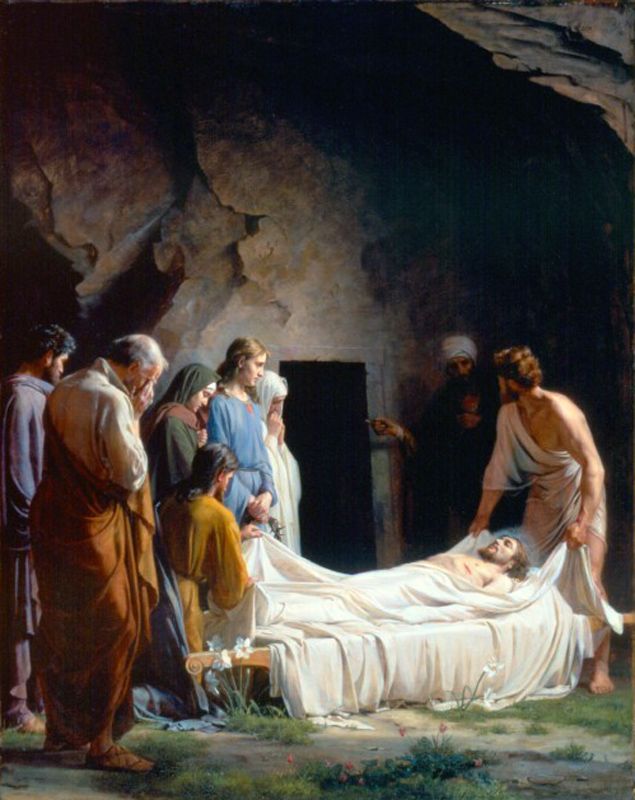
The Burial of Christ Carl Heinrich Bloch
The Burial of Christ by Carl Heinrich Bloch (public domain via Wkimedia Commons)

For some, the short-hand declaration, we are saved by Jesus’ death, carries with it the unfortunate misconception that Jesus death was a sacrifice that conditioned God into being gracious. I pray that we all see the fallacy of this notion.

T.F. Torrance writes that with a proper understanding of the Old Testament sacrifices, we will see Jesus’ death not as a pagan offering for the sake of forgiveness, but as a powerful witness to the will of a merciful God (Atonement: The Person and Work of Christ, pages 38-39). Pagan systems of sacrifice were based on retribution, but Israel’s was based on reconciliation. Under Israel’s system, rather than sacrifices and offerings being given to earn forgiveness, God provided them to cover for and remove the people’s sin so that they would be reconciled to God.

Israel’s sacrificial system was designed to make manifest and to witness to God’s love and mercy, pointing to the purpose of Jesus’ death, which is reconciliation with the Father. Jesus death also defeated Satan and the power of death: “Since the children have flesh and blood, he too shared in their humanity so that by his death he might break the power of him who holds the power of death—that is, the devil—and free those who all their lives were held in slavery by their fear of death” (Hebrews 2:14-15). Paul adds that Jesus “must reign until he has put all his enemies under his feet. The last enemy to be destroyed is death” (1 Corinthians 15:25-26). Jesus’ death is the atoning part of our salvation.

Resurrection

He is Risen by Liz Lemon Swindle (used with permission)

On Easter Sunday, we celebrate Jesus’ resurrection, which fulfills many Old Testament prophecies. The author of Hebrews tells us that Isaac being saved from death is a picture of resurrection (Hebrews 11:18-19). The book of Jonah tells us that Jonah was in the stomach of the sea monster “three days and three nights” (Jonah 1:17). Jesus related that event to his death, burial and resurrection (Matthew 12:39-40; Matthew 16:4, 21; John 2:18-22).

We celebrate Jesus’ resurrection with great joy because it reminds us that death is not permanent. It’s a temporary step toward our future—eternal life in communion with God. At Easter we celebrate Jesus’ victory over death and the new life we will have in him. We look forward to the time spoken of in Revelation 21:4: “He will wipe every tear from their eyes. There will be no more death or mourning or crying or pain, for the old order of things has passed away.” The resurrection is the hope of our salvation.

Ascension

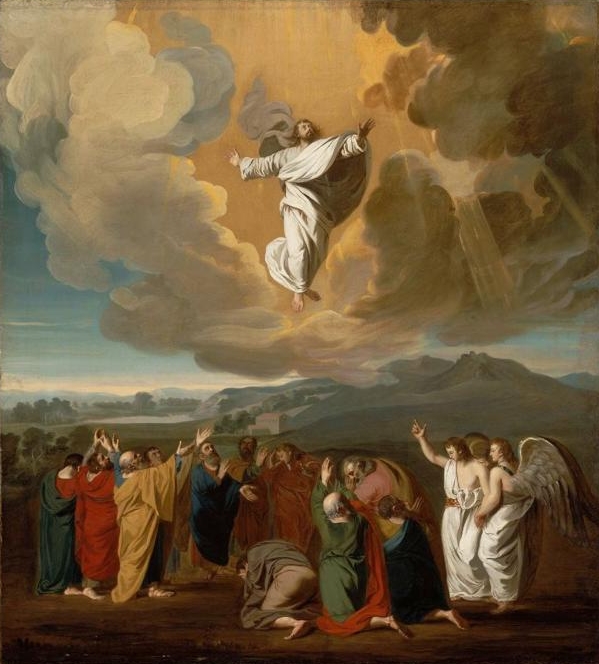
Jesus_ascending_to_heaven by John Singleton Copley, 1775 public domain via Wikimedia Commons
Jesus Ascending to Heaven by John Singleton Copley (public domain via Wikimedia Commons)

Jesus’ birth led to his life and his life led to his death. But we cannot divorce his death from his resurrection and we cannot separate his resurrection from his ascension. Jesus didn’t just come out of the grave and live as a human being. Now a glorified human, Jesus ascended to the Father, and it was not until that great event occurred that he finished the work he started.

In the introduction to Torrance’s book Atonement, Robert Walker wrote this: “The ascension is Jesus’ taking of our humanity in his person into the presence of God into the union and communion of the love of the Trinity.” C.S. Lewis put it this way: “In the Christian story God descends to re-ascend.” The glorious good news is that in ascending, Jesus took us up with him: “God raised us up with Christ and seated us with him in the heavenly realms in Christ Jesus, in order that in the coming ages he might show the incomparable riches of his grace, expressed in his kindness to us in Christ Jesus” (Ephesians 2:6-7).

Incarnation, death, resurrection and ascension—all vital parts of our salvation and thus our worship during Holy Week. These milestones point to all Jesus has accomplished for us through his whole life and whole work. Throughout the year, let’s take in more and more of who Jesus is and all of what he has done for us. He is the complete salvation package.

Holy Week blessings to you and yours,
Joseph Tkach