GCI Update
Connecting Members & Friends of GCI
Header Banner

Sermon outline

Following is a sermon outline that expands on the message of Holy Week and the season of Easter concluding with Pentecost. It was written by GCI, Philadelphia member John Kossey. 
 

Hosanna Precedes Hallelujah

In this sermon we’ll remember the old, old story of Jesus and his love—his love for us unto death on the cross. Hosanna and hallelujah are distinct emotional exclamation points that help us understand what Jesus has done for us.

1. The core message

To the vain, “know it all” Corinthians, Paul focused, “not on lofty words of wisdom,” but “decided to know nothing among you except Jesus Christ and him crucified” (1 Corinthians 2:1–2, NRSV throughout except as noted). What Paul regarded “as of first importance,” was that “Christ died for our sins in accordance with the scriptures, and that he was buried, and that he was raised on the third day in accordance with the scriptures” (1 Corinthians 15:3–4). Paul explained to the Galatians, “I have been crucified with Christ….It was before your eyes that Jesus Christ was publicly exhibited as crucified” (Galatians 2:19; 3:1). And John praised Jesus as “the slain Lamb of God who takes away the sin of the world! (John 1:29), of whom it is declared: “For you were slaughtered and by your blood you ransomed for God saints from every tribe and language and people and nation; you have made them to be a kingdom and priests serving our God…” (Revelation 5:9–10).

Anticipating his death, resurrection and ascension, Jesus made provision for “another Advocate” to be with his disciples “forever” (John 14:16). That Advocate, the Holy Spirit, promised Jesus, “will teach you everything, and remind you of all that I have said to you” (14:26). The Spirit, who abides in and among the people of God (John 14:17), inspired John to devote considerable attention to the final week of Jesus’ earthly life (chapters 12 through 20). Indeed, the Spirit illuminates significant aspects of Jesus’ journey to the cross–a journey that, according to some theological scholars, included the entirety of our Lord’s life here in earth.

2.   Jesus the Nazorean

Soldiers who came to arrest Jesus asked twice for “Jesus the Nazorean” (John 18:5, 7 margin)—the same title that Pilate had written and placed on the cross in multiple languages (“Jesus the Nazorean, King of the Jews”; John 19:19 margin). Jesus even used this title after His resurrection:

  • “I fell to the ground and heard a voice saying to me, ‘Saul, Saul, why are you persecuting me?’ I answered, ‘Who are you, Lord? Then he said to me, ‘I am Jesus of Nazareth [margin: the Narzorean] whom you are persecuting’” (Acts 22:7-8).

In the four gospels, John and Matthew use nazōraios whereas Mark and Luke prefer nazarēnos. After Herod’s death following the slaughter of the infants, Joseph departed Egypt and returned to Israel with his family and “made his home in a town called Nazareth, so that what had been spoken through the prophets might be fulfilled, ‘He will be called a Nazorean’”(Matthew 2:23). There is a complication here in that no Old Testament passage relates Nazareth (a town) to a messianic person. However, “Nazareth” has a root meaning in the word “branch” (netser). Qumran writings synonymously link netser with samah. Note these words in Scripture:

  • Isaiah 11:1: “A shoot shall come out form the stump of Jesse, and a branch [netser] shall grow out of his roots.”
  • Zechariah 6:11-13: “…Thus says the Lord of hosts: Here is a man whose name is Branch [samah]: for he shall branch out in his place, and he shall build the temple of the Lord. It is he that shall build the temple of the Lord; he shall bear royal honor, and shall sit upon his throne and rule.”
  • John 2: 19-21: “Jesus answered them, ‘Destroy this temple, and in three days I will raise it up.’ The Jews then said, ‘This temple has been under construction for forty-six years, and will you raise it up in three days?’ But he was speaking of the temple of his body.”

John’s Gospel helps us understand the crucifixion and resurrection of Jesus as the destruction of his embodied temple and his raising up and inaugurating a personalized temple/Father’s house/household that the Holy Spirit would constitute and continually vitalize: ”

  • “‘And I, when I am lifted up from the earth, will draw all people to myself.’ He said this to indicate the kind of death he was to die” (John 12:32).

Jesus “learned obedience through what he suffered” (Hebrews 5:8). He endured the unspeakable agony of crucifixion, overcame death and the grave and rose victorious through the Father and the Spirit in order to prepare an inclusive “temple of the living God” (2 Corinthians 6:16) for not only his disciples, but ultimately for all humankind. According to one commentator, “The Father’s house will no longer be a construction of stones, but will be a household of many interpersonal relationships, many dwellings, where the Divine Presence can dwell with believers.”

In accord with the title Pilate had written, Jesus the Nazorean is our temple of divine glory and the messianic temple builder of God’s presence (see John 1:14; 2:21; 17:23 and 1 Corinthians 6:19). Hallelujah—praise God!

3.   The Lamb of God

Let’s read John’s account of Jesus’ entry into Jerusalem, days after he had raised Lazarus from the grave (the following translation is from Anchor Bible, chapter 12:9–19, emphasis added):

Now the large crowd of the Jews found out that that he was there and came out, not only because of Jesus, but also to see Lazarus whom he had raised from the dead. The chief priests, however, planned to kill Lazarus too, because on his account many of the Jews were going over to Jesus and believing in him. The next day the large crowd that had come for the feast, having heard that Jesus was to enter Jerusalem, got palm fronds and came out to meet him. They kept on shouting: “Hosanna! Blessed is he who comes in the Lord’s name! Blessed is the King of Israel!” But Jesus found a young donkey and sat on it. As the Scripture has it: “Do not be afraid, O daughter of Zion! See, your king comes to you seated on a donkey’s colt.” At first, the disciples did not understand this; but when Jesus had been glorified, then they recalled that it was precisely what had been written about him that they had done to him. And so the crowd which had been present when Jesus called Lazarus out of the tomb and raised him from the dead kept testifying to it. This was [also] why the crowd came out to meet him: because they heard that he had performed this sign. At that the Pharisees remarked to one another, “You see, you are getting nowhere. Look, the world has run off after him.”

Jesus’ entry into Jerusalem took place on 10 Abib/Nisan. Moses passed instructions to Israel to select a male lamb (sheep or goat) on day 10 of Abib/Nisan for sacrifice late on 14 Nisan before or through twilight (Exodus 12:3–6). Not only did these days afford time to verify that the lamb was without blemish and suitable for sacrifice, the family could and did become attached to their lamb, not just any lamb. By the time of Jesus, rabbinic tradition called for the high priest to go out through the North Gate of Jerusalem sometime after the morning sacrifice to select the best of the best yearling for the Passover. A considerable procession of priests would ceremoniously line the streets to honor the high priest’s return with the perfect sacrificial lamb. Meanwhile, a crowd who had witnessed the raising of Lazarus accompanied Jesus on his way to Jerusalem. Crowds of people who had heard about this unprecedented miracle—imparting life to Lazarus who had been dead for four days—poured out of Jerusalem’s East Gate, eager to see the Coming One. The crowds grew confident, reasoning that since Jesus had power to raise the dead (and feed a large crowd, John 6:14), “the prophet who is to come into the world” could surely free the Jews from Caesar’s brutal oppression.

The people of Jerusalem were selecting their Messiah-King at the time that Caiaphas the high priest was seeking the perfect Passover lamb during daylight of 10 Nisan.

  • John 12:13: “So they took branches of palm trees and went out to meet him, shouting, ‘Hosanna! Blessed is the one who comes in the name of the Lord—the King of Israel!’”

Hosanna is literally either hosha na or the longer compound, hoshiah na—“save now” or “save, please.” The Greek word for hosanna is a transliteration of Hebrew, not a translation.

  • Psalm 118:25–26: “Save us, we beseech you, O Lord! [hoshiah-na]  O Lord, we beseech you, give us success! Blessed is the one who comes in the name of the Lord. We bless you from the house of the Lord.”

Some of the crowds were crying out to select Jesus as their new King of Israel. The psalm says nothing about a nationalistic king. And the use of palm branches to greet a potential liberator evoked or suggested Maccabean nationalism. Crowds that pleaded for Jesus to save them from Roman brutality as king of the Jews turned on him just days later. And before Pilate, Jesus asserted, “My kingdom is not from this world” (John 18:36).

At this point Jesus enacts his true identity by seating himself on a donkey, not riding militantly on a horse into Jerusalem. His purpose is to undergo crucifixion, death and resurrection in order to draw all humankind to himself as worldwide Messiah. His raising of Lazarus promised the gift of life not just for Israel but for people across the earth.

Jesus did not enter Jerusalem as a “triumphal entry” of kingly hallelujah that brought an immediate political solution for Israel. Instead, Jesus chose a “donkey entry” of hosanna—saving the whole world that the Father loves by submitting to crucifixion and death.

Points to Ponder

  • The distinction between hallelujah—Praise God!; and hosanna—Save/help us, please!; has become blurred through the centuries. Music and messages typically assume they mean the same concept. Hosanna is an urgent plea, petition, or cry for help. Hallelujah is a grateful exclamation of praise to God (see “Hosanna” in Anchor Bible Dictionary, 3:290–291).
  • We can learn anew that Jesus the Nazorean is “King of kings and Lord of lords” (Revelation 19:16) because he faithfully obeyed God the Father through suffering unto death on the cross. He has incorporated us, through the Spirit-Paraclete, into the temple of the living God.
  • Jesus refused to become just another temporal king of the Jews, despite the pleading hosannas from Jerusalem’s Passover crowds. They urged him to become a liberating king on 10 Nisan, when Passover lambs were being selected.
  • Reflect upon our need to exclaim, “Hosanna!” to “the Lamb of God who takes away the sin of the world” (John 1:29). He gave himself to public scrutiny, scorn, suffering, desolate rejection and humiliating crucifixion to be lifted up and glorified. In our urgent need, let us remember the concise prayer, “Hosanna!”—“Save [or help], please!”
  • Instead of saving himself from the cross, “Christ through the eternal Spirit, offered himself without blemish to God” (Hebrews 9:14).

Hosanna precedes hallelujah. Praise God!

Filipino Discipleship Pathway

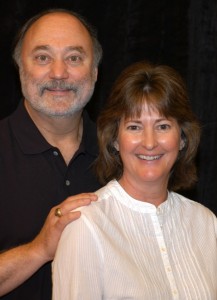
GuzonsGCI in the Philippines recently adopted a Discipleship Pathway for use in their churches. “D-Star,” as it is called, was designed by GCI Philippine’s National Director Eugene Guzon (pictured at right with his wife) with assistance from the national office leadership team. It is a five-step journey of coming to know Christ and then growing up in Christ: (1) Connect, (2) Community, (3) Convert, (4) Commit and (5) Commission.

Each step in the D-Star pathway is fully centered on Jesus, who, in accordance with GCI’s Incarnational, Trinitarian theology, is understood to be at work, through the Spirit, with all people—leading them to conversion and on to maturity as one of his followers. The goal of D-Star is to follow in step with the Spirit, helping people take each step on the journey with Jesus–eventually becoming active participants in our Lord’s Great Commission work (Matthew 28:18-20; Acts 1:8).

This is, of course, a journey of faith, by which each believer shares, through Christ, in God’s promise to Abraham: “I will bless you and make your name great,” so that, “in you all the families of the earth shall be blessed” (Genesis 12:1-3). As children of Abraham, we participate by faith in what Jesus is doing in the power of the Spirit to fulfill the Father’s mission to the world.

For more about our calling as churches to participate in Jesus’ disciplemaking work, go to http://mindev.gci.org/strategy.htm.

Canada & Mozambique

This update is from Gary Moore, GCI’s national director in Canada.

Ordinations in Vancouver

Canadian ordinationsRecently I had the privilege of attending services in the Surrey, Vancouver, British Columbia church. It was a special day with Jerry Lucky and Johannes Breytenbach ordained as elders, and Louise Jeansonne and Dan Holiove commissioned as deaconess/deacon (called “ministry leaders” in the US). These individuals with spouses are pictured here, from left to right: Juliette Breytenbach, Johannes Breytenbach, Louise Jeansonne, Dan Holiove, Sue Lucky and Jerry Lucky. They will add to the committed group of existing leaders in the congregation and provide a great team working with pastor Craig Minke as they lead the church into greater participation in the mission of Jesus Christ to the world.

Missions work; Mozambique Easter conference

I’m pleased to report that GCI Canada’s International Mission Fund and congregational donations sent $77,000 outside our borders for mission work last year. This has accomplished much good, and it is great to see this level of generosity within our fellowship. We recently provided financial support for the annual Easter conference in Mozambique. Here is Tim Maguire’s report:

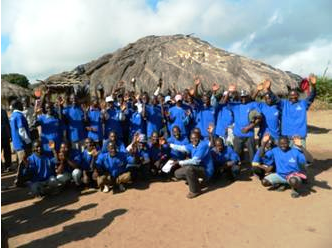
Mozambique groupAccompanied by Dawie Maree, I returned mid-week from my travels up into Mozambique. Even though the roads are long and in poor condition and living conditions extremely basic, I somehow return rejuvenated after seeing the joy that these people have from embracing Christ. My words are inadequate for describing the experience, and I wish you could all come along so that you could see and feel it for yourselves, as 11 Polokwane members did this year, hiring a taxi and spending two days of the conference with our Mozambique brothers and sisters. This year there were about 750 people in attendance at our headquarters in Morrumbala. The Easter conference is for our Mozambique pastors (about 100 in total) but others just arrive, drawn by a thirst for knowledge of him and fellowship.

This year’s theme was “Who is Christ.” When I arrived I discovered after talking to some of the leaders that the Jehovah’s Witnesses have had a fairly strong influence within some areas and some of the understanding of who Christ is was distorted.

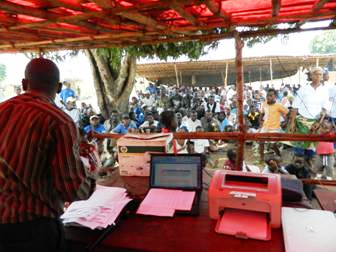
Mozambique high techIt is a surreal feeling, being surrounded by mud and grass huts, no plumbed water or electricity (though they had managed to hire a diesel powered generator), eating basic food cooked over open fires, yet having access to vast online resources due to mobile internet. I was immediately able to go online, search our international GCI website for relevant articles, translate them into Portuguese (using Google translate), print them on a small laser-jet printer we had purchased for them (which is usually operated by a battery and power inverter fed from a solar panel, also bought by GCI South Africa) and distribute them to all the pastors to study further. What a privilege it is to participate where the Holy Spirit is working!

Thanks to funding from GCI Canada, I was able have a tow-bar put on my car to take a trailer with me on this trip. It was loaded with clothes donated by members and congregations, as well as food, Bibles and “Talking Bibles,” GCI t-shirts for our pastors and fivewater purifying units, which were installed in and around Morrumbala. That the trailer had two blow-outs on the way and we had only one spare wheel is a story for another day! The final day of the conference concluded with a moving Communion service.

Prayer request: Unfortunately, when Tim returned from Mozambique, he fell ill with malaria. After several days of high fever and sickness, he is returning to health. Please pray for his complete recovery, and for our members in Mozambique who face this dangerous disease on a regular basis without even the benefit of pain killers. Malaria is the most common cause of death in the region.

About the Bible

Dear Brothers and Sisters in Christ,

Joe and Tammy TkachAlthough I have written hundreds of articles, I have written only one book, Transformed by Truth. I wanted to chronicle, from our denominational perspective, the transformation God led us through.

truthcoverWriting that book was hard work. I made an overall outline, and then dictated my thoughts and ideas. Using a transcription of my dictation, I then reorganized the material, eliminating repetition while maintaining the story flow. It took me months of hard work. Even so, I didn’t do a perfect job. I tried to be fair and accurate, explaining why and how our church went through what some have called an unprecedented change in doctrine. With the wisdom of hindsight, I look back over what I wrote and see places where I could have explained things more clearly.

That is the problem with the written word. It is a conversation where one party is absent. The writer and the reader are separated by distance, time, language or culture—sometimes all four. I wish I could sit with each person reading my book and explain what I was trying to communicate. I can’t do that, but the Bible’s ultimate author does, as I’ll explain.

The Bible has rightly been called the greatest story ever told. It is about the greatest person who ever lived, who had the greatest message possible and made the greatest offer ever made. As you know, the Bible was written over a 1,500 year span of time by over 40 authors from every walk of life, including kings, peasants, philosophers, fishermen, shepherds, soldiers, poets, statesmen, scholars and more. From beginning to end, these authors wrote on many topics, from many different perspectives. The challenge was to present these testimonies in a way that was coherent and consistent, building up a written record that conveyed the unfolding story of God’s love for all humanity in all times—not just those who lived in “Bible times.”

The Bible has been read by more people than any other book—it has out-sold every book that has ever been written and still sells more copies every year than any other book. The Bible has been translated and published in more languages than any other book in existence. The story had to be told in a way that would be accessible to all these people, whenever they lived and whatever their cultural background.

Some authors offer revised editions of their work, updating their writing as times change or more facts become available. Some have wanted to do that with the Bible, altering the text to make it more “relevant” to their particular culture. We can do that to some extent, but we had better be careful, for we have no authority to alter the meaning of the inspired words of God.

However, the Bible has a significant advantage that no other ancient book can claim: its ultimate author and editor is still alive! Not only that, but he promises to come and be with each reader, guiding his or her understanding. As Gary Deddo explained in the first of his articles on Interpreting the Scriptures, God stands behind his word, helping us, no matter who we are or where we are in time and space, to grasp more deeply what those uniquely inspired words hold for us.

While Jesus was with his disciples, he could teach them personally, at times giving one-on-one instruction. It was like having the Word of God living among them. Actually, it was not like that—it was that. However, at the Last Supper, Jesus told his disciples, who had relied so much on his presence:

“I have much more to say to you, more than you can now bear. But when he, the Spirit of truth, comes, he will guide you into all the truth. He will not speak on his own; he will speak only what he hears, and he will tell you what is yet to come. He will glorify me because it is from me that he will receive what he will make known to you. All that belongs to the Father is mine. That is why I said the Spirit will receive from me what he will make known to you” (John 16:12-15).

Today, we can trust that same Spirit to be at work among us, helping us hear just what he spoke to those authorized first apostles.

A recent survey from the Barna Group, commissioned by the American Bible Society, revealed that most Americans esteem the Bible and have access to it. There is a healthy cultural respect for and fascination with Scripture, which helps explain why millions tuned into the recently broadcast television series, The Bible. People seem to be open to experiencing ancient scriptures in new ways. However, many are not sure how to apply the lessons of the Bible to their own lives and to society at large. I believe that Gary’s ongoing series of articles will help us not only maintain a proper respect for the Holy Scriptures but also apply their timeless wisdom to our lives. The third installment in his series will be posted in the next issue of GCI Weekly Update; for the first installment, click here; for the second installment, click here.

With love, in Christ’s service,

Joseph Tkach

Jason Richards

We have had prayer requests from time to time for Jason Richards. His grandfather is GCI pastor Martin Manuel. Here is an update from Martin concerning Jason.

Jason is in the ICU at Seattle Children’s Hospital fighting pneumonia. His heart transplant has gone well over the past four months, but he has felt the effects of fairly minor complications: weakened respiration while his diaphragm recovers form surgical injury and weight loss due to poor appetite; otherwise, his recovery has been remarkable. Now his doctors are trying to treat pneumonia that has set in over the past few days and have him under oxygen support to restore his lungs to normal function. They plan to reinsert the NG tube so that he can receive nourishment and start to regain weight.

As many of you know, Jason and his family have gone through difficult days over the past two years. Through it all, our Father, Jesus and the Holy Spirit have held them, carried them, comforted them, and provided repeated healing and recovery. Please pray for them and for us too as his grandparents—in our frailty, we struggle with complete trust and we stress easily. Over and over, we have witnessed the grace and glory of God; praise him!

Death of Leslie Schmedes

Leslie Schmedes
Leslie Schmedes

We are saddened to learn of the death of retired GCI pastor Leslie “Les” Schmedes on April 20 from congestive heart failure.

Leslie Alva Schmedes, of Azusa, California, was born December 1, 1931 in Charlotte Amalie, St. Thomas, US Virgin Islands. Les became a member of the Worldwide Church of God in 1964 along with his wife Darlene. He began serving the church as a deacon in Kansas City, Missouri. In 1968, Les was ordained an elder and he and his family were assigned to the Chicago Southside church where he trained under Harold Jackson. From there, Les and his family went on to pastor congregations in New York, Ohio and California.

Les SchmedesLes leaves behind his wife of 58 years, Darlene; his sons Keith and Kent; and his daughter Audrey. Les was preceded in death by his son, Kevin. His legacy lives on through five grandchildren (four survive) and three great grandchildren. Please pray for Darlene and the whole family.

Cards may be sent to:

Darlene Schmedes
840 E Foothill Blvd Space 82
Azusa, CA 91702-2607


Thai mission

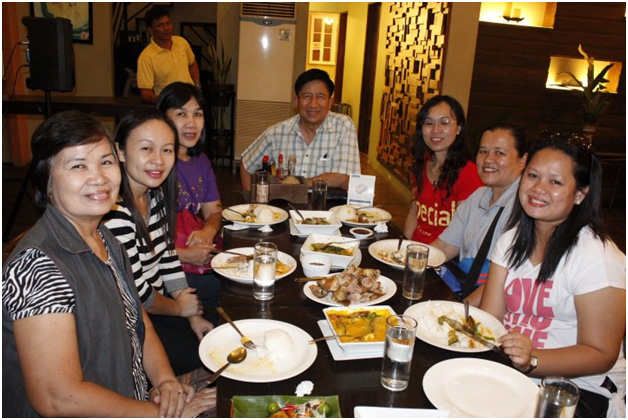
Thai_TeachersDecerel Pilarca, an English teacher and GCI missionary in Chiang Rai, northern Thailand together with a fellow Filipina teacher, accompanied three Thai teachers from her school to visit the Philippines for the first time last March. The group had dinner with GCI Philippines national director Eugene Guzon (see picture at right).

The visitors were hosted by the GCI Philippines missions community team represented by Mina Gonzales who also served as tour guide. While in the Philippines, the group explored the possibility of establishing a student exchange program between their school and a partner high school in the Philippines. Through the program, Thai students would stay in the Philippines for a month while being hosted by Filipino families. In turn, an equal number of Filipino high school students would travel to Thailand and stay with Thai families.

The group also met with GCI Philippine leaders in Baguio City and Manila. After visiting her parents in Mindanao, Ms. Pilarca will return to Thailand to continue teaching in Chiang Rai. The Philippine missions team hopes to organize a short-term mission trip to Thailand within the year. Those interested in participating may contact the GCI Philippines national office.

Converge East

“I think it was one of the happiest, most positive conferences I have ever attended in the church. It showed that the concept of the various generations represented in our church working together is not just a nice idea. It really is happening.”

This was John Halford’s observation after attending Converge East, where about 100 men and women from GCI Generations Ministries (GenMin) camps, mission events and administration gathered last weekend near Columbus, Ohio. Also participating were GCI youth ministry leaders from Canada as well as other guests.

Converge East

Converge is the annual summit of GenMin’s leaders, held this year in two locations: Southern California (last February—click here for a report) and recently in Ohio. The purpose of Converge is to gather for inspiration, encouragement and instruction. Participants worshiped, shared meals and fellowship, and participated in discussions about various aspects of GenMin camp and mission event ministries.

Presenters in Ohio included Dan Rogers, Gary Deddo, Cathy Deddo, John Halford, Anthony Mullins, Ted Johnston, Greg Williams, Jeff Broadnax, Anne Stapleton and Mark Stapleton. Moving testimonies were given by participants representing GenMin’s cross-generational ministry focus. Here, from Stephen Symonds, is a montage of pictures and video clips from Converge East:

http://youtu.be/oNjAbN1Eivo

Ordination of

An event highlight was the ordination of Dustin Lampe as a GCI elder (see picture above). Dustin was hired recently to serve as assistant pastor in the GCI Cincinnati, West congregation where Rick Shallenberger is senior pastor. Dustin recently completed a Master of Arts degree in Christian Ministry at Friends University in Wichita, Kansas. Dustin learned about GCI from Friends professor Dr. Chris Kettler, who has appeared on GCI’s You’re Included program discussing Trinitarian theology.

Converge East was coordinated by GCI Columbus pastor Jeff Broadnax, who also serves as GenMin camps coach for the eastern United States. Converge West was coordinated by GCI San Diego pastor Mark Stapleton and his wife Anne who serve together as GenMin camps coach for the western United States. For more about the ministries that GenMin provides in service to GCI congregations, click here.

Karl Reinagel

Reinagels
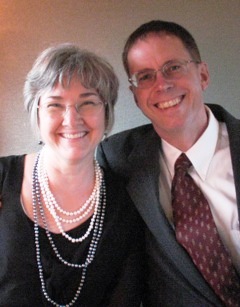
Carla and Karl

“I love having a front row seat to watch how God is working in the lives of many people,” said District Pastor, Karl Reinagel, who pastors the GCI congregation in St. Louis, Missouri.

Karl spent his early years on a 40-acre Christmas tree farm in Eden, New York. “I sold trees as a boy of 8 or 9 when dad was at work. We stopped running that business after embracing WCG teachings against Christmas. Oddly enough the last time we had a Christmas tree in the house is one of the acts that my mom and sisters remember most fondly of me. I barely remember it, but it always comes up at family reunions. I helped them by cutting, hauling and standing up a tree in the living room after it was forbidden by Dad. I don’t think I got the memo on that one – at least my conscience was not developed enough to have a crisis. I just saw my mom and sisters struggling with something that was important to them and needing a strong hand from an older brother.”

Karl first became aware of WCG in the late ’60s through The World Tomorrow radio program, The Plain Truth magazine and especially the Correspondence Course. “Dad asked me to read the Correspondence Course and scriptures as he typed every word. We began attending church, along with two of my brothers, in the early ’70s following a public Bible lecture series in Buffalo, New York. We had no idea there was a congregation in the area until then.”

Karl’s parents divorced when he was about 12 and Karl became “chief cook and bottle washer of the bachelor pad with dad and two brothers.” In late 1974, they moved to central Tennessee where his father remarried and began a mixed family of “yours, mine and ours.” Karl graduated from high school in 1977 and went off to University of Tennessee-Knoxville to study accounting.

Karl was baptized right after high school and started participating in the local Spokesman Club while attending college. “It was a pretty scary adventure for me. I usually enjoyed my astronomy class at 7:50 a.m. except Wednesday mornings when I began to anxiously anticipate my assignment at club that evening” His passion for pastoral ministry started developing and Karl transferred to Ambassador College in 1979. “Events in WCG and in my home church area led me to attend AC. I wanted to learn to be more helpful to the church in a troubled time.”

It was in college that Karl met his wife, Carla Abbey. They were married August 8, 1982. Karl and Carla have three children and two grandchildren. Jon is married to (another) Carla and they have two children, Kyran (3) and Jariel (six months). Their other two children are Kneight (who currently lives in Chicago) and Krissy, who will graduate from high school in 2014.

After graduating from AC in 1982, Karl began working in the Mail Processing Department of WCG. “I was hired to serve those responding to The World Tomorrow program and The Plain Truth magazine. At the same time I started serving members of our local Auditorium PM congregation in various capacities alongside a whole bunch of outstanding men and women over the years.”

Karl worked in various departments of Mail Processing for a number of years overseeing office staff and working with volunteer phone operators for the WATS line. In 1995 he transferred to Church Administration to assist Richard Rice. Karl calls that time, “the year all heaven broke loose in the church.”

Richard Rice was a mentor to Karl for many years. “Richard Rice helped me grow as a Christian in many ways during my years in Pasadena and helped me to navigate through various rough patches of ministry as a new pastor who faced sticky situations I had no idea how to approach. I especially treasure the hours we spent travelling to and from the Los Angeles airport as he and his wife Ginny made many trips across the country to encourage pastors and congregations. This gave me the opportunity to learn how to graciously and lovingly deal with many of the difficult circumstances ministers face.”

In the mid-90s Karl became aware of the importance of identifying spiritual gifts. “I realized shepherding was one of my strongest gifts. It became apparent that my position in Pasadena would soon be phased out and I was sure I would serve in pastoral ministry when that happened. Unfortunately in the spring of 1996 when ‘my number came up’ with another wave of massive layoffs, they were also cutting back the already depleted field ministry. That was heartbreaking, but it gave me the chance to gain some useful experience serving the congregation in Olean, New York, while I sought work in the area. Pastor George Hart was most encouraging at the time in ministering to me as well as giving me opportunities to serve others. In July I was hired to replace a transferring minister in Wausau, Wisconsin.”

Since that time, Karl and his wife Carla have served congregations in Wisconsin, Iowa, and Nebraska before finally settling in St. Louis. “Carla is very supportive of me in my ministry, but her ministry priority has been on providing a stable home and rearing godly children. She serves the church by filling in where needed as she is able and encouraging the body of Christ through art.”

When asked about his most memorable moments as a pastor, Karl said he’s had three. “It is more as a parent than as a pastor, so maybe it doesn’t even count but it is the baptism of each of my children. Carla and I have been blessed beyond words to express just what it means that each of our children loves Jesus and serves him according to their gifts, abilities and opportunities.“

A couple of interesting things about Karl that others may not know: “Several years ago we installed a wood burning stove on the hearth and have used it for our primary heat ever since. It gives me lots of good exercise splitting, stacking and hauling wood most of the year and the radiant heat is hard to beat. Carla and I have also begun to make homemade wine and are trying our hand at hard apple cider.  We have little success to date, but we eagerly await next year’s apple harvest so we can test modifications to our recipe.”

Karl enjoys the “amazing journey” of GCI. “The variety and breadth of friendships over the years is wonderful with friends and acquaintances literally throughout the country and all over the world.” As a pastor, Karl says, “I want to see people growing into maturity in Christ: discovering God’s love for them and responding to it, finding their spiritual gifts and passion and taking their place as active members of the body of Christ.”

Karl says he feels closest to God “in those quiet mornings before anyone else gets up just watching the birds and other wildlife interact with one another and enjoying the native garden Carla and Krissy have planted in the backyard—our sanctuary. Also, sitting by the fire in the middle of a cold winter’s night meditating and praying while reloading the stove. Oddly enough there are more public times as well, such as standing with a couple during their wedding ceremony and feeling for those brief moments that God has included me with them inside a special circle of his love. Or when I am privileged to participate with Jesus as he comforts mourners before and during a funeral service as we reflect upon the love of the Father, Son and Holy Spirit for the deceased and the survivors.”