GCI Update
Connecting Members & Friends of GCI
Header Banner

Hawking, science and atheism

Dear Brothers and Sisters:

Joe Tkach and Tammy TkachThe movie The Theory of Everything tells the compelling story of theoretical physicist Stephen Hawking. Though I respect his brilliance and the way he continues to work despite battling Lou Gehrig’s disease, it amuses me when Hawking and other scientists who are atheists claim to be smarter than and thus superior to people who hold to non-atheistic worldviews. The fact is, smart people are found everywhere (including in prison!) and intellectual ability certainly does not equate with superiority.

Stephen Hawking in Cambridge (Creative Commons attribution)
Stephen Hawking (Wikimedia Commons, creative commons attribution)

You’ve likely heard of Hawking’s best-selling book, A Brief History of Time, in which he seeks to explain the origin and future of the universe. A few years ago he wrote a sequel with Leonard Mlodinow titled The Grand Design, which asks, “Is the apparent ‘grand design’ of our universe evidence for a benevolent creator who set things in motion? Or does science offer another explanation?” Though the book does not break new scientific ground, it received a lot of attention because Hawking revealed his leaning toward atheism with sweeping statements like these: “Because there is a law of gravity, the universe can and will create itself from nothing” and “Spontaneous creation is the reason there is something rather than nothing…why the universe exists, why we exist.” Though thought-provoking, such statements don’t explain why there is something rather than nothing. Hawking and Mlodinow assume the existence of gravity and spontaneous creation, which then bring forth other things. This line of reasoning is like arguing that a preexisting process of carbonation brought forth Coke and Coors.

Though in times past Hawking would refer to God as “the embodiment of the laws of physics,” he now self-identifies as an atheist, saying, “There is no God” and “Religion believes in miracles, but they are not supported by science.” Being a world-class scientist, Hawking’s statements have credibility in the scientific community, but that should not blind us to his magical thinking when he refers to creation without a creator, law without a lawgiver, and grand design without a Grand Designer. When Hawking and others speak in such terms, they are making assumptions that lack scientific evidence. This is ironic when you consider that atheists often accuse Christians of believing in an imaginary God.

No scientific experiments can “prove” the assumptions that underlie Hawking’s atheistic thinking. Why? Because those assumptions have to do with realities outside the realm of science. It might interest you to know that Hawking’s mother, Isobel Hawking, pointed out the need to keep her son’s comments in perspective. In the book, Stephen Hawking: An Unfettered Mind, she is quoted as saying this:

Not all the things Stephen says probably are to be taken as gospel truth. He’s a searcher, he is looking for things. And if sometimes he may talk nonsense, well, don’t we all? The point is, people must think, they must go on thinking, they must try to extend the boundaries of knowledge; yet they don’t sometimes even know where to start. You don’t know where the boundaries are, do you?

In the book God and Stephen Hawking: Whose Design Is It Anyway? John C. Lennox, professor and emeritus fellow of mathematics at the University of Oxford notes that many of Hawking’s conclusions about origins are not only unproven—they are fundamentally unprovable. He is particularly critical of Hawking’s attempt to explain how something comes from nothing. One of Lennox’s concluding statements gave me a chuckle: “What all this goes to show is that nonsense remains nonsense, even when talked about by world-famous scientists.”

What should we do about scientists like Hawking who hold to atheistic positions? Let us pray for them, knowing that the Father, Son and Spirit continually are reaching out to all people (atheists included!) that they might come to know God and his unconditional love for them. Because I share God’s love for scientists and science, it brings me joy when brilliant scientists like Hawking come to know God and join in proclaiming the reality of God’s love and grace for all people.

Sharing the Grand Designer’s love,
Joseph Tkach

John McKenna

McKennaPlease pray for Dr. John McKenna, GCI elder and Grace Communion Seminary board and faculty member. His wife Mickey McKenna told us that John had a stroke a few days ago. Thankfully she recognized the signs and immediately took John to the hospital. Rehabilitation has been prescribed as the next step in his recovery.

Card may be sent to:

Dr. John and Mickey McKenna
PO Box 3204
South Pasadena, CA 91031-6204

2016 GCI-USA Regional Conferences

Church Administration and Development is pleased to announce that in 2016, GCI will hold seven regional conferences in the United States. Here are the dates and locations:

  • February 19-21 in Ontario, California (Los Angeles area)
  • March 11-13 in Portland, Oregon
  • April 22-24 in Northbrook, Illinois (Chicago area)
  • May 20-22 in Morristown, New Jersey (New York City area)
  • June 24-26 in Charlotte, North Carolina
  • July 15-17 in Dallas, Texas
  • August 5-7 in Orlando, Florida

Pastors, as you and your leadership teams make plans and establish budgets for 2016, please factor in these conferences. Lead pastors and one member of each pastoral team are expected to attend as part of their continuing education. We also urge church treasurers and other finance committee members to attend—we will provide special content for them, including workshops on church finances (with updates on GCI and IRS financial regulations), opportunities to network with folks from the GCI treasurer’s office, and a reception honoring church treasurers. There also will be workshops for those involved in children’s ministry (more details to come).

Further information about conference content and registration will be made available later this year. The cost for registration and lodging will be comparable to the 2014 regional conferences.

Recent conferences

Here are reports from several recent GCI conferences.

PhilippinesGreg-Williams-570x380

GCI-Philippines recently held a five-day conference in Baguio City with more than 1,000 in attendance. The theme was Celebrating Kingdom Life Now. Featured speakers included Greg Williams (pictured at right), director of US Church Administration and Development; and Larry Hinkle, US pastor and director of Odyssey in Christ ministry. For more about the event, click here.

Canada

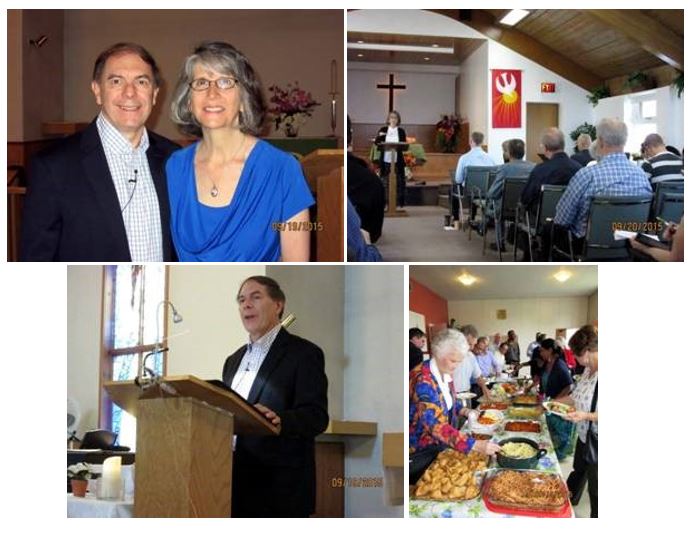
The Toronto East and Cornerstone Christian Fellowship congregations of GCI-Canada recently hosted a conference titled Life in Christ, Life in the Trinity. Guest speakers Gary and Cathy Deddo (pictured below) gave sermons and lectures covering the basics of Incarnational Trinitarian theology and its implications in the Christian life. More than 90 people attended, including visitors from neighboring congregations.

Toronto pictures

Madagascar

Thirty GCI members from Madagascar met recently in Foulpointe on the Indian Ocean coast for a conference titled Joy of Sharing in Christ’s Glory. Activities included organized individual “quiet time,” beach and Bible games, a picnic and evening worship. Two ordinations occurred during the conference: Pastor Daniel Rakotondrabary was ordained an elder to serve members in the Antsirabe congregation, and Angele Rafirangason was ordained a deaconess to serve the Antananarivo congregation.

Madagascar

Nigeria

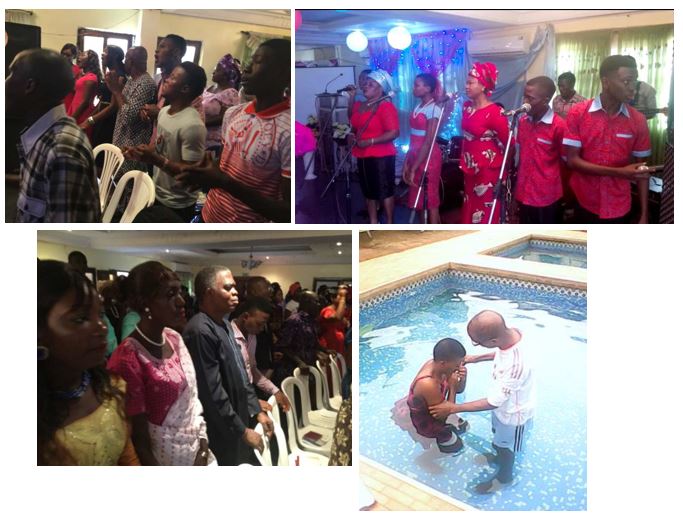
GCI’s churches in Nigeria held a four-day conference in the neighboring nation of Benin. The theme was God is faithful. God’s presence was evident in the worship with singing, praise and prayer, along with several special music performances. Various events were held, including a leader’s meeting, singles/youth forum, a women’s meeting, Bible Study, video presentations on Incarnational Trinitarian theology, a variety night and an elderly citizens’ forum. A highlight of the conference was the baptism of two teenage girls.

Nigeria pictures (2)

Denmark

GCI-Denmark recently held a conference with the theme Our Christian Journey. Sermons addressed the nature of the journey at personal and collective levels. A highlight was the baptism of 80-year-old Chresten Emil Madsen who for eight years has translated GCI publications in the Norwegian and Danish languages.

Denmark festival

Love: the revelation of God

Dear Brothers and Sisters,

Joe Tkach and Tammy TkachOne of the most enjoyable benefits of my job is meeting many of God’s beloved children around the world—both within and outside GCI. I especially enjoy it when I’m introduced to people I’d heard of, but hadn’t yet met. This often happens when I travel internationally since many pastors and others can’t afford to travel abroad. Though I’d heard about them and their work, until I got to a conference or other event in their country, I hadn’t had opportunity to put a face to their name.

Recently on one of my international trips, a pastor I met said to me, “I’ve heard about you for years and I’ve seen your picture, but now I feel I know you.” His comment stuck with me and later I started thinking how such introductions are much like our calling to evangelism—the privilege to introduce people to someone they may have heard of, but haven’t met—Jesus Christ.

Meeting God, who is love

Rembrandt_Harmensz._van_Rijn_-_The_Return_of_the_Prodigal_Son_-_Detail_Father_Son
Rembrandt, Return of the Prodigal Son
(public domain via Wikimedia Commons)

When I introduce people to Jesus, I want to be sure I give them a picture that will delight them and help them want to get to know who God truly is. That’s not hard to do, since the Bible teaches us that love is the essence of God’s being. And so I testify to the love of God. Furthermore, because we know that God the Father is the father of all people, to evangelize is to introduce people to their true Father—their Abba. Evangelism is thus sharing with others who God is and how much he loves them.

What is love?

Quite naturally, people search for love. In 2012, What is love? was the most searched-for phrase on Google. People define love in different ways: an emotion, action, state of mind, or a combination of these. Though some define it as nothing more than our biochemistry at work, most say love is much more than that, yet they struggle to find an adequate definition. Only God can accurately define what love is. Thankfully he has done so through the apostle John, who wrote, “God is love” (1 John 4:8). It’s important to note here that John is not saying “love is God”—we don’t worship love and we don’t define what love is then apply those definitions to God. In writing that God is love, John is indicating that God’s nature and character—his very being—is loving. All God does is loving, and his will is loving. God’s agape love—his holy love—is what true love is all about. In knowing that, false views of love are exposed and ruled out.

There is a strong note of truth in the song, Looking for Love in All the Wrong Places. People look for love in family, friends and in romantic relationships, but as important as these relationship are, true love (holy, agape love) is found only when a person knows its true source—our triune God. God, who is love, created us for loving relationships, including the male-female relationship that is unique to marriage. Sadly, the deeper nature of God’s agape love often is forgotten when people, searching for romantic relationships, turn love into a search for merely satisfying their erotic desires. But when we ground our thinking on the sure foundation that love is the revelation of God, everything else we think about love, and the way we go about seeking after it, will align with reality and lead to our true fulfillment.

Who is God?

Much in our secular western society reflects the sad reality that, as a people, we have not retained God in our thinking. As a result, many struggle with the question, “Who is God?” As noted above, we know that God is love as a triune communion of holy, agape love—Father, Son and Spirit. Were he not triune, God would need creation or something other than himself in order to be love, because authentic love does not exist in isolation. The stunning truth is that God, who exists eternally in a tri-personal, loving relationship, has called us to share in both his love and life through his Son Jesus, by his Spirit. In that relationship, because we understand that God is love, we trust him to be loving—we trust his plan to bring us into relationship with himself and thus to fulfill his purpose for creating us. We also trust him to be faithful, and we trust the fact that even though we don’t understand everything he does (or allows) we know that his purposes are always good, flowing from who he is and expressing his love for us.

God’s revelation

Greg Olsen, Forgiven (used with permission)

We see that God is love most clearly, powerfully and directly in the incarnation, life and self-giving of the whole God through the Son of God on the cross. Jesus is God’s love in flesh and blood, in time and space, in Person. To know God that way is far more than “head knowledge”—it’s about a relationship with God, through Jesus, by the Spirit. In and through that relationship we experience God’s love “up close and personal”—much like we do in a truly loving friendship with another human. As C.S. Lewis wrote in Mere Christianity,God cannot give us a happiness and peace apart from himself, because it is not there. There is no such thing.” Because he loves us, God has given us himself.

Scripture tells us that the revelation of who God is involves the work of the Father, Son and Spirit. The apostle Paul tells us that as God’s adopted children we are heirs with Jesus. He tells us that the Holy Spirit both leads us into this understanding and into a loving relationship with our Father in heaven. As a fruit of that relationship, we are enabled to have loving relationships with other people, loving our enemies as Jesus did, and seeking reconciliation and right relationship whenever we encounter alienation. The apostle Peter tells us God loves us so completely and profoundly that he includes us in his life:

[God’s] divine power has granted to us all things that pertain to life and godliness, through the knowledge of him who called us to his own glory and excellence, by which he has granted to us his precious and very great promises, so that through them you may become partakers of the divine nature, having escaped from the corruption that is in the world because of sinful desire (2 Peter 1:3-4 ESV).

Let us think carefully about these things so that all we think and do (including our evangelism) is grounded fully in the revelation of who God is: love.

Sharing the revelation of God with others,
Joseph Tkach

Pastor appreciation

October is Pastor Appreciation Month in the United States and Canada. Here is the story of how one congregation showed its appreciation for their pastor.

On a recent September morning, Wayne Mitchell, pastor of GCI’s congregation in Seattle/Bellevue, Washington, headed for the hills (the home of Mike Hills, that is). There he met up with a “band of brothers” from his congregation. After sharing breakfast, the men took to the woods with chainsaws, pruners, and a four-wheeler, and proceeded to fell some trees. Four hours later they had cut, split and stacked a couple of cords of wood to be given to Pastor Wayne. The men wanted to show their pastor how much they appreciate him and all he does in serving the congregation. They also wanted to help keep Wayne and his wife warm and cozy this winter. Here are some pictures:

The Band of Brothers
The Band of Brothers (Pastor Wayne in back row, fourth from the left)

woodcutting

Updating church finder information

This announcement is from Bret Miller, manager of GCI’s Information Technology Department.

Are you wanting to change the information displayed for your church on the GCI.org website’s church finder (at http//www.gci.org/participate/find)? If so, here’s how:

  • Log into https://online.gci.org
  • If you have multiple churches, select the one you want to change
  • In the top left box, click Church Information
  • The website is in the first section at the top. To change it, click the Edit button in the upper right
  • Put in the new website, making sure you include the http:// or https:// on the front
  • Click the Submit button
  • From the Church Information screen, click the more info button in the upper right
  • Click Church Locator

By default, we display the pastor for a church as the contact person, including their phone and email. If you prefer that prospective attendees contact a different person, you can fill in the contact name, phone and email here. If you do so, we no longer display the pastor’s information and display the contact person instead.

Over the years a number of pastors have asked for the ability to write something about their church. The description box is now where you can do that. Basic HTML markup should work there for those of you who want more than text. You might use it to note a special event when you’re meeting at a different location. Or if you’re a fellowship group, you might want to describe what your meeting is like. Or you could use it to introduce your church. It’s entirely up to you.

For fellowship groups, we do not automatically display a meeting address because many of them change weekly or meet in homes where the homeowner may not want the address made public. For those that meet in the same location every week and want the address displayed, you can check the box.

Any time we display an address for a church, we also include a map link. Occasionally, this link doesn’t work properly. If your church is one of those, you can find your own public map website like https://www.google.com/maps or http://www.mapquest.com/, make a map for your church and copy the URL of that map into the Map URL box. Then any time we display a map link, we’ll use that instead of trying to make one automatically from the address.

We hope this information will help you make the most of your church information posted on the GCI.org website.