

GCI pastor Timothy Brassell will appear on the TV game show, Wheel of Fortune, on October 14. You might want to watch the show that day to see how he did (check local listings for station and time).

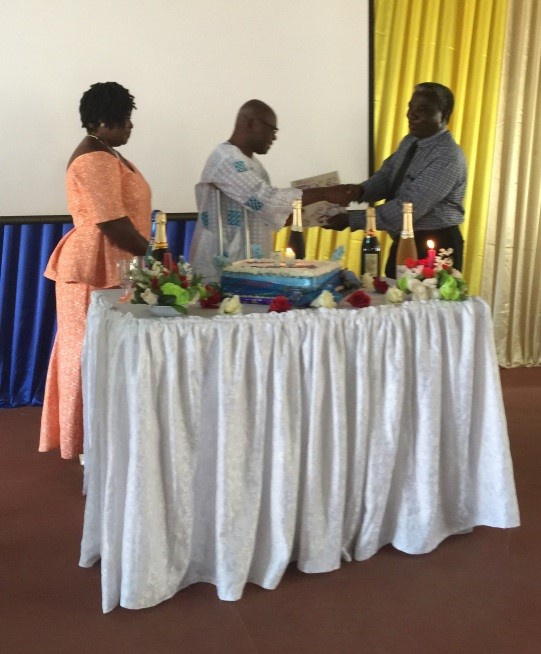 Members of GCI’s New Ashongman congregation in Ghana, Africa, recently honored Pastor Solomon Ayitey on his 70th birthday. Solomon is the pioneer pastor of GCI in Ghana.
Solomon was ordained in 1983 and has served all branches of the church in Ghana. One of the fruits of his service is his brother Theo Nii Okai who Solomon mentored and led to Christ. Now a GCI pastor, Theo preached the sermon in the service preceding his brother’s birthday celebration.
Both young and old wished their “Spiritual Dad” and mentor long life and good health. The Ayiteys live at Adenta in one of the northern suburbs of Accra, the capital city of Ghana.
Please pray for Bettie Broadnax, mother of Jeff Broadnax who pastors GCI congregations in Grove City and Chillicothe, Ohio.
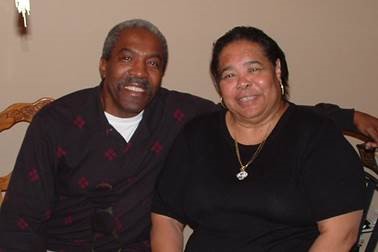
Bettie has been hospitalized for over a month, battling bacterial meningitis, a pulmonary embolism, and now pneumonia and a blood clot in her leg. Though treatment for these conditions is going well, her recovery is slow and difficult.
Jeff and his father Earl (a GCI member in Cincinnati) request prayers for Bettie and the rest of the family at this difficult time.
Cards can be sent to:
Bettie Broadnax
1739 Northcutt Avenue
Cincinnati, OH 45237
Here is part 3 of a 8-part essay by Dr. Gary Deddo titled “The Christian life and our participation in Christ’s continuing ministry.” To read other parts, click on a number: 1, 2, 4, 5, 6, 7, 8. For all 8 parts combined in one article, click here.
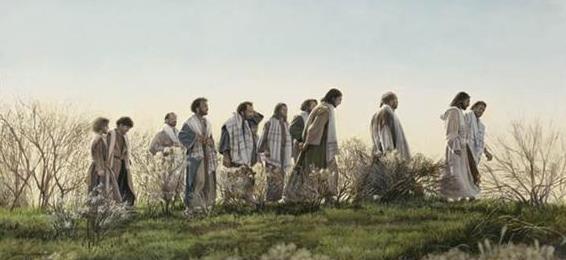
In part 2 of this series we looked at the biblical foundations and theological synthesis of the revelation of the reality of our union and communion with Jesus Christ. This reality was not a secondary matter in the New Testament nor in Christian teaching down through the ages. But because it has been somewhat forgotten, there is the need to bring it back to light. However, there are some obstacles in the way of fully appreciating the truth and reality of our union with Christ. In part 3 of this series we will consider some of those barriers.
There are significant obstacles to our even beginning to grasp the truth of our union with Christ. I’d like to give some consideration to those concerns that often have blunted if not obliterated any concerted effort to grasp this profound theological truth.
First is the sheer wonder of the profound depths of such a grace. Would God really go to such lengths, heights and depths for us? It sounds too good to be true. But when it comes to God, shouldn’t we expect the good news to sound like it is too good to be true? Is not God’s grace beyond all we can ask or imagine? Certainly this response is no reason to rule out its gracious reality.
Union with Christ has often been avoided because of fear that if we say we are united to him at the ontological depths of our being, we will collapse ourselves into him and confuse ourselves with him. That misunderstanding of our union with Christ is a possibility expressed not just in what we think, but reinforced by how we are taught to think. We learn that what things really are is what they are all by themselves. They are individual substances, all one stuff. So, if two things are truly united, the difference between them as well as the distinction of each must be lost. Either one thing would turn into another, or both would turn into a third thing. Following this pattern of thinking, union with Christ would mean we turn into Christ or he would turn into us, each ceasing to be what we were. The Torrances were quick to warn that it is this way of thinking about ourselves as individual substances (a way that can be traced back to Aristotle) that leads to such confusion. If we assume that we are what we are independent of anything else, then a relationship, such as union, cannot contribute in any essential way to what things actually are.
But what if Aristotle was wrong? What if the essence of being human is defined by what we are by virtue of our being in some kind of relationship with God? What if relationship is essential to human being and not optional or accidental, but constitutive—such that we would not be what we are except by virtue of the relationships in which we exist, especially in relationship to God? If that is the case, then the Triune God who has his being as Father, Son and Holy Spirit reconstitutes our humanity by forging a new relationship with fallen humanity through his Incarnation and his entire life, death, resurrection and ascension as the New Adam. In that case, Jesus Christ has become our Lord from the inside of our humanity. We are now what we are because of Whose we are.
It was the truth of our union with Christ that led the Torrances to rethink our Aristotelian ontology (the study of the nature of being itself), and conclude that being itself, divine and human, is “onto-relational.” If relationship is essential to who we are, then in union with Christ, we are really united, but remain distinctly ourselves without confusion with Christ. We are most truly ourselves when we are united to our Lord and Savior Jesus Christ. Union is a continual relationship with Christ at the deepest levels of our being, not a confusion of ourselves with Christ.
Grasping the truth of our relationship to Christ calls for the renewing of our minds so that we begin to think differently about what makes us who we are. In the end, we even have to approach reading Scripture differently. The challenge becomes not so much taking the Bible literally, but taking it realistically. When Paul declares that we are seated with Christ in the heavenlies, we have warrant, despite our Aristotelian philosophical training, to grasp this realistically. The good new is that we as Christians are united to Christ in such a way that all that is ours is his and all that is his is ours. Paul says, “though he was rich, yet for your sakes he became poor, so that by his poverty you might become rich” (2 Cor. 8:9).
What does it mean to be a Christian? It means by grace we are united to Christ as his true brothers and sisters. Nothing less. That is who we are in him.
As noted above, some people worry that any real union must confuse us with Christ. This idea can be reinforced if we feel somehow compelled to trace out a false logic—a third obstacle, which goes something like this: If who we are is who we are in Christ, and our whole salvation is complete in Christ, then there is no place for me and no significance to what I do. This is the antinomian objection, that if we are really united to Christ then there is no reason or purpose for my choices or obedience. I can do what I like.
This might be one of many possible logical implication of our union with Christ. But theology is not the result of strings of logical implications. And simple logical inferences are never necessarily true. Second, everything depends on what we mean by union. The New Testament affirms a profound union with Christ, the completed work of Christ, and the wonderful exchange and yet it also calls for our involvement, our activity, our participation. Union in the New Testament sense does not rule out response, obedience, action and decision, but includes them.
Can we make any progress in understanding how these elements fit together? I think the answer is yes, and the Torrances lead the way. Union with Christ in this realist way does not eliminate the trusting obedience of the Christian life, but actually strengthens it!
The biblical picture points to the union of persons who remain persons. The union is a personal union, not mechanical or functional or impersonal. Such a personal unity calls for interaction, for inter-relationship. A personal unity means that neither person is lost, but the distinction of persons is maintained while the personal, deliberate and chosen interaction takes place. Unity in this frame means the establishment and fulfillment of the creature in relationship to God through the humanity of Jesus Christ, bone of our bone and flesh of our flesh. This union is a reflection of the Triune relationships but now mirrored in God’s relationship to us in Christ and through the Spirit. Jesus can pray to the Father in a meaningful way even though he is one in being with the Father in the Spirit. From all eternity the Son can glorify the Father and the Father glorify the Son and yet be one. It turns out that the oneness of God is a unity where relationship is intrinsic to the being of God, so that if God were not Father, Son and Spirit, God would not be God. Aristotle’s presuppositions about what things can be and how they exist are apparently incorrect. Relationship can be essential to who, at least, God is—and who we are.
Within those relationships there is real interaction, personal activity. So the saving relationship of exchange into which we are taken by grace calls for interaction, inter-relationship, and responsiveness. Salvation, rather than being an impersonal steady state of being, like a statue, is a relational reality. This is what makes salvation personal and alive. Being united to Christ is not being formed into a perfect, inert statue, but more living and being in a dynamic relationship where there is intimate giving and receiving in a wonderful communion. That relationship determines the essence of who we are and who we are becoming.
Perhaps we can draw a distant comparison with marriage in answer to the question, “Why should we do anything if we are united to Christ and our whole salvation is complete in him?” Raising the question that way about our union with Christ would be like asking why two people who are married should live together, since they have entered into the state of matrimony. But isn’t marriage by definition a sharing of life together? It would make no sense and be a violation of the logic of relationship to say, “Since we’re already married, there’s no point in living together.” So too in our union with Christ. As James Torrance used to exhort us, following Calvin, union with Christ and communion or participation in Christ are twin doctrines that can never be separated and never collapsed. Our unity with Christ in a relationship of wonderful exchange is a completed gift in which we personally participate so that the truth and reality of who we are in Christ becomes more and more manifest in our lives as we grow up into him.
We live our life in union with Christ because we live and move and have our being by being in communion with Christ. It is a personal reality in which we are meant to participate. Neglecting our active participation is neglecting our present salvation established in Christ. What does it mean to be a Christian? It means living daily by the grace that we are united to Christ as his brothers and sisters. Nothing less. That is who we are in him.

GCI youth member Trey Carlisle (pictured at right) attends New Hope Christian Fellowship, one of GCI’s congregations in Los Angeles, California.
Trey serves the congregation in many ways, including as a member of the Crimson Tide youth worship band. Trey also is active in serving the community, as shown in the “Cool Kids” TV news report below:
Online at http://abc7.com/education/cool-kid-trey-carlisle-using-his-many-talents-to-inspire-others/989756/.
Below is a video update on the recently held GCI Intern Program orientation. For additional details and pictures, click here.
On YouTube at http://youtu.be/gIq9jZa7rkQ.
Rod Matthews, one of GCI’s mission directors, provided this update on our ministry partner in Nepal.
In Nepal today you see the rubble remains of brick and stone buildings—the result of two devastating earthquakes earlier this year. Thousands of people had to live outdoors for weeks as the aftershocks continued, their children too fearful to go inside even if their homes remained standing. Because much of Nepal is mountainous, with the infrastructure poorly developed and access to many remote rural villages only by foot (or helicopter), it has taken months to assess the damage and destruction and the personal needs of villagers in some locations.
Deben Sam, leader of Gospel for Himalayas church, our ministry partner in Nepal, organized a small team to travel to many locations in Nepal, not only to assist his network of rural churches, but to take supplies to others in desperate need. Deben has expressed gratitude to GCI congregations in many countries for assisting him in lifting the lives of so many people as they endured the worst personal experiences of their lives. With this assistance, Deben hired a fleet of mules to carry urgent humanitarian relief supplies to villages which could not be reached in other ways. Here are pictures of that relief effort:

Back in Kathmandu, the local church’s facility also suffered damage in the earthquakes. A portion of the building (including the room where the children meet) collapsed. Fortunately no one was injured, but the room backed onto an external wall that was breached and became a security issue. Funds from GCI were used to repair the building and make the compound secure again (see pictures below).

In the last few weeks Deben has taken advantage of the summer weather to travel extensively through western Nepal, visiting local pastors and missionaries in seven districts. His goal was to get first-hand field reports, to personally encourage and advise the church leaders, and to discuss the possibility of taking his Mobile Bible School (MBS) to their areas in the next couple of months. This program offers a short, intensive training program in their home area so they can learn, experience and practice, then teach their own people.
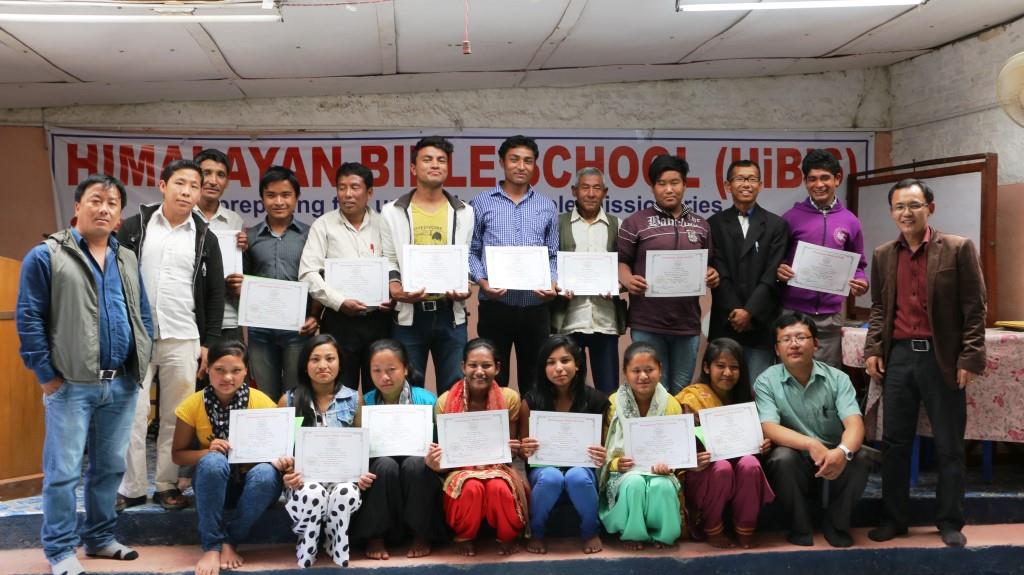
Deben also desires to prepare missionaries to reach into areas where there is yet no church. He explains: “We are providing two stages of training: 1) Personal Spiritual Building—training for all kinds of believers in the local church as well as new converts in new areas where there is no church. 2) Preparation for the Ministry—training for pastors and lay leaders as well as those who have done the first stage training.” The first stage covers the topics of salvation, the Trinity, the Word of God, prayer, praise and worship and giving. With generous support from the Australian Mission Fund, this program will be fully funded again this year. The second stage of training covers systematic Bible study and sermon preparation, discipleship, the church, leadership, Christian marriage and family, biblical finance, evangelism and church planting. Called the Himalayan Bible School (HiBiS), the course is conducted in Kathmandu over three months each year for about 15 young men and women with potential as missionaries who are selected from the Mobile Bible School program. This is followed by a nine-month practicum in the villages.
Earlier this year in May, the second annual graduation from HiBiS was held in Kathmandu (see picture below, with Deben Sam at far right). The graduates have returned to their villages where they are assisting with pastoring and mission work in fulfillment of the practical experience part of their training.
Thank you all for your love and practical concern for the Nepalese people in their time of need, and for our partner ministry, which is doing marvelous work in Christ’s ministry in very difficult circumstances.
For information about donating to the GCI Disaster Relief Fund, click here.
August 30 was a significant milestone for GCI’s congregation in Wichita, Kansas, as the baton of pastoral leadership was passed from lead pastor Don Engle to a newly commissioned pastoral team. As part of the celebration, Don Engle and his wife Alix were honored on the occasion of Don’s retirement after 43 years of WCG/GCI employment. Regional Pastor Mike Rasmussen honored the Engles by recounting Don’s years of pastoral service and presenting him with a gift from GCI president Joseph Tkach (below, left). The congregation honored the couple with a special cake (right).

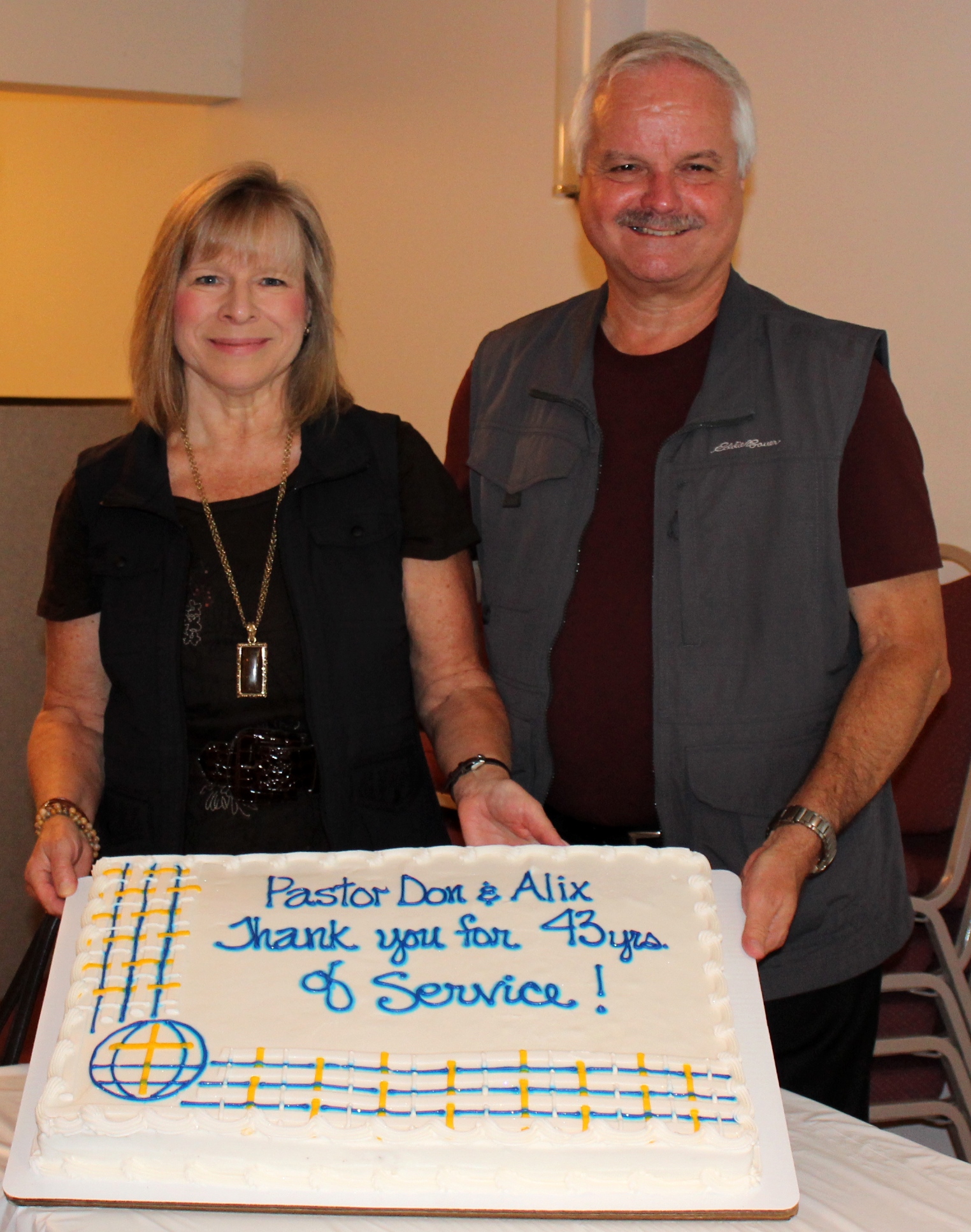
Don graduated from Ambassador College in Bricket Wood, England in 1972, and was ordained an elder in 1974. During his years of GCI/WCG employment (with Alix at his side most of those years) Don served 15 congregations, including four in New Zealand, and ones in Louisiana, Texas, Pennsylvania, West Virginia, North Carolina, Minnesota, Iowa and Kansas. Don plans to continue his service in ministry as a chaplain with the Harry Hynes Memorial Hospice in Wichita.
As part of the celebration, Mike and Don, with the support of the congregation (see pictures below), commissioned a pastoral team to assume the responsibilities formerly fulfilled by Don as lead pastor. The team members are Kirk Hayden, Laura Hayden, Ross Hays and Rhonda Hays.
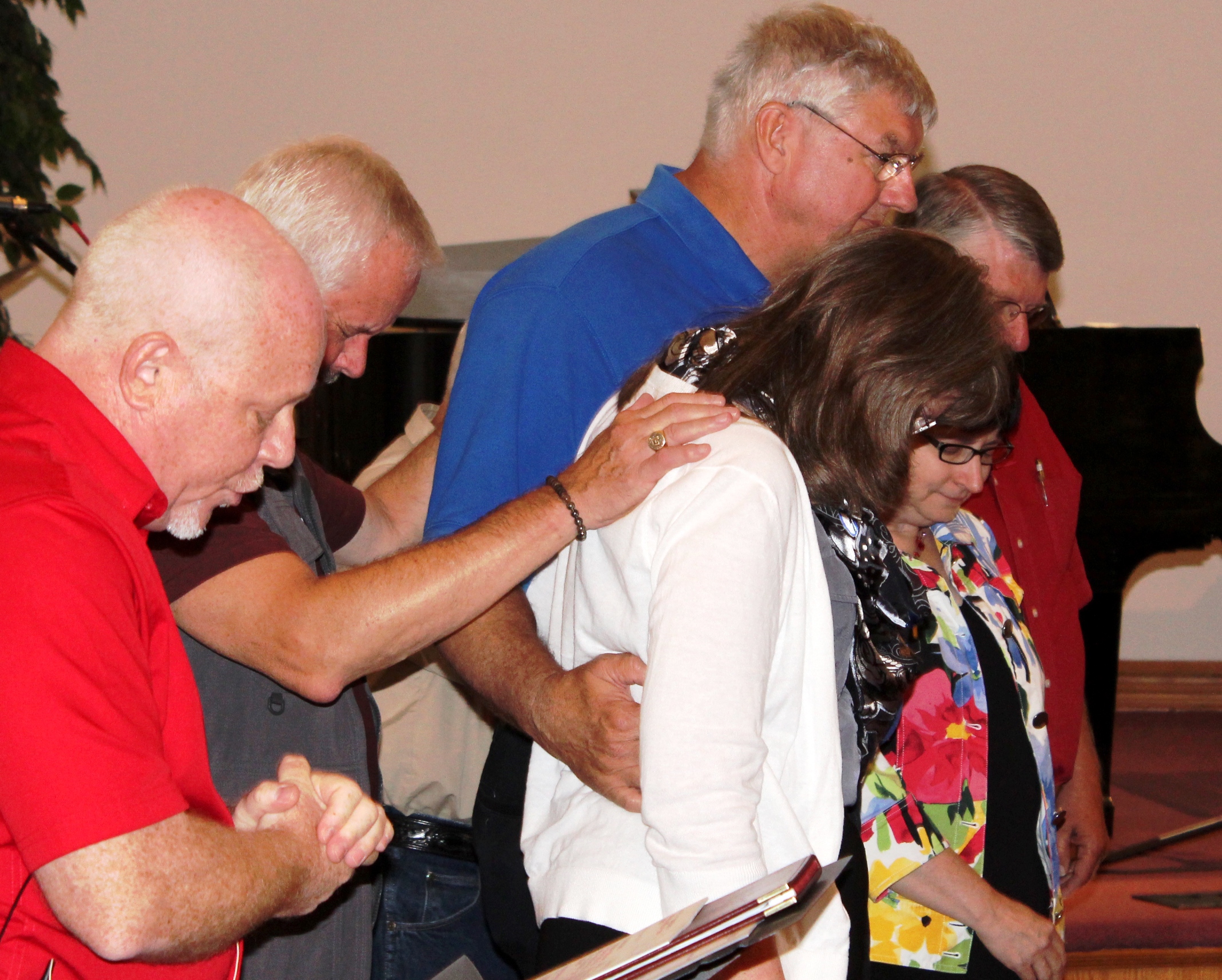
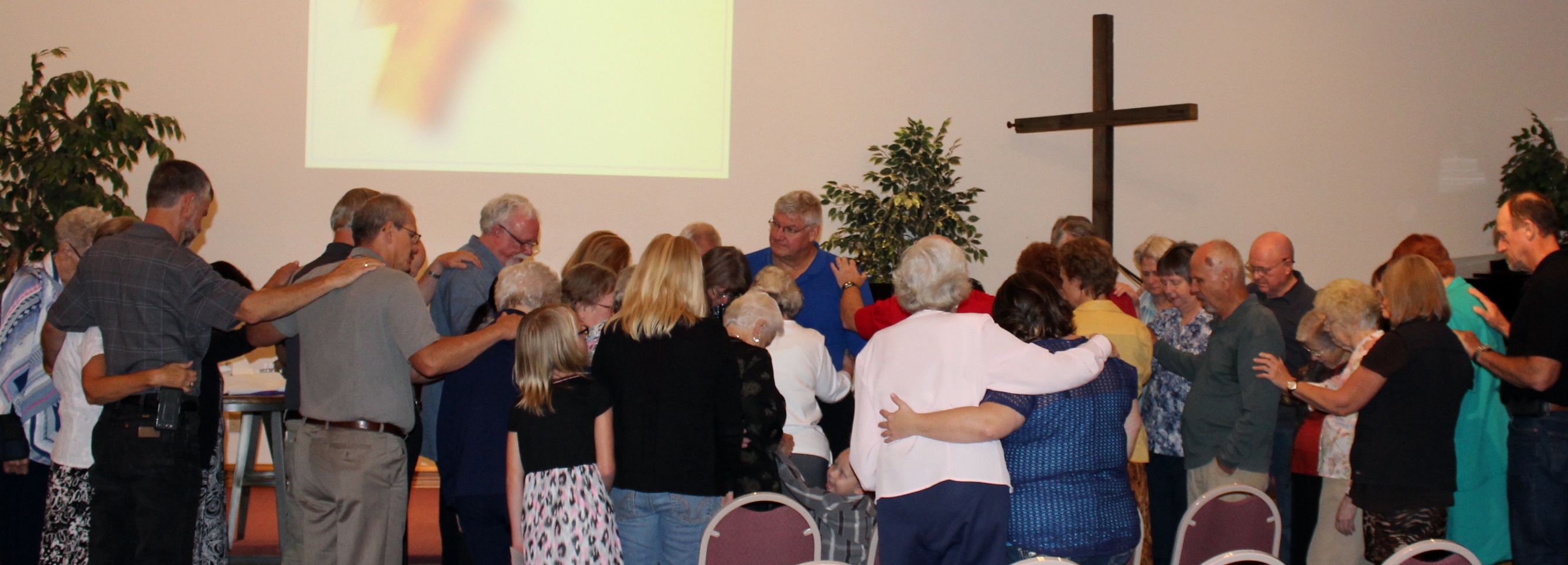
Also during the August 30 celebration, Kirk Hayden, a member of the newly commissioned pastoral team, was ordained an elder by Don and Mike (see picture below).

Our sincere thanks to the Engles and congratulations to the new pastoral team.
Here is part 2 of an 8-part essay by Dr. Gary Deddo titled “The Christian life and our participation in Christ’s continuing ministry.” To read other parts, click on a number: 1, 3, 4, 5, 6, 7, 8. For all 8 parts combined in one article, click here.
In part 1 of this 7-part essay we noted that in responding to the ethical challenges in our contemporary world, some churches have adopted an activism that, unfortunately, tends to misrepresent God and the Christian life. As a corrective, we noted the Torrance brothers’ emphasis on an approach that remains focused on the central question of Christian theology: Who are you Lord? With that focus, all we think about and do as churches remains centered on Christ, enabling us to enter more fully into what our Lord actually is calling us to do. At their core, Christian living and ministry are about living in union and communion with Christ. Now in part 2 of this series we’ll explore the biblical foundations and theological synthesis for understanding that union and communion.
What do the Scriptures teach? What did the early church and the Reformers understand? And what legacy have the Torrance brothers left us regarding our union with Christ? Let me first summarize what that union is not:
Union with Christ is much deeper, more enduring and far more effective in our lives than any of these aspects of the Christian life. The New Testament message is that we are so united to Christ that the core of our very being is changed because it has become spiritually joined to the perfected humanity of Jesus. The apostle Paul writes that we are one in Spirit with Christ (1 Corinthians 6:17). In his letter to the Ephesians he writes that we are presently—right now—seated with Christ in the heavenlies (Ephesians 2:6). We are so joined that what happened to Christ 2,000 years ago has actually included us. So in Paul’s letter to the Colossians we read that we have co-died with Christ and have been co-raised with Christ (Colossians 2:12-3; 3:1). Paul announces this fact as a completed action that is true of all the members of the body of Christ.
Jesus himself indicated his purpose to unite himself with us. He teaches that our oneness with him is comparable to his oneness with the Father. He declares, “On that day you will know that I am in my Father, and you in me, and I in you” (John 14:20, ESV unless noted). He prays, “I in them and you in me, that they may become perfectly one…. that the love with which you have loved me may be in them, and I in them” (John 17:23, 26). Jesus teaches that eternal life, salvation, involves a close communion: “Whoever feeds on my flesh and drinks my blood abides in me, and I in him” (John 6:56).
In 1 Corinthians, Paul announces that everything that Jesus has is also ours. He declares that Jesus himself is our wisdom, our righteousness and our sanctification (1 Corinthians 1:30). The New Testament is filled with language that points to a profound reality: we belong in an astounding way to Jesus Christ. We can be said to indwell him and he us. We are often depicted as being in Christ, not just with or alongside him. The book of Ephesians is full of this kind of description that frankly blows our minds and fries our rational mental circuits. We have become new creatures “in” Christ (2 Corinthians 5:17), because he has made us his own (Philippians 3:12) in such a way that there is what Calvin called a “wonderful exchange” at the deepest level of who we are. At that level Christ takes our fallen and broken natures and gives us a share in his sanctified and perfected human nature. Who we are is no longer who we are alone, for we are not alone. We are who we are by virtue of being united to Christ. As James Torrance tirelessly reminded us, by his grace we are given the gift of sharing in the Son’s union and communion with the Father in the power of the Spirit. As the early church expressed it: He who was the Son of God by nature, became a son of man so that we who are the sons of men by nature might, by grace, become the sons and daughters of God.
When Calvin and Luther commented on Ephesians 5:21-32, following the early church teachings, they did not exposit on the nature of human marriage, but marveled that we are far more united to Christ than a man and woman are in matrimony! Marriage is a dim and distant reflection of the deeper truth about our real communion with Christ. The ultimate companion we are made for is Jesus Christ who is truly bone of our bone and flesh of our flesh and to whom we are united by the Holy Spirit.
In the New Testament, especially in the book of Hebrews, we see that such a union had its beginning in the Incarnation, in Christ’s assuming a complete humanity, from conception to his death. What qualifies Jesus to accomplish this exchange with us is his assumption of our humanity along with its fallen condition. The early church recognized the depths of the incarnation when it declared not only that Jesus was “one in being” (homoousios in Greek) with the Father, but also “one in being” (homoousios) with humanity. His divinity by virtue of his union with the Father is no more true of him than is his humanity by virtue of his union with us. The apostle Paul laid the ground for this doctrinal explication of the Council of Chalcedon (A.D. 451) when he identified Jesus with the new Adam (Romans 5:14; 1 Corinthians 15:45). Jesus Christ is united to us even more than we are united to the Adam of the Garden in Genesis. Thus our relationship with Christ puts our very existence on a whole new basis.
Our redemption does not just depend on what Christ did, but on who he is in the depths of his being—one with God and one with us. Our salvation, our life in Christ, was not only accomplished by means of Christ but “in Christ,” as Calvin used to say and James Torrance used to regularly remind us. Our new life is not external to us and layered on over us, but is worked out first in the humanity of Jesus and then given to us through his Spirit.
One older book that James Torrance often referred to was James Stewart’s A Man in Christ. Stewart concluded after his careful study of the New Testament that our union with Christ was the central element in the message of the gospel. That is, without union with Christ, there would be no gospel. God’s grace reaches that deep into who we are. We are no longer ourselves alone—we are who we are only in and through our union with Christ. We belong to God in Christ., body and soul.
Calvin used to warn that we ought never consider Christ at a distance. We are, to the root of our being, who we are in relationship to him who made himself one with us. This is why Luther and Calvin recognized that our whole salvation was complete in Christ: not just our justification, but our sanctification and glorification as well. To have Christ was to have the whole Christ. Christ could not be divided up into pieces, so neither could our salvation. What is complete and actual in Christ is truly ours even if it does not yet appear to be so. Our lives are hidden in Christ (Colossians 3:3). Our life in him is being worked out in us by the Spirit. This new being wrought in us comes through the sheer gift of our union with Christ. It is not us working out a potential that might be true if we properly apply ourselves. Rather, the Christian life is living out and manifesting the present reality of our union with Christ.
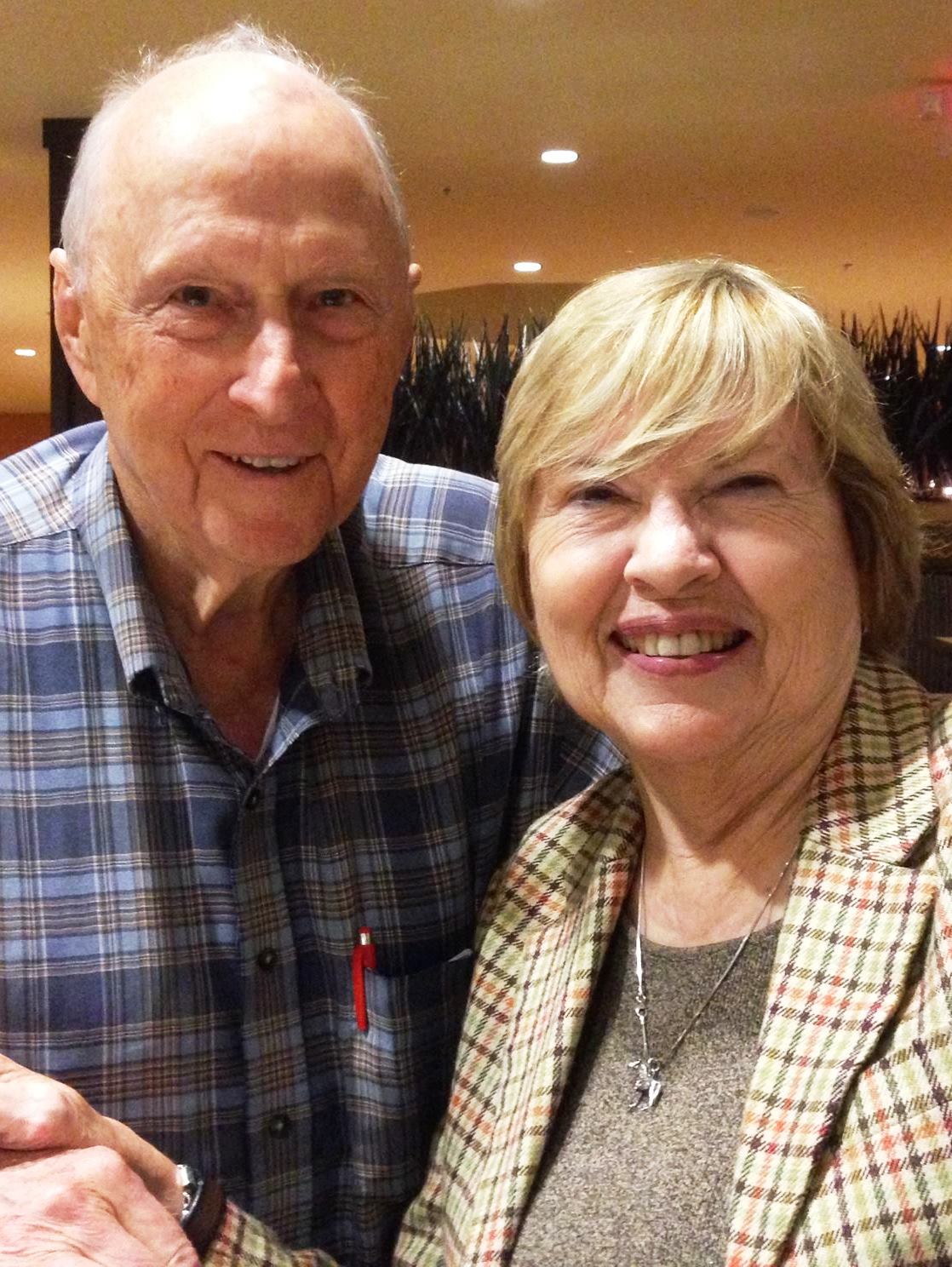
Ed Graham, former WCG Television Department employee, has been diagnosed with colon cancer and the cancer has metastasized into his liver and spine.
Prayers for both Ed and his wife, Sheila, are much appreciated.
Cards may be sent to:
Ed and Sheila Graham
111 Pueblo Drive
Lake Kiowa, TX 76240.
