GCI Update
Connecting Members & Friends of GCI
Header Banner

Converge West

GenMin national coordinator Anthony Mullins reports on the Converge West conference held recently in Southern California. For more about Converge 2016, click here.

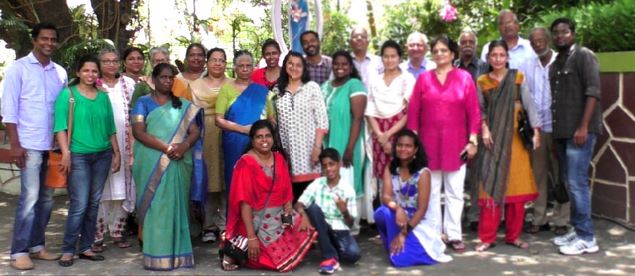
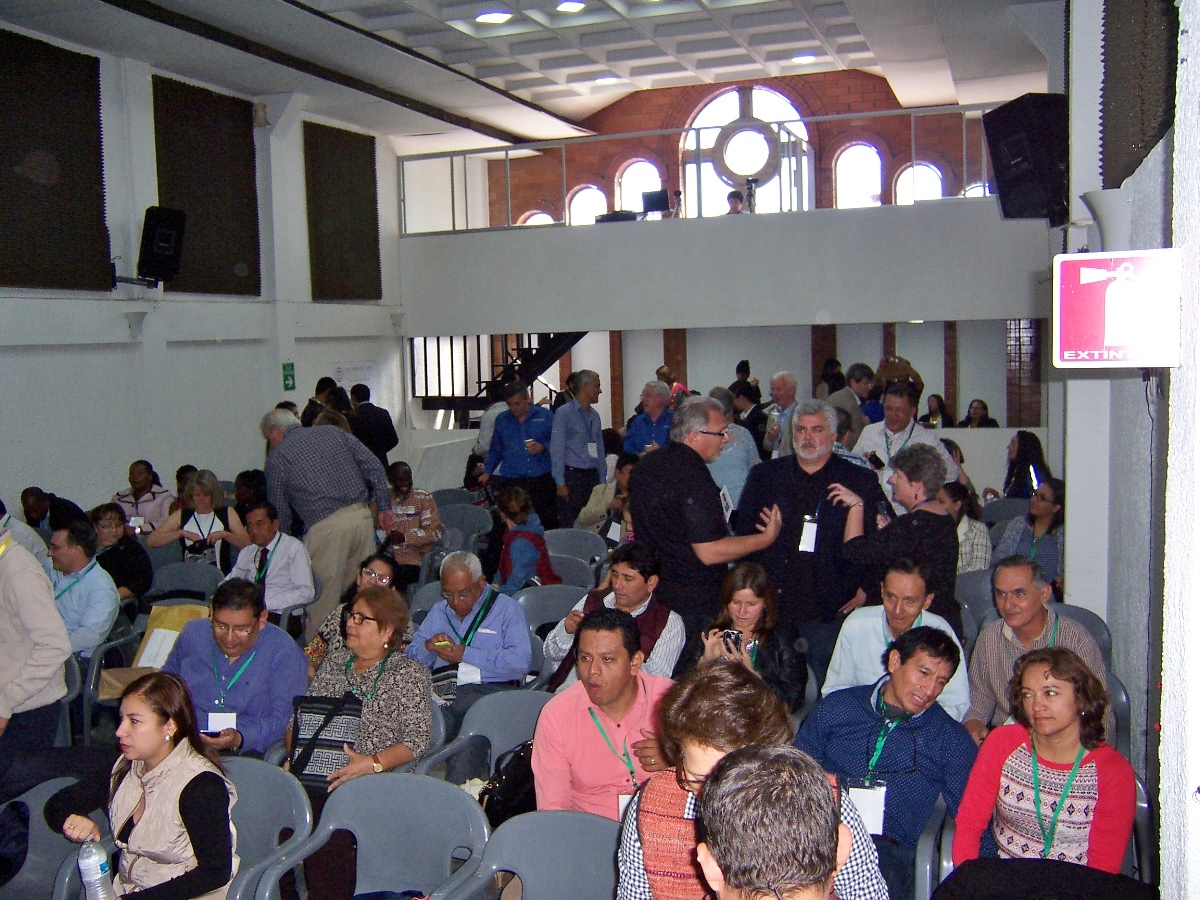
Converge WestConverge West exceeded our expectations! The Spirit renewed our sense of togetherness and our hope for the future. We were blessed to share the conference with 86 women and men (see picture at right—click to enlarge). We met at the Holy Spirit Retreat Center in Encino, California with Mark and Anne Stapleton serving as our organizers and guides. Here are conference highlights:

  • Emerging trends in ministry to young adults, children and teenagers. The group participated in an interactive session telling stories of celebrations and challenges in ministering to young people. We then prayed and talked together in small groups.
  • Interns. We heard inspiring stories from the six GCI Interns who were attending. There was a sense of anticipation for the future as we heard the joy they have experienced in fellowship and ministry within our denomination. What lies ahead is exciting!
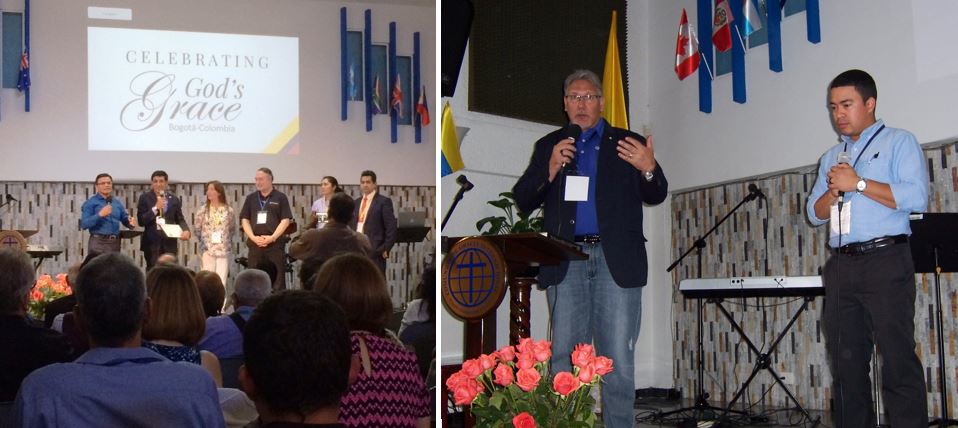
  • BrandonMaking a difference in the school system. Brandon Antwine (pictured at right), who directs our YES Camp in Louisiana, inspired us with a story about launching several clubs within the school where he teaches in order to help change the youth culture in his city. It was powerful!
  • The Year of the Child. Susi Albrecht shared how church renewal and Kingdom work include children. She shared this “truth-telling” quote: “When we look at most churches—their programming, their staff, and their budgets—it appears that children must first become prodigals, then we go about putting together elaborate programs and events to save them.”
  • Celebrate the Grip camp curriculum. Jeff McSwain demonstrated Jesus’ “grip of grace.”
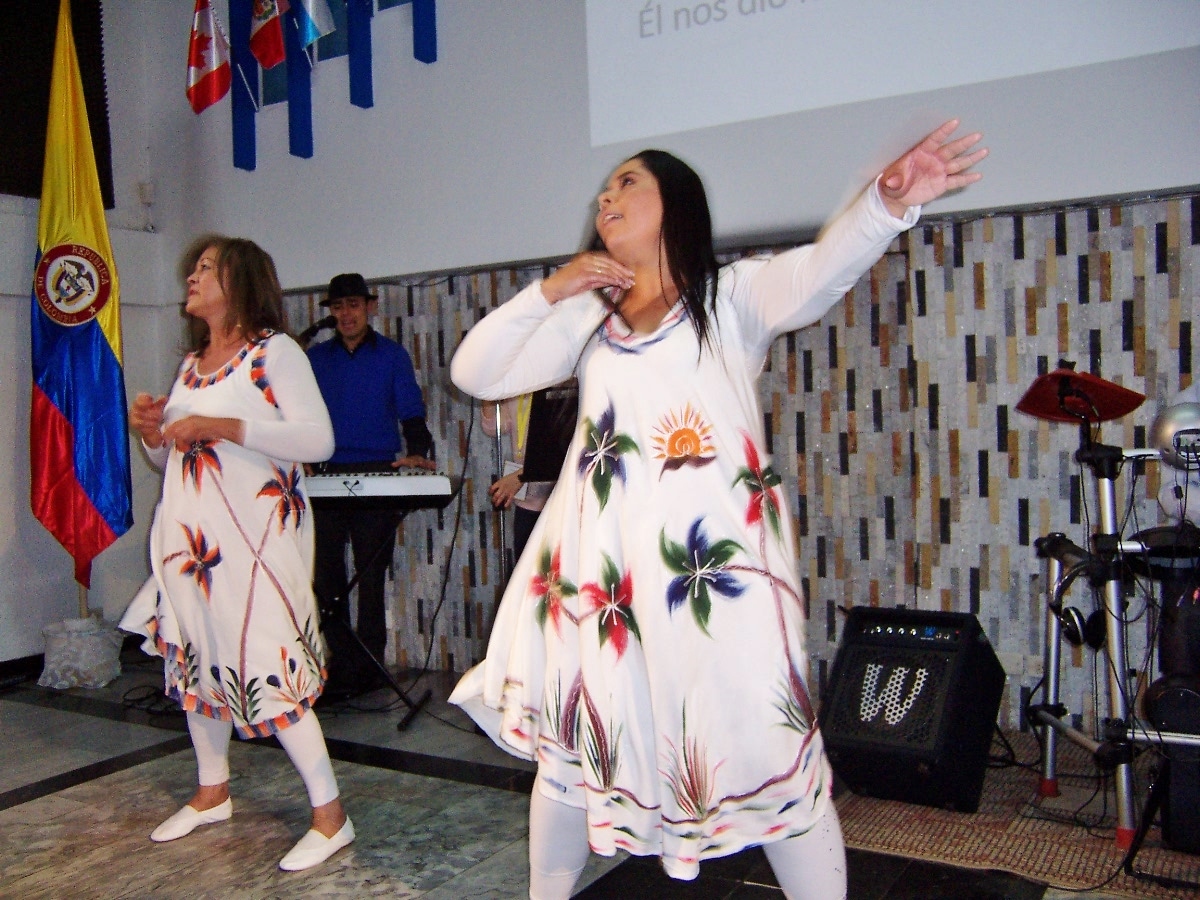
  • Worship. Xiara Lee danced, Jillian Caranto sang, and Dwight Jarron Sanders led as we worshiped the Lord together through their expressions of love for Christ.
  • CW1People on the margins. Susan McSwain (pictured with her husband Jeff at right) shared the story of Mephibosheth as she led a group discussion concerning seeing people who live on the margins of society.
  • Incarnational ministry. Brad Turnage gave inspiring examples of what incarnational ministry looks like.
  • Gospel declaration. On Sunday morning we gathered in a circle to discuss how the gospel informs our ministry to young people. The were inspired, encouraging and full of hope.
  • CW45Communion. Mark Stapleton invited those over the age of 40 to serve the bread and wine to those under 40, then vice versa (see picture at right). The presence of the Trinity was palpable.
  • Offering. We gathered an offering to support two GCI congregations in the Kakuma Refugee Camp in Kenya (one is pictured below). GCI Pastor Anthony Gachanja and GCI Mission Developer Kalengule Kaoma shared their desire to host two Youth Camp Seminars within the Refugee Camp in the coming year. Pastor Anthony reported that their churches are “comprehensively needy” and would welcome any financial assistance provided. At Converge West, we talked about how compassion is shown not so much in our service to others, but in understanding our kinship with image-bearers of God around the world. Thanks to the generosity of the group, we collected $2,435.

refugee camp church

__________________

Note: Thank you for your financial support of Grace Communion International. Your support allows GCI to, among many other things, provide resources to support youth-focused ministries and training for emerging leaders at Converge, summer camps, intern training events and other programs that bring young people together from around the world, helping them grow as young leaders and disciples of Jesus. Thank you for sharing so that others are blessed.

Spreading the gospel in Nepal

This update is from Rod Matthews, mission developer for GCI in Southeast Asia.

Nepal (see map below, click to enlarge) is regarded as the country with the fastest-growing Christian church in the world. 82% of its over 31 million residents are Hindu and perhaps 3% are Christian. The introduction in 1990 of a multi-party democracy brought a lessening of hostilities towards Christians although it’s still a challenging place to be involved in the work of taking the gospel to the people.

political-map-of-Nepal

In March, my wife, Ruth, and I, along with our Southeast Asian pastoral coordinator, Wong Mein Kong and his wife, Chew Yeng, travelled to Kathmandu to visit our ministry partner there, the Himalayan Gospel Church (HGC), led by Deben Sam. As summer comes to Nepal, Deben has to make the most of the warmer months and takes trips to visit the rural congregations in the mountainous areas along the southern slopes of the Himalayas. So just prior to another of his trips, we had to squeeze a lot into a few days in Kathmandu.

N1On Saturday, March 12, we joined the Kathmandu congregation in their weekly worship service (see picture at right). Saturday is the day off from work for everyone in Nepal and all churches meet that day. About 80 people worshipped in the church’s facility, built on rented land. It consists of a U-shaped structure with a meeting hall, children’s room, kitchen, office, library, other rooms for guests, and restrooms.

Wong Mein Kong and I gave short sermons translated into the Nepali language by Deben’s brother-in-law, Raju, and Pastor Joseph. It was a delight to participate in the service, listen to the singing, and join in the offering which includes fresh food items donated to help the widows and very poor.

N2I had asked Deben if he could arrange a trip to a congregation outside of Kathmandu to expand our experiences and get a better feel for what the Holy Spirit is doing through HGC. We settled on a visit to the town of Manahari, about 120 km (75 miles) to the southwest of Kathmandu (pictured at left). Deben said that there was a new road in that direction that would cut down our travel time to less than 6 hours. I quickly discovered that I had added some built-in assumptions to the term “new road”!!

We left Kathmandu at 6 am “to avoid the traffic” – again a relative term. We wound our way out of Kathmandu on a narrow though sealed road passing through villages perched on the side of steep hills, with spectacular scenery in the morning mists – up to hovering peaks above us and down to rocky river beds hundreds of feet below. There was no safety barrier most of the way.

N3Then we reached the “new” road (pictured at left). It was so new that, in places, it was still being rebuilt, which added some further delays to the trip. The road was rocky with a deep layer of fine powdery dust. The rock was crumbly and subject to landslides, not helped by the earthquakes and after-shocks of last year, still being cleared away. Our four-wheel drive vehicle bounced and slithered around. So did we, inside. Some trucks and motorcycles, and even a few courageous cars were negotiating the road in both directions. I’ve been on some bad roads in my time, but this was a prize-winner!

N4We finally arrived in Manahari just before midday, and met the local pastor and his wife, who support themselves by running a small grocery shop in the main part of the town. The local church was in the process of constructing a building (pictured at left).

We learned that it was to be large enough to accommodate about nine orphans that the church is already caring for, and their guardians. The pastor from a church some distance away had come to Manahari to meet Deben and us.

N6Soon it was time to head back to Kathmandu, and I can’t say I looked forward to that road again. But the driver decided he would take an alternative way. Surely, it couldn’t be any worse, we thought. About 90 minutes out of Manahari, we turned off the established road and, literally, took a river bed instead (pictured at right). It was nothing but a track, but we were not alone—there was a row of four-wheel-drive vehicles winding along the valley, through scrub-land, over rocks, and fording the stream numbers of times. Another marvelous experience – a bonus off-road adventure that gave us a taste of the real Nepal.

On Monday, we visited the medical clinic that serves the very poor that the HGC has been running for about 10 years with support from GCI in the US and Australia. It was established to provide free medical consultations and medicines to people working in the brickyards and on the streets, focusing mainly on mothers and children. It was established simply to be a tangible expression of the love of God for the most disadvantaged of people, but over time some have asked why we offer a free service. A few have become church members as a result.

N8The owners of the original clinic location needed to utilize the site again after the earthquake last year, so Deben had to look for a new location.While he was doing so, Deben took the opportunity to assess its long-term future. To survive in the long term, the clinic needs to be financially self-supporting. So he has moved it into an urban area in the location shown at left.

Convenient to those shopping nearby, the clinic charges for medicines and consultations. It will also serve as a base for a mobile clinic which will take medical services even closer to those in need than before. It is Deben’s plan that eventually the income generated by the clinic will fully support the mobile services for the poor. In the transition, GCI will continue to fund it as we are able.

N9We also visited Deben’s farm (pictured at right) where he provides land so the poor people can raise tomatoes to sell to support themselves and the church. Deben also has a farm animal facility, which financially supports his extended family, including the 15 orphans from rural areas who live with him (pictured below). Deben mentioned that after the tragic earthquake of April last year, he found numerous children in rural areas where there are HGC congregations who had lost at least one parent in collapsed buildings, and that HGC is providing various forms and levels of support for another 80 children.

orphans

On Tuesday, we had the privilege of visiting the Himalayan Bible School (HiBiS) in session. Twelve men and women had been chosen from the locations where his mobile Bible school had conducted sessions last year in rural villages, to attend a three-month intensive course of Bible and Pastoral education in Kathmandu. It runs from February to May each year. Afterwards the participants go home with a small stipend to help support them for nine months while they use what they have learned in support of a local congregation and in community evangelism. Ultimately, Deben hopes to have the resources to hire a few of these graduates for full-time service in ministry in rural Nepal.

School

Nepal is an exciting and exceptionally challenging country in which to be part of Jesus’ ministry. One of the congregations in the northwest that Deben visits necessitates a 12-hour bus ride, followed by a one-hour plane ride and then three days of walking. Even places close to Kathmandu are not easy to reach, and Kathmandu itself is still recovering from the severe earthquakes of 2015, with much greater needs still outstanding in the regional areas. Doors are open everywhere you turn, and ministry has to be a matter of priorities according to the gifts and resources God gives to each part of the body of Christ.

We deeply appreciate the partnership God initiated between GCI and HGC, and the vision, sound management and courage to take up new opportunities that Deben brings as leader of a wonderful team of people. I know they all appreciate your prayerful support of the work God is doing in Nepal. As the former principal of Nepal Ebenezer Bible College, Rev. Manoj Shrestha, explained in an address at Calvin College (Grand Rapids, Michigan) last year, the gospel has reached “the highest point on the earth [Mount Everest in Nepal] from the lowest point on land on the earth [the Dead Sea].”

__________________

Note: Your financial support of Grace Communion International allows the denomination to support Rod Matthews and other Mission Developers so that they can connect with people around the word who are interested in learning more about Jesus’ love for them. Thank you for sharing so that others are blessed.

GCI-Philippines

Here are links to updates concerning various recent events in GCI in the Philippines:

Japan
Earthquake damage in Japan

Mozambique relief

In March, we reported on the assistance GCI is giving to the congregations being impacted by the devastating droughts in the African nation of Mozambique. Here is an update on the relief work from pastor Manuel J. Vasco.

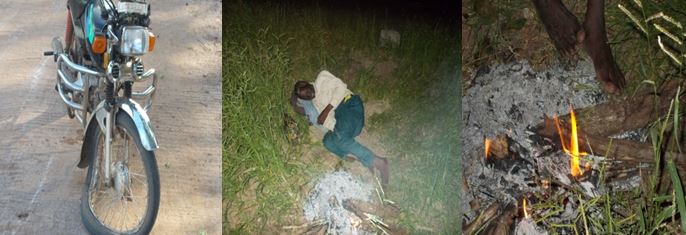
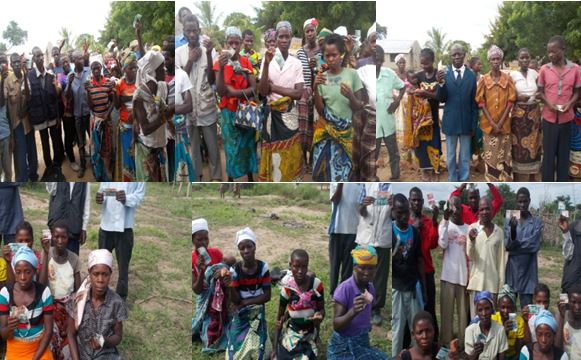
We have been distributing food to GCI congregations in central Mozambique. Each has received three large bags of rice (pictured below, left). The trip went well despite motorcycle breakdowns and other challenges. We ferried our motorcycles across the Chirre and Zambezi rivers (pictured below, right). Due to bad road conditions and political tensions, we were unable to stay long at each location.

receiving the rice crossing river

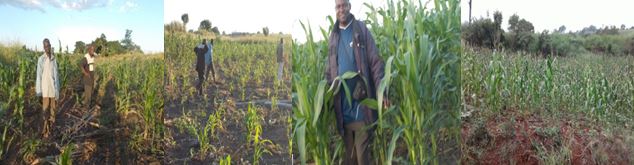
Because many people have lost their crops to drought, hunger is rampant. The people subsist on green bananas and roots from various plants (pictured below, left). They take advantage of the little rain that falls by planting sesame, maize and sweet potatoes.

root eating the rice

rainDuring the aid delivery process, the people cooked and ate some of the rice (pictured above, right). They thanked us, saying they would die without this assistance. There were many joyful faces among the recipients, knowing they would have sufficient food for a while.

My trip coincided with a big rain (pictured at right)—it had not rained like this until we were traveling in the area. Because we lacked protection from the rain, we all got very wet. I contracted a fever.

The Mozambican church thanks our brothers and sisters who are supporting them both directly (financially) and indirectly (prayer).

__________________________________________

GCI Disaster Relief Fund

If your congregation has a heart to help members impacted by major disasters like the one in Mozambique, probably the best way to do so is to donate to the GCI Disaster Relief Fund. The Fund helps provide members in disaster areas with emergency needs such as food, water, medicine, clothing, temporary housing, home and/or church hall repairs, temporary local pastoral salary expenses and other emergency needs. Monies received into the Fund that are not immediately needed will remain in the Fund to be allocated in future disasters. In previous years, money from this Fund has been used to help members recover from Hurricane Katrina in New Orleans, storms and flooding in Bangladesh, an earthquake and tsunami in the Solomon Islands, typhoons in the Philippines and an earthquake in Haiti.

If your congregation would like to donate to the Fund, your treasurer can set up a one-time or monthly donation through the GCI Online system (http://online.gci.org) by logging in and selecting Church Giving under the Treasurer tab.

If your congregation prefers to send a check, make it out to Grace Communion International, indicating on the memo line that the donation is for the GCI Disaster Relief Fund. Send the donation to:

GCI Disaster Relief Fund
Grace Communion International
P.O Box 5005
Glendora, California 91740

Advancing the gospel in Bangladesh

This update is from Rod Matthews, GCI’s Mission Director for the Southern Asia & South Pacific region.

In affiliation with the Bengali Evangelical Association (BEA), GCI is taking part in a fairly extensive operation to advance the gospel in Bangladesh, a country with over 175 million people. BEA operates there from a mission base located in the remote Bengali village of Sathsimulia. In March, I was part of a team (pictured below) led by Dr. John Biswas (BEA director), that visited the area to encourage gospel workers and strengthen and expand BEA’s ministry programs. Below is a trip diary and summary of BEA ministry programs in the region.

B1
Left to right: Don Fredricks (BEA friend), Robin and Arlene Connelly (BEA board members), Naomi and John Biswas, Ruth and Rod Matthews.

Trip diary

B2We arrived in Dhaka on Saturday where we met with BEA supporters (over 80 attended). On Sunday we undertook an eight-hour van trip to Barisal in the south. Two hours out of Dhaka we took a 40-minute ride on a vehicle ferry (pictured at right) across the wide Padma River. Lunch had been arranged through John’s friends at a Baptist facility near Faridpur. Then it was another four hours to Barisal where we arrived around dark. John and his local assistants had to negotiate with the hotel which had double booked a room or two due to pressure from a local politician.

On Monday we drove over an hour from Barisal to the mission base where about 250 people met with us, packed into a meeting room in the newest building there (see pictures below). The people joyously praised God in song in a service that included my biblical message in English with Bangla translation.

B5 B10

On Tuesday we met with leaders working in Barisal and the mission base area to introduce Learning-for-Life, a mutual sharing and learning program that includes the development of effective speaking principles. On Wednesday the gospel workers and supervisors of the various outreach programs met to give reports on the year’s progress and to outline the needs and challenges for the months ahead.

B11 B6

Ministry programs

BEA conducts a wide range of social development, humanitarian, and evangelistic ministry programs through its small staff in the region. These programs provide tangible physical assistance in the day-to-day lives of the poor as a means to reach out into the community with practical demonstrations of God’s unconditional love for all people. Nothing is asked in return, which engenders questions and interest in what prompts these initiatives. In that way the programs are discretely evangelistic in a very sensitive environment where such initiatives can easily be misunderstood. BEA workers must conduct the ministry with utmost wisdom and discretion.

  • BEA trains nurse’s assistants through intensive three-month courses conducted twice each year. The young women who participate are chosen from surrounding communities, regardless of their religious affiliation. They are given a basic medical and health education so they can gain employment in area clinics, hospitals and nursing homes. Over 450 women have completed the course since the program began in 2003.
  • BEA runs 13 small elementary schools (see picture below). Children in Bangladesh are often deprived of a good education due to lack of schools or because parents are unable to pay for schooling. BEA’s schools address this need, providing books, school supplies and emergency health care support. Though most students come from Muslim or Hindu families, they recognize the value of the quality education offered, which is based on biblical principles, and promotes community responsibilities and good citizenship.

B7 B8

  • BEA provides goats to disadvantaged families (see picture above). Scant income from laboring in the rice or corn fields isn’t enough to support healthy, educated children. Providing a family with a goat, which they can breed with a neighbor’s goat, not only provides the family with goats to sell but enriches their diet. Goats can produce four quarts of milk a day, often produce twin kids, and can thrive in a wide range of environments. A well-managed goat can lift a family from deep poverty and greatly improve their health.
  • BEA trains gospel workers (see picture below) in order to equip people to appropriately answer the questions that come their way by virtue of the activities noted above. Over 200 workers have been trained in the last eight years. Meeting in homes and congregations, these workers share the gospel, answering biblical questions in a country where few people know anything about Christianity. As part of this gospel work, BEA distributes Bengali Bibles and prints and distributes small Bengali booklets explaining the gospel message.

B9

New developments in Myanmar

This update is from Rod Matthews GCI’s mission developer for Southeast Asia including Myanmar.

For years, GCI has had two small congregations in the nation of Myanmar. Then last year an independent network of churches requested to join us after the network’s supervising pastor, Chan Thleng, made contact through the GCI.org website, came to appreciate our theology, then met Wong Mein Kong, GCI’s coordinator for Southeast Asia, and lead pastor of our congregation in Malaysia. As a result of these multiple contacts, Chan Thleng has come to love our fellowship.

New doors have recently opened to us in Myanmar as a result of the recent historic elections (the parties opposed to the long-standing military regime gained a majority in parliament) and some other developments that I’ll describe here by sharing excerpts from Wong Mein Kong’s diary of a trip he and others recently made to the Myanmar cities of Yangon and Mandalay. As a result of their trip, we now have an expanded network of friends and fellow pastors to advance our part in the work of the gospel in the nation of Myanmar.

Wong Mein Kong’s diary

TRIP TO YANGON

Wong Mien Kong
Wong Mein Kong

We arrived in Yangon on Thursday (January 21). On Friday we met elder Naing Key Har at the hotel. I updated him on Chan Thleng’s group joining us. Afterwards Chan Thleng came to meet me and spoke of his plan for the church to generate income and support their church planter in Rakhine State. [GCI Malaysia] had donated some money for flood relief in Myanmar last year. In October he visited Chin State to distribute our flood relief to the affected churches. Chan Thleng has translated some GCI articles and our Malaysian magazine articles into the Matu Chin language to teach his group.

On Saturday morning we met with Kyaw Thu Min who has translated “The God Revealed in Jesus Christ” and another GCI booklet into Burmese. He and another friend are willing to translate our Discipleship 101 Course into the Karen language. In the afternoon we met Stephen, who had contacted the GCI website offering to translate material into Hakha Chin. He is a young man who teaches at a Bible school. Shortly after Dawt Lian Thawng and his wife Lily came. He is also a Bible school teacher who runs a children’s home in his house. Saturday evening [our friend from previous visits] Pastor Hung Ling came to fetch me to his Bible school in Shwepyithar to give a talk to 30 of his students. He is very thankful for the books and flood relief we donated.

Sunday morning we took a taxi to the village of Hmawbi about 40 km from Yangon to Chan Thleng’s church. I gave a split sermon with Chan Thleng translating. The church building has made progress, with walls and roof erected. We donated a box of clothing for the members. After lunch Chan Thleng and some of his leaders had a Q&A session with me. That evening Nyein Thu and Saw Ler Ghaw came to meet me. [Saw Ler Ghaw hosts a house church in the southern delta region.] We enjoyed fellowship and a meal.

Monday morning Chan Thleng and I discussed his proposed project. His church wanted to rent a piece of land a few miles away for three years. They will buy flower seeds for planting, drill a well onsite and install a generator to power irrigation. His church members have started planting and will harvest flowers from June onward to sell in the market. Here are pictures of their work:

Yangdon1

Yangdon2

Chan Thleng and I also discussed the possibility of me visiting Chin State later this year to meet his elders and members. That afternoon Dawt Lian Thawng took me to his home in Mingalardon where I met his wife and three children (they also house and feed 13 other children). I was asked to give a talk to them. His wife formerly taught in a Bible school but now she weaves traditional cloth designs to sell. He was impressed by GCI’s sincerity and that I was the first church leader to visit his Beulah Children’s Home. Tuesday morning we flew to Kuala Lumpur.

TRIP TO MANDALAY

On the following weekend I made a trip to Mandalay to meet pastor Andrew Bawi Ceu, who is about 45 years old and has three children. He has an MDiv degree, is working towards a DMin and is keen to learn more. He is taking one of our ACCM courses online with the intention of [exploring what is available that might eventually be offered in Burmese]. He strikes me as one with vision and ambition as pastor of an urban church that is active in outreach.

Sunday morning they brought me to their church located on the rooftop of a shopping mall. The attendance is over 100 (mostly young people), the worship is lively, led by a youth band. Among them are 35 students of Andrew’s Bible school. I gave the sermon with Andrew translating. In the evening I gave a lecture to his students and some teachers. Andrew expressed his appreciation for GCI, and invited me to visit again.

Additional developments

In the past few years we’ve had contact with a young, well-educated seminary graduate named Van Thawm Lian. He is excited about our theology and delighted with our literature. In the last year or two, we have contracted him to translate several publications into the Falam Chin language and into Burmese. As a result we have been able to distribute hundreds of copies of our Falam Chin edition of the Discipleship 101 Course to pastors and interested Christians in Myanmar. This past month, I received a message from him saying he wants to formally affiliate with us. His goal is to establish a Bible school in his home area in the Chin State.

After years of having to work with caution and limitations in Myanmar, we now see new doors opening, indicating that exciting times lie ahead as we are enabled to share the blessings God has given us with the people of Myanmar.

Annual conference in Guadalajara

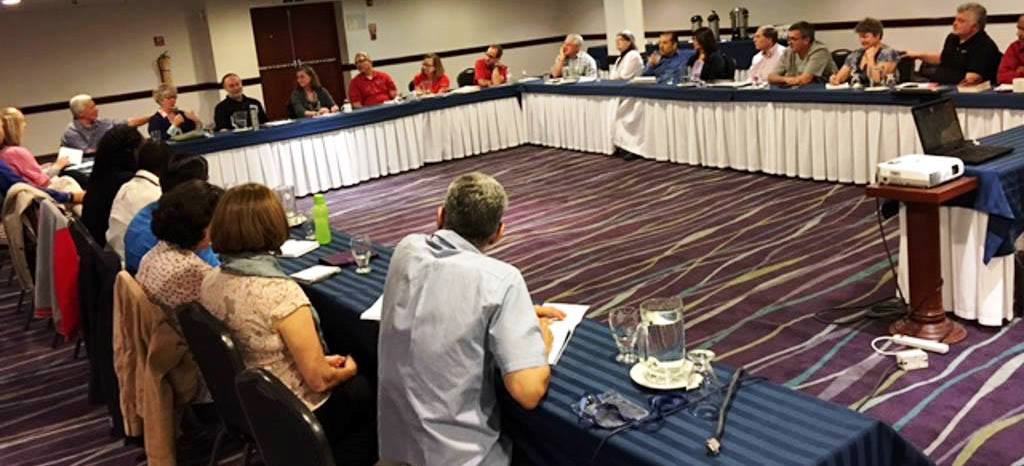
GCI-Mexico recently held its annual conference for pastors and leaders in Guadalajara. It featured lively worship, fellowship (lots of food!), and teaching sessions addressing theology, mission and women’s issues. GCI members and guests from Mexico came from as far away as Tijuana (north) and Veracruz (south). The guest speakers who came from the U.S. were given a warm Mexican welcome with mariachi music, folkloric dance, fine dining and sightseeing. Conference highlights included the ordination of GCI-Mexico’s first female pastor, and the announcing of the up-coming hand-off of supervisory leadership of GCI-Mexico from Lorenzo Arroyo to Heber Ticas.

Alfredo Mercado, GCI national leader in Mexico and lead pastor of the Guadalajara church, led the ordination of Irma Selena Venegas de Soto (pictured at right). Selena has been leading worship, teaching and preaching in the local church for some time. She also is an educator with a master’s degree and teaches at a private school. Selena and her husband, pastor Luis Soto, along with their children Alejandro (24) and Andrea (17), are long-time members of the Guadalajara church. Both Selena and Luis have a strong missional focus in their ministries, which involve gathering, evangelism and making new disciples. They currently are planning the planting of a new church in Guadalajara. Our congratulations to Selena!

Greg Williams

During the conference, Greg Williams (pictured at left), director of U.S. Church Administration and Development, represented GCI president Joseph Tkach in announcing that Heber Ticas will be the new ecclesiastical supervisor for GCI in Mexico starting January 1, 2017. Heber, who will continue as U.S. national coordinator for Church Multiplication Ministries, will add the leadership role in Mexico ably filled for about five years by Lorenzo Arroyo. Heber worked at Lorenzo’s side most of that time, making for a seamless leadership transition. Our thanks to Lorenzo and congratulations to Heber!

Heber and Lorenzo
Heber (left) and Lorenzo

Heber will continue what Lorenzo began—leading the gospel work in GCI-Mexico in a Christ-centered, missional direction that emphasizes disciplemaking, growing churches and planting new ones. Plans are already in the works for Pastor Natanael Cruz and his Mexico City congregation to host an “Outside the Walls” (OTW) event in the future.

Rita and Selena

Greg gave the conference keynote address on the topic of church renewal and preached a motivating and uplifting Eastern Sunday sermon. Lorenzo’s wife Rita Arroyo (pictured at right with Selena), joined with Presbyterian pastor Rosario Salgado Cervantes in giving inspiring messages to the women. Rita also gave the women hand-crafted gifts that she had made, along with gifts from women involved in the GCI-USA Connecting and Bonding ministry.

Heber’s wife, Xochilt Ticas (pictured at right), led a devotional for the pastors and leaders and participated in missional workshops. Heber introduced Outside the Walls through a series of talks on mission in the community, and preached the Saturday sermon. Lorenzo gave talks on the theological and philosophical effects of dualistic thinking on western thought over against the unitary framework of Incarnational Trinitarian theology.

Thanks are extended from the members in Mexico to the churches and individuals in Canada and the U.S. who helped make this conference possible.

Palm Sunday in Montreal

This update is from GCI-Canada director Gary Moore.

My family and I had the pleasure of visiting the Montreal-area GCI congregations (French and English) for a combined Palm Sunday service. The French youth band (top picture below) did a superb job leading us in a bilingual worship. The service included a lovely potluck meal, and the fellowship went on for three hours. It was a great time of togetherness and worship.

Canada 1

Canada 2

Outside the Walls in Jacksonville

GCI’s congregation in Jacksonville, Florida, recently hosted an Outside the Walls training and community outreach event. Here is a short video, some pictures and a related cartoon.

12513898_10154671680198136_3910227727170378034_o 12890882_10154671691693136_750512241283086776_o 12885836_10154671684378136_2010196912014372877_o
11069Church Multiplication Ministries (CMM) coordinates Outside the Walls training and events as part of renewal church consulting services provided by Church Administration and Development. Congregations receiving these services are trained in incarnational outreach, assimilation through hospitality, and other approaches to joining Jesus in reaching outside the church walls to connect with non-churched people, then assist them in becoming mature followers of Jesus within the fellowship of the congregation.

To learn more about these consulting services in the U.S., click here and contact your regional pastor.