Prayer is requested for Charles Taylor, lead pastor of GCI’s congregation in Miramar, Florida (Miami area). On May 11, while cooking dinner, Charles suffered severe burns to his forearm and hand from a stove fire. It appears that he has some nerve damage. Charles’ wife Keysha gave this report:
Charles was transported to Ryder Trauma center at Jackson Hospital in Miami. The pain meds they are giving him are really strong, so he’s nauseous, but otherwise comfortable. He was originally scheduled for surgery on May 12, but they are holding that off for at least a day. Praise God—the area to be grafted is getting smaller because his skin is healing itself!
Cards may be sent to Charles and Keysha at:
Charles and Keysha Taylor 9650 Dunhill Drive
Miramar FL 33025
Please join us in offering condolences to David Howe, lead pastor of GCI congregations in Fort Wayne and Elkhart, Indiana. David’s father, Howard Howe, died recently.
Howard Howe
Howard, who was a GCI member, was born in Holly, Michigan, in 1946. He graduated from Grand Blanc High School and in 1965 married Susan Lynn Rainbolt. He retired in 1994 from GM’s V-8 Engine Plant.
Surviving are his wife, Susan; two sons, David Howe (Ann), and Paul Howe (Bekkah); eight grandchildren; two sisters; three brothers and several nieces and nephews. Howard was preceded in death by his parents, two brothers and a sister.
Cards to David and his family may be sent to:
David Howe
24465 Country Road 18
Elkhart, IN 46516-5942
Last week I reported on two GCI conferences I attended recently in South Africa. The first was for our International Mission Developers who met in Johannesburg with some of our national leaders and representatives from our home office. The second (called the Pan-African Conference) was for our pastoral leaders from throughout Africa who met in Bela-Bela (north of Pretoria) with those who attended the first conference.
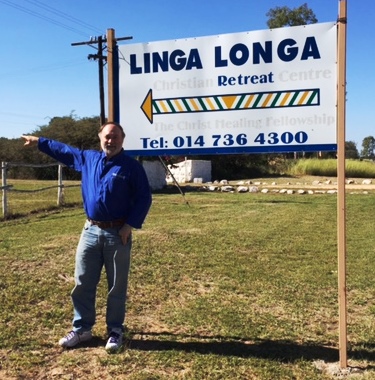
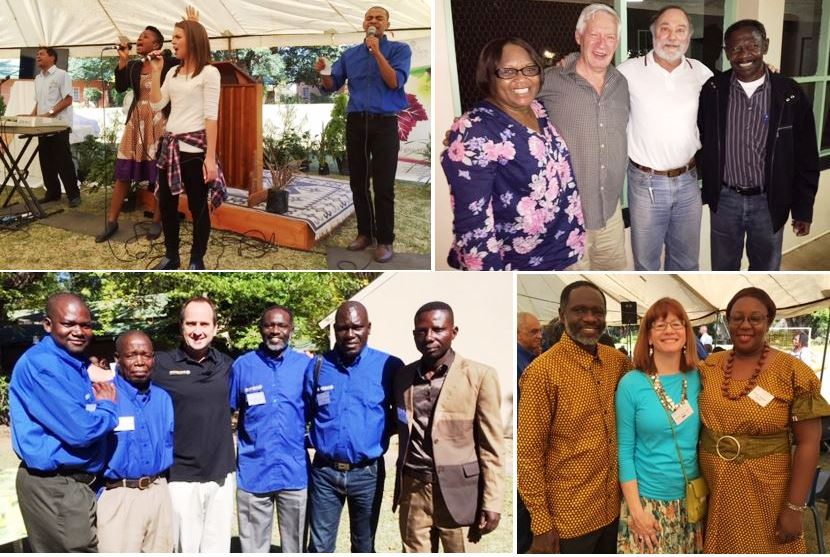
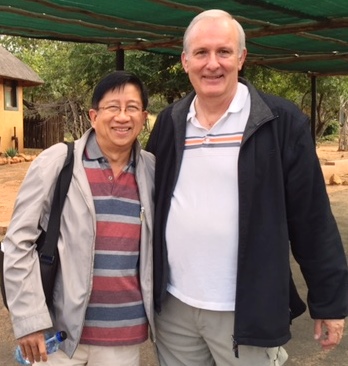
We met for the Pan-African Conference at the Linga Longa Retreat Center, which is operated by our South Africa churches (that’s me at right, pointing the way in). The conference started Thursday evening and continued through Sunday, with about 110 attending conference sessions and over 170 at the Sunday worship service.
Among other topics, the conference addressed how the Holy Spirit affects traditional African religion, church planting, updates from various African regions, ministerial training and education, children and youth ministry, and a Q&A on how to teach GCI beliefs. It was a grand event!
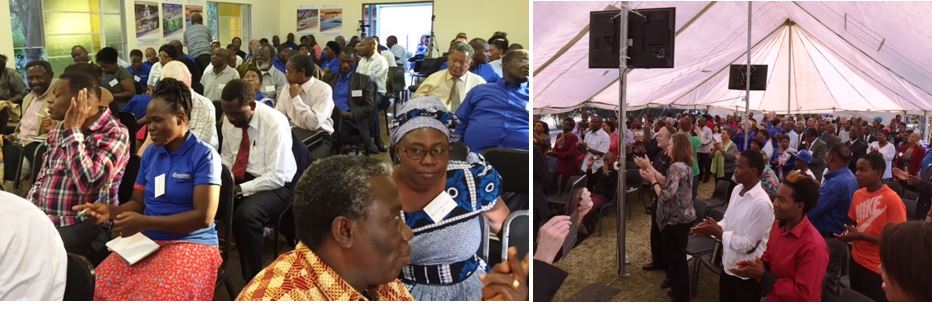
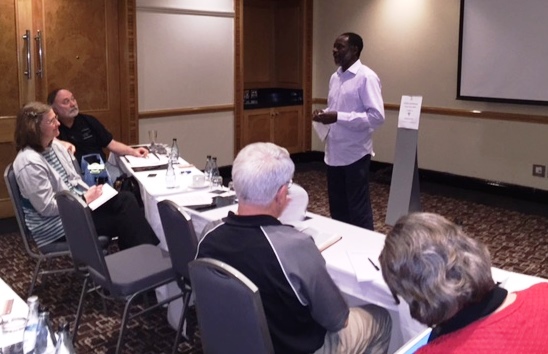
One of the conference sessions at left. Sunday worship service at right (which was held in a tent).
Spending time with our wonderful pastoral leaders from Africa (pictured above and at the end of this letter) was a reminder to me of the value of viewing church leaders as faithful shepherdsof God’s flock. This imagery is common in Scripture.
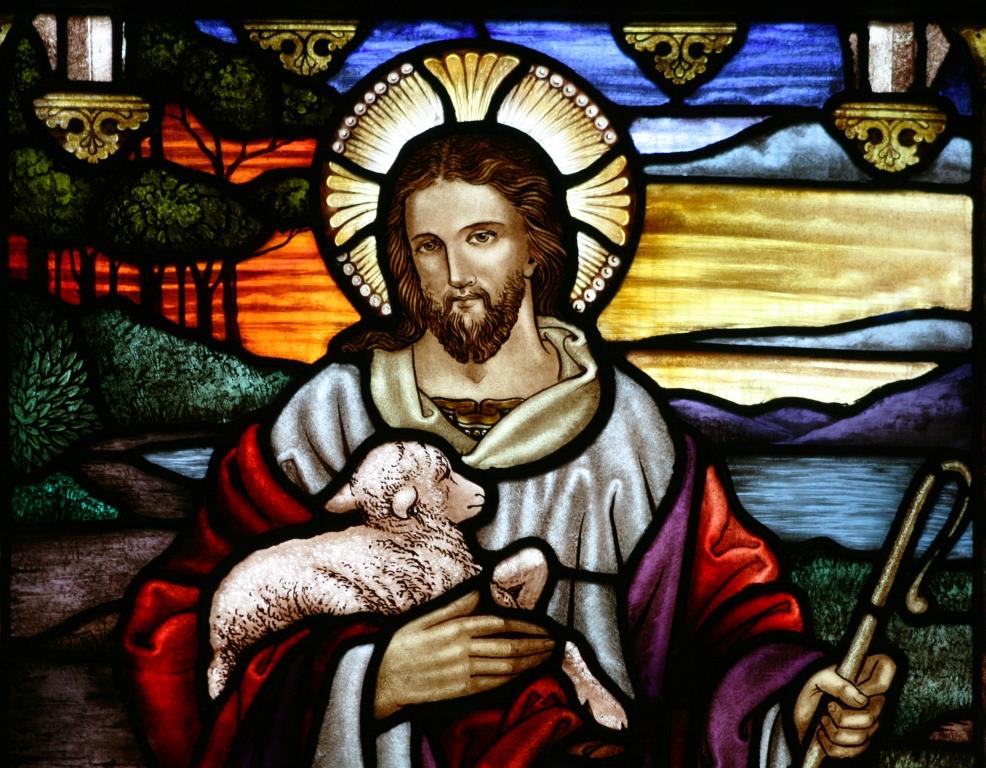
The Good Shepherd (stained glass window at St. Johns Ashfield), Wikimedia commons, with permission
In the ancient middle-east, raising sheep and goats was an important part of the economy (it still is today). Sheep, goats and chickens were some of the first animals to be domesticated. Fairly low maintenance (“easy keepers,” we’d say), they yielded a high return for nomads and people with a more settled agricultural lifestyle. As noted in the Baker Encyclopedia of the Bible, the term shepherd was used historically (including in the Bible) to refer to leaders:
Because of the fundamental role of shepherding in the ancient world, the word “shepherd” became a common term for a ruler. The kings of Assyria, Babylon, and Egypt were often referred to as shepherds who protected their people. This imagery formed the background for the Old Testament, where the same usage is found. God is pictured as the shepherd of Israel, concerned for every aspect of his people’s welfare. Rulers and leaders of the people are often referred to as shepherds (cf., e.g., Numbers 27:17; 1 Kings 22:17; Jeremiah 10:21; 12:10; 22:22; 23:1-2).
Though in our day it’s popular to think of sheep as dull or silly, studies show that they are actually quite intelligent. The Bible talks about sheep as hearing the master’s voice—able to distinguish their shepherd from all others. The Bible uses sheep and shepherds as metaphors to portray two truths: the helplessness of humanity to save itself, and the goodness of God, who lovingly cares for his sheep—especially those that are lost. The New Testament refers to Jesus as “the good shepherd” (John 10:11), “the great Shepherd” (Hebrews 13:20) and “the Chief Shepherd” (1 Peter 5:4). To serve his flock, Jesus calls some people to serve as under-shepherds (called pastors)—joining with him in leading, protecting, feeding and caring for his sheep, including seeking after those that have gone astray.
I realize that serving with Jesus as an under-shepherd is not always easy. When I travel and meet our pastors around the world, I’m reminded of the struggles they face daily. In some cases we can offer them material assistance, and in all cases I try to give them encouragement by reminding them that they are constantly in our thoughts and prayers. They are not alone.
Like us, Jesus had many struggles, including conflict among his first disciples. Yet he shepherded them sacrificially: “I am the good shepherd; I know my sheep and my sheep know me—just as the Father knows me and I know the Father—and I lay down my life for the sheep” (John 10:14-5). He also said, “My sheep listen to my voice; I know them, and they follow me.I give them eternal life, and they shall never perish; no one will snatch them out of my hand” (John 10:27-28). He then spoke of them as the Father’s gift to him (John 10:29). Such statements reveal the heart and the commitment of our Chief Shepherd—the heart and commitment shared by his faithful under-shepherds.
The Christian life is not only knowing about our union with Christ. It’s also about living into that union, in communion with the Father, Son and Holy Spirit. As pastors, we’re called to lead people in the way of communion—joining with Jesus, the Chief Shepherd, in caring for his flock. I’m thankful for the shepherd-leaders that our triune God has provided within GCI, including those I met with recently at our Pan-African conference. I ask that you join with me in not only in praising God for these pastoral leaders, but also in praying for them.
Thanking the Chief Shepherd,
Joseph Tkach
PS: On our way home from South Africa, Tammy and I joined GCI’s Northampton, England, congregation in celebrating its 40th church anniversary. Over 160 attended a service with great singing and special music from two choirs. Roger Clark, John O’Donovan and Maggie Mitchell did an extraordinary job planning and coordinating the event.
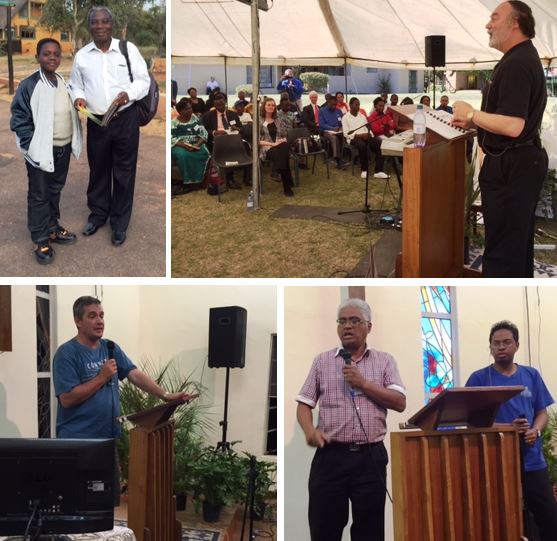
Here are pictures of some of the shepherd-leaders who attended the Pan-African conference:
Left to right, top row: Emmanuel Okai and his son Nana Yew (Ghana); Joseph Tkach preaching at the Sunday worship service. Left to right, bottom row: Tim Maguire (South Africa) addressing the conference; Rigobert Rafiringason (Madagascar) addressing the conference with his son Lova translating.Left to right, top row: Conference praise team – Lova Rafiringason (South Africa), Myma Mantey (Ghana), Megan Maguire and Caleb Makhela Jr. (South Africa); Mutinta Nyumbu (Zambia), James Henderson (UK), Joseph Tkach, and Mutinta’s husband Inyambo. Left to right, bottom row: Manuel Vasco and Mariano Maganizo (Mozambique), Charles Albrecht (home office), Kalengule Kaoma (Zambia), and Oliviera Kitambala and Henrique Mananga (Angola); Kalengule, Susan Williams (home office) and Kalengule’s wife Nsama.
In a recent post on the Exchange Blog entitled, “4 Necessary Mindsets for Developing Transformational Leadership,” Ed Stetzer of LifeWay stated this:
I am convinced that gifted and well-equipped leadership is absolutely essential for every church. Biblical leadership is taught clearly in the Scriptures but perhaps often lost in the application of the local church.
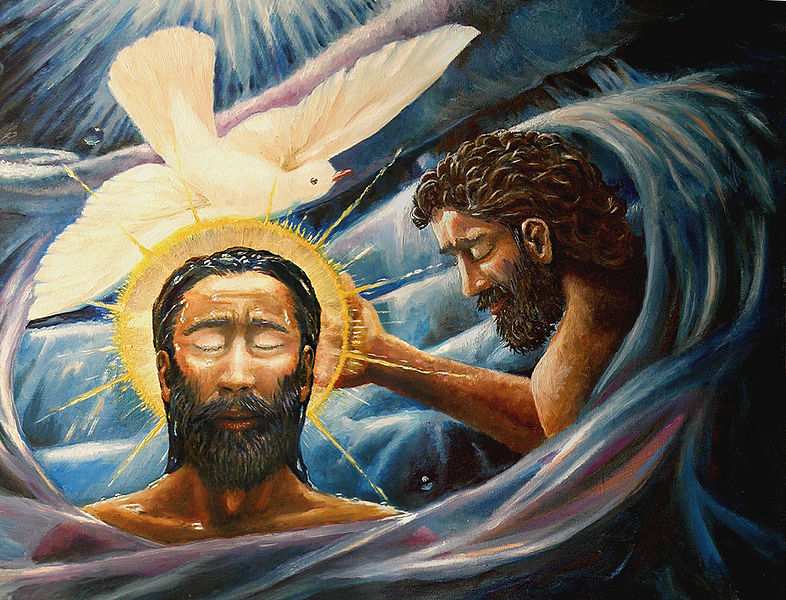
Baptism of Christ by Davezelenka. Used with permission, Wikimedia Commons.
In GCI we baptize both believers and infants. When the person being baptized is a minor, certain approvals are necessary as noted in section 3.7 of the GCI-USA Church Administration Manual:
Minors (those under age 18) may be baptized and/or become members (including youth members) only with the approval of a parent or legal guardian. When a youth under age 12 is baptized, a parent or legal guardian must be present at the ceremony.
GCI in Spain extends to GCI members and friends a warm invitation to come to Majorca this fall for a worship festival celebrating God’s love and grace in Christ. The festival will be held at the Barcelo Ponent Playa Hotel (pictured below). For additional information, including the offer of an early-bird registration discount, click here.
Experienced ministry coaches and other ministers (pictured below, left) who are interested in becoming ministry coaches, met recently in Columbus, Ohio, to participate in ministry coach training provided by GCI-USA Church Administration and Development. Participants included six ministers (below, right) who will continue to pursue certification as GCI-USA ministry coaches.
During the training, Anthony Mullins, ministry coach program coordinator, taught these sessions:
Coaching the Person, Not the Problem
Coaching Models
Ask, Don’t Tell: The Art of Asking Powerful Questions
Measurable Outcomes, Action Steps and Small Victories
Regional Pastor Randy Bloom, who launched coach training several years ago, taught a session on listening skills. Pastor David Howe, who is a certified life coach, taught sessions on the intake process and preparing memorandums of understanding. Pastors Sam Butler and Becky Deuel then shared practical lessons learned through their experience as ministry coaches.
Each participant was given a copy of the book The COACH Model for Christian Leaders by Keith E. Webb. Ongoing coach training will include online webinars, five hours of practice coaching through triads, and an exit interview.
GCI’s Church Administration and Development (CAD) team has multiple responsibilities in serving our U.S. churches. The team operates with a three-fold, forward-looking focus: starting new churches (church planting), helping raise up a new generation of leaders, and helping established churches revitalize. When it comes to church revitalization, though there is no “one-size-fits-all” approach, there are common, significant leadership challenges. Those challenges are helpfully addressed in a recent blog post from Ed Stetzer of LifeWay at www.christianitytoday.com/edstetzer/2015/april/leadership-challenges-in-church-revitalization.html.
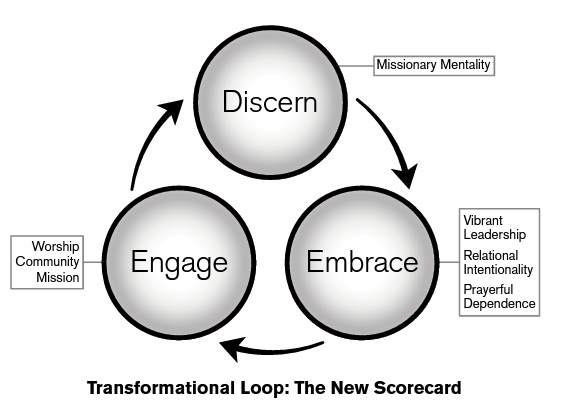
If your congregation would like assistance (consulting and training) related to church revitalization, you are encouraged to contact your regional pastor. Also note the relevant services provided by CAD in the catalog at www.gci.org/CAD_Services. Those services include Transformational Church consulting, which utilizes the church revitalization process and principles illustrated in this diagram:
Two of GCI’s congregations in New York City recently teamed up to hold a “Feed Your Mind, Body, and Soul” prayer breakfast as an outreach to the Queens community nearby the meeting place of GCI’s congregation in Queens. About 100 people attended with about 25% of these being visitors.
The event was organized by the women’s ministries of GCI’s Queens and Manhattan congregations. The event focused on community prayer and community health. A breakfast was served featuring healthy food choices prepared by members. Prayers for healing, wellness and stress management were offered. Medical professionals from the congregations provided free blood pressure screening.
The guest speaker at the event was Dr. John Clarke, Administrative Medical Director and Medical Review Officer for ConEdison, and a member of the Queens congregation. His presentation, “Taking Care of God’s Temple, Your Body,” focused on healthy living and longevity in terms of our walk with Christ.
John Newsom, the lead pastor of both congregations, provided a brief message about the role in our lives of praying together. “God invites us into his inner life through his prayer and our prayer in the Spirit,” he said. Other members gave moving testimonies on the role of prayer in healing and transformation in their lives. Young members led worship. At the conclusion of the event, all those present joined hands in singing “I Need You to Survive,” symbolizing the divine foundation of unity that praying together brings.
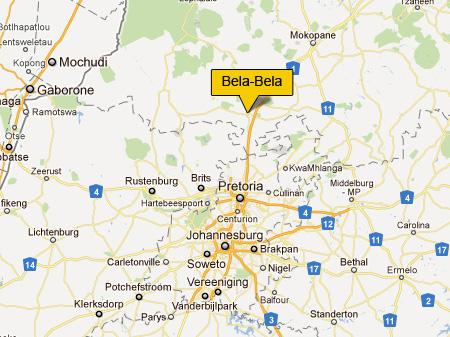
As I write, Tammy and I are in South Africa, where we have the joy of participating in two conferences with GCI brothers and sisters from various parts of the world. The first conference, now complete, was the International Mission Developers’ Conference in Johannesburg. The second, still in session, is the Pan-African Conference in Bela-Bela, north of Pretoria (see the map below). In this Weekly Update letter I’ll give you a brief report on each one.
Pan-African Conference
In this conference, hosted by Kalengule Kaoma and co-hosted by Tim Maguire, 70+ elders and other congregational leaders representing GCI churches in Africa are meeting with our Mission Developers and members of our home office team.
This is my first opportunity to meet several of our African church leaders. I’m humbled by their enthusiasm for the gospel and their love for our GCI church family. They traveled here from Angola, Botswana, Ghana, Kenya, Madagascar, Malawi, Mozambique, South Africa, Zimbabwe and Zambia.
Sadly, some African leaders were unable to attend the conference. Leaders from The Congo, Nigeria and Uganda could not obtain visas. Illness and other difficulties prevented the attendance of leaders from Benin, Burundi, Cameroon, Ivory Coast, Lesotho, Liberia, Mauritius, Namibia, Reunion, Rwanda, Swaziland, Tanzania and Togo. Our prayers are with them and we hope to see them in the future.
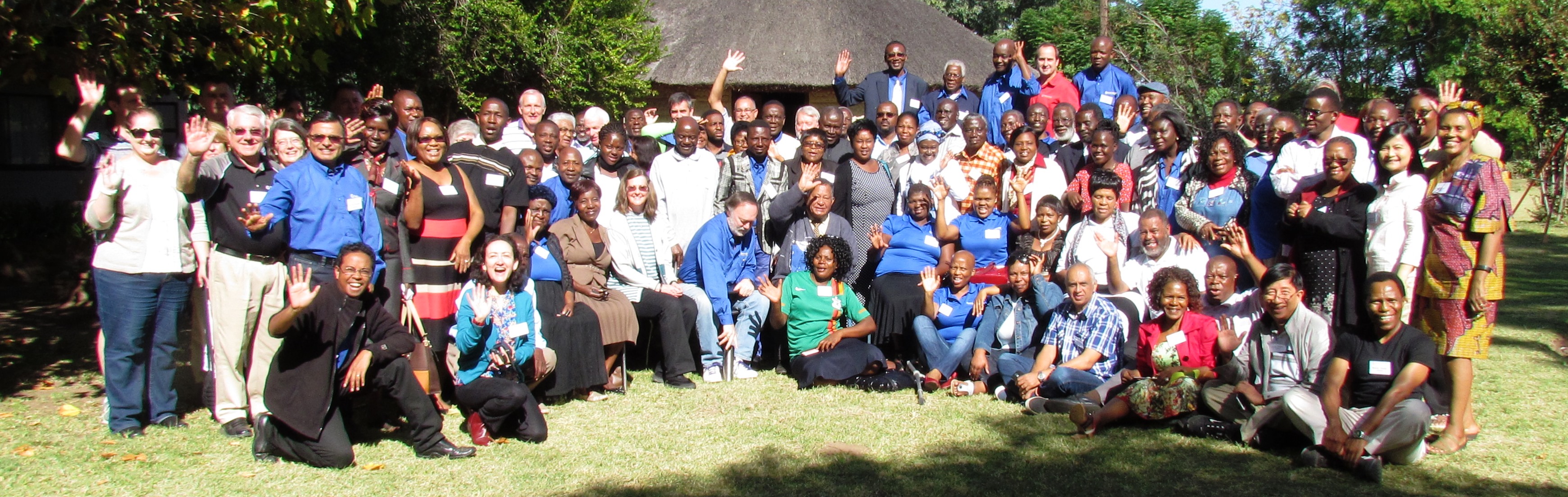
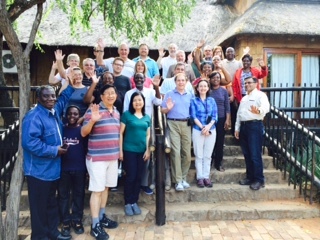
Participants in the Pan-African ConferenceLeaders from Mozambique with Joe and Tammy TkachLeaders from Zambia with Joe and Tammy
International Mission Developers (MD) Conference
Prior to the Pan-African Conference, our International Mission Developers met for four days with several GCI national leaders (Anthony and Jane Gachanja from Kenya, Gavin Henderson from the UK, and Emmanuel and Margaret Okai from Ghana), and members of our home office team (Charles Albrecht, Gary Deddo, Rick Shallenberger, Nathan Smith, Greg and Susan Williams, Tammy and I). During the conference, which was hosted by Tim Maguire, each MD gave a report concerning the region they serve. I’ve provided excerpts of their reports below.
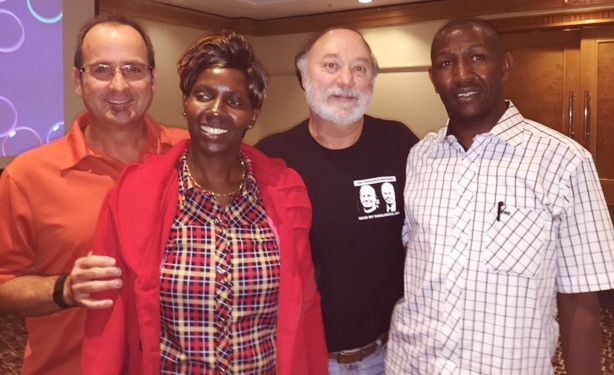
MD conference participantsCharles Albrecht (at left), Jane Gachanja, Joseph Tkach and Anthony Gachanja
John McLean,representing Australia, reported that churches that formerly preached what they were against, now share the inclusiveness of Christ. In a nation where helping others is part of the culture, our churches follow suit by reaching out to their communities, finding ways to help. They realize that if they want a seat at the community table, they must be actively involved within the community.
Robert and Tonia McKinney, representing the Caribbean (standing in for Charles and Carmen Fleming, who were unable to attend for health reasons), shared that they are looking for more ways to equip the next generation. They also are training existing pastors and ministry leaders by offering ACCM classes throughout the Caribbean.
Tim Maguire, representing the southern part of Africa, noted that he too is focused on training younger people for ministry. He shared that two younger men have recently been ordained and another has been approved. The “church under the tree” we’ve told you about is now meeting in a tent. That congregation consists of about 80% youth—they get excited when older people join!
Tim Maguire (in patterned shirt) coordinating a group outing
James and Shirley Henderson, representing Europe and the UK, talked about the challenge of being a Christian in Europe where believers are seen as suspect or archaic. Though this presents a challenge to our churches, they are excited about being part of GCI, and are reaching out within their communities. Much of the congregational ministry is conducted by volunteers, so James asked us to pray for these volunteers and for ideas on how to train and promote volunteerism.
Eugene Guzon (at left) and Gary Moore
Eugene and Lulu Guzon, representing the Philippines, said that because of the relational nature of the Philippine people, evangelizing is more natural and people come to church because of those relationships. The latest trend is that people are coming to GCI because they find the message encouraging and positive—we have become known as a place to escape legalism. Over the last year, 150 members and three churches were added.
Hector and Paulina Barrera, representing South America, are focused on discipleship. They have started a one-year training program to teach the Bible and theology to new leaders. Evangelical churches are growing in South America, and Hector and his team want to have leadership ready for that growth. Hector and Paulina will host next year’s MD Conference in Bogotá, Colombia.
Kalengule Kaoma presenting
Kalengule and Nsama Kaoma, representing eastern and western parts of Africa, talked about working with youth camps and with youth and children’s ministries to identify potential new pastoral leaders. Kalengule also told about his Pastor’s Basket project where he gives volunteer or partially compensated pastors seed money to invest in helping sustain their families. Some grow vegetables, others bake bread or other products to sell.
Gary and Wendy Moore, representing Canada, talked about how an influx of immigrants into Canada (most are Christians) are having a positive impact in Canadian churches. Many of our GCI congregations in Canada have partnered with our congregations in Africa. Their contributions have made a tremendous impact on the growth in these African congregations. Wendy shared a devotional suggesting the difference between Christians and non-Christians is not about behavior, church affiliation or adherence to a moral code, but about our attitude of gratitude. As Wendy said, “The big story is that God has created, man has fallen, God has redeemed and will bring redemption to completion. For that we are eternally grateful.”
Ruth and Rod Matthews (at left), Gary Deddo, James and Shirley Henderson
Rod and Ruth Matthews, representing southern Asia and the South Pacific, gave daily updates on the impact of the recent devastating earthquake in Nepal. Our ministry partner in Nepal, along with his family and the 16 orphans in his home, were not harmed, but the infrastructure in that nation will take years to rebuild. We’ve sent money from our GCI Disaster Relief Fund to help. Rod mentioned two young teachers in Myanmar who recently contacted us and are excited about translating GCI literature into their local dialects.
Greg and Susan Williams, representing the United States and Mexico, shared stories from the U.S. about how God has built things seemingly ex nihilo (out of nothing). Greg’s prayer is that God, who can do anything, will continue building up GCI by allowing the impact of his love to move us forward. Susan gave updates concerning Grace Communion Seminary and answered questions about classes and degree programs. She said, “Visiting South Africa has been a remarkable experience that I will not forget. The beautiful smiles and generous hospitality were vivid reminders of the bond we share in Christ. Our joyful fellowship demonstrated the messages of Christ’s love given by several conference speakers.”
Gary Deddo
A highlight of the MD conference was a presentation from Gary Deddo entitled “Jesus Christ: Spirituality, Eschatology, and the Kingdom of God.” Gary noted that in the Christian life, hope is as important as faith and love. Our hope is in Jesus and his kingdom. We live now with the first-fruits (the down-payment) of the kingdom—having the inheritance, yet waiting in hope and with patience for the day when the glory of our Lord’s reconciling victory over death and evil will be fully revealed. The Father, Son and Spirit will bring to completion all that God has begun both in us and throughout the entire universe down through history. Living now in that hope (along with faith and love), we provide a living sign of the kingdom’s coming fullness and of Jesus’ present rule and reign in every area of life—in every relationship, including our primary relationship of worship with the Father, Son and Spirit.
Enjoying our international connectivity,
Joseph Tkach